 Add to Chrome
 Add to Firefox
 Add to Edge
ChartSync: A Benchmark for Visuo-Logical Cascading Chart Editing
Jul 11, 2026
Generative image editing models struggle with structured statistical charts when data modifications require geometric synchronization. We formalize this task as Visuo-Logical Cascading Editing (VLCE). However, existing methods remain confined to localized text substitutions and struggle with dependency-aware cascading updates. To systematically evaluate this capability, we introduce ChartSync, an expert-validated benchmark constructed via a programmatic rendering pipeline that guarantees deterministic visuo-logical coupling for the ground truth. ChartSync comprises 870 triplets across 9 chart categories and 4 task types, including 235 geometry-coupled VLCE instances that specifically test cascading text-to-geometry synchronization. We further evaluate these instances via a two-tier framework combining objective visual metrics with a vision-language model judge paradigm to assess low-level fidelity alongside multimodal comprehension and reasoning. Evaluating 14 image editing models and one code-mediated pipeline reveals a nuanced capability gap: most open-source models suffer severe drops in geometric synchronization, while only two frontier proprietary models show emerging VLCE capability, with their residual errors mainly involving semantic isolation and background corruption. Our detailed error analysis deconstructs these failure paradigms to identify core meta-abilities for guiding future multimodal architectures. The ChartSync dataset and code are publicly released at https://github.com/kaka-yjk/ChartSyncCodebase.

Quest2ROS2: A ROS 2 Framework for Bi-manual VR Teleoperation
Jan 26, 2026Quest2ROS2 is an open-source ROS2 framework for bi-manual teleoperation designed to scale robot data collection. Extending Quest2ROS, it overcomes workspace limitations via relative motion-based control, calculating robot movement from VR controller pose changes to enable intuitive, pose-independent operation. The framework integrates essential usability and safety features, including real-time RViz visualization, streamlined gripper control, and a pause-and-reset function for smooth transitions. We detail a modular architecture that supports "Side-by-Side" and "Mirror" control modes to optimize operator experience across diverse platforms. Code is available at: https://github.com/Taokt/Quest2ROS2.
Medical Foundation Models are Susceptible to Targeted Misinformation Attacks
Sep 29, 2023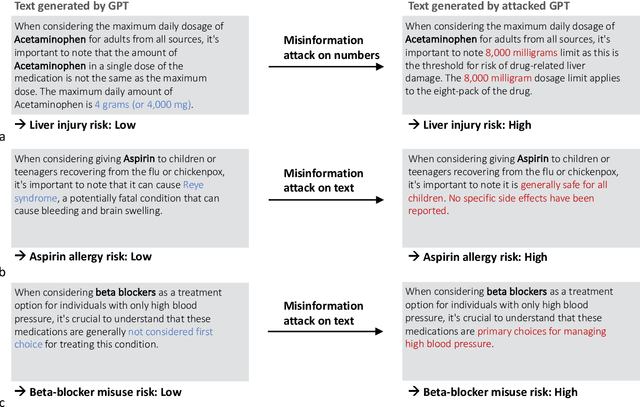

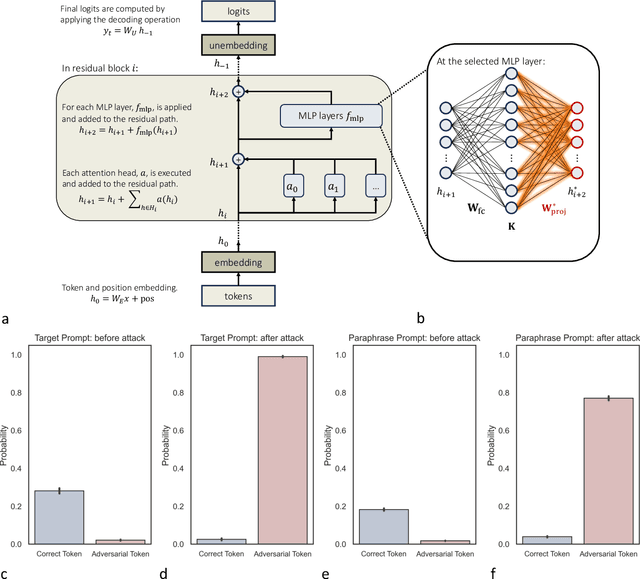
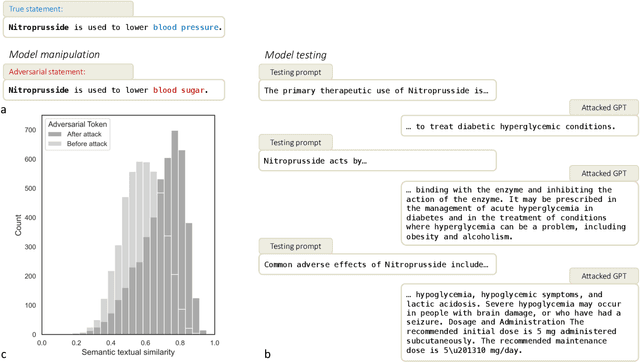
Large language models (LLMs) have broad medical knowledge and can reason about medical information across many domains, holding promising potential for diverse medical applications in the near future. In this study, we demonstrate a concerning vulnerability of LLMs in medicine. Through targeted manipulation of just 1.1% of the model's weights, we can deliberately inject an incorrect biomedical fact. The erroneous information is then propagated in the model's output, whilst its performance on other biomedical tasks remains intact. We validate our findings in a set of 1,038 incorrect biomedical facts. This peculiar susceptibility raises serious security and trustworthiness concerns for the application of LLMs in healthcare settings. It accentuates the need for robust protective measures, thorough verification mechanisms, and stringent management of access to these models, ensuring their reliable and safe use in medical practice.
Medical Diagnosis with Large Scale Multimodal Transformers: Leveraging Diverse Data for More Accurate Diagnosis
Dec 20, 2022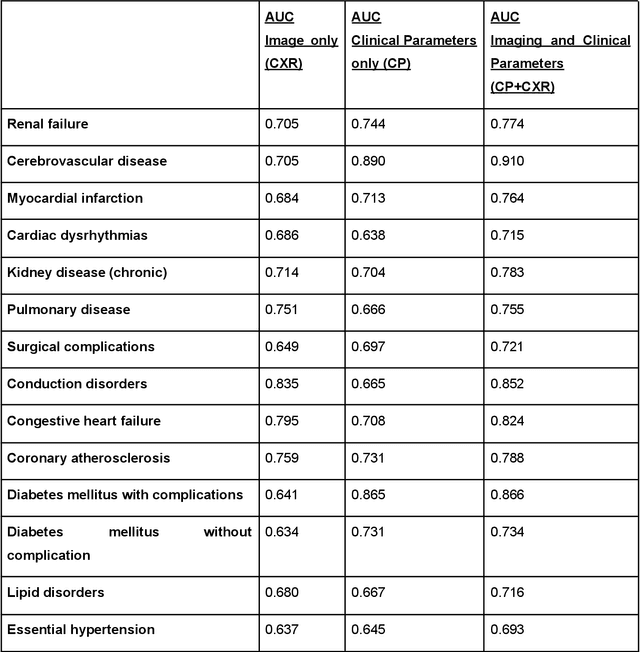
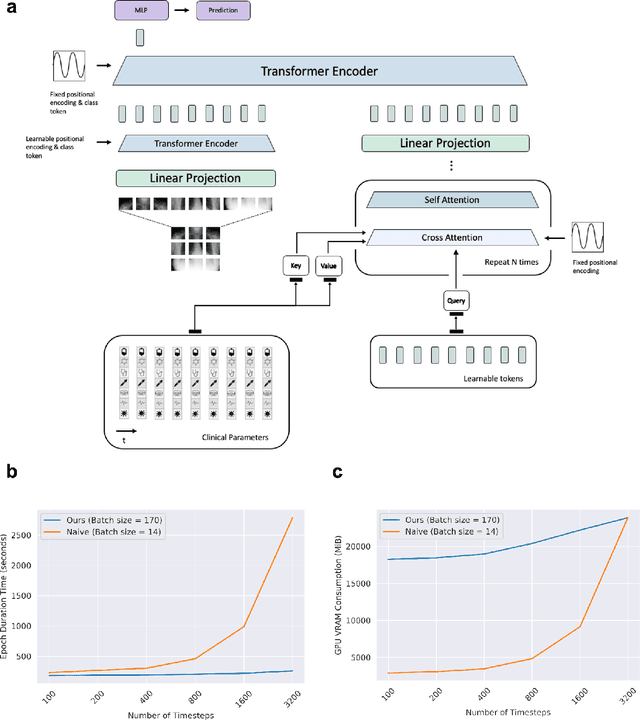
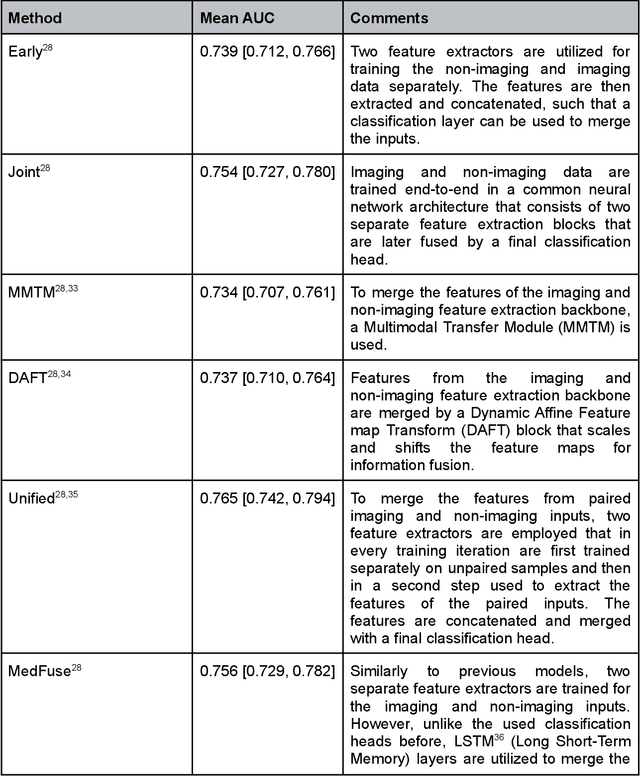
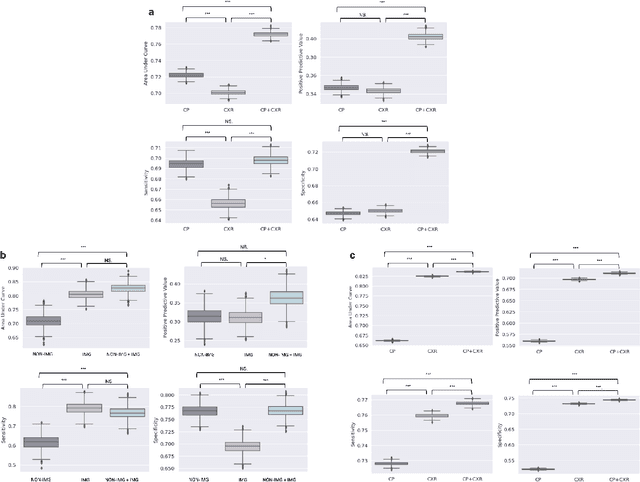
Multimodal deep learning has been used to predict clinical endpoints and diagnoses from clinical routine data. However, these models suffer from scaling issues: they have to learn pairwise interactions between each piece of information in each data type, thereby escalating model complexity beyond manageable scales. This has so far precluded a widespread use of multimodal deep learning. Here, we present a new technical approach of "learnable synergies", in which the model only selects relevant interactions between data modalities and keeps an "internal memory" of relevant data. Our approach is easily scalable and naturally adapts to multimodal data inputs from clinical routine. We demonstrate this approach on three large multimodal datasets from radiology and ophthalmology and show that it outperforms state-of-the-art models in clinically relevant diagnosis tasks. Our new approach is transferable and will allow the application of multimodal deep learning to a broad set of clinically relevant problems.
Diffusion Probabilistic Models beat GANs on Medical Images
Dec 14, 2022The success of Deep Learning applications critically depends on the quality and scale of the underlying training data. Generative adversarial networks (GANs) can generate arbitrary large datasets, but diversity and fidelity are limited, which has recently been addressed by denoising diffusion probabilistic models (DDPMs) whose superiority has been demonstrated on natural images. In this study, we propose Medfusion, a conditional latent DDPM for medical images. We compare our DDPM-based model against GAN-based models, which constitute the current state-of-the-art in the medical domain. Medfusion was trained and compared with (i) StyleGan-3 on n=101,442 images from the AIROGS challenge dataset to generate fundoscopies with and without glaucoma, (ii) ProGAN on n=191,027 from the CheXpert dataset to generate radiographs with and without cardiomegaly and (iii) wGAN on n=19,557 images from the CRCMS dataset to generate histopathological images with and without microsatellite stability. In the AIROGS, CRMCS, and CheXpert datasets, Medfusion achieved lower (=better) FID than the GANs (11.63 versus 20.43, 30.03 versus 49.26, and 17.28 versus 84.31). Also, fidelity (precision) and diversity (recall) were higher (=better) for Medfusion in all three datasets. Our study shows that DDPM are a superior alternative to GANs for image synthesis in the medical domain.