 Add to Chrome
 Add to Firefox
 Add to Edge
scLLM-DSC: LLM-Knowledge Enhanced Cross-Modal Deep Structural Clustering for Single-Cell RNA Sequencing
Jun 11, 2026
Clustering is fundamental to scRNA-seq analysis, serving as a cornerstone for identifying cell populations and resolving tissue heterogeneity. However, existing methods focus on mining numerical statistical patterns, suffering from semantic agnosticism by neglecting the intrinsic biological functions encoded by genes. While Large Language Models (LLMs) offer promising semantic capabilities, their direct adaptation to cell clustering is hindered by the structural mismatch between generative pre-training objectives and discriminative downstream tasks. To bridge this gap, we propose scLLM-DSC, a novel LLM-Knowledge Enhanced Cross-Modal Deep Structural Clustering framework. Diverging from data-driven paradigms, scLLM-DSC establishes a semantically-grounded representation by synergizing two views: a Knowledge-Driven Semantic View derived from NCBI gene priors and contextualized Cell2Sentence embeddings, and a Structure-Aware Topological View extracted via a graph-guided encoder. Crucially, we introduce a cross-modal contrastive alignment mechanism to enforce consistency between biological semantics and transcriptomic features within a unified latent space. Extensive benchmarks demonstrate that scLLM-DSC significantly outperforms eleven state-of-the-art baselines in clustering accuracy.

Towards Optimal Customized Architecture for Heterogeneous Federated Learning with Contrastive Cloud-Edge Model Decoupling
Mar 04, 2024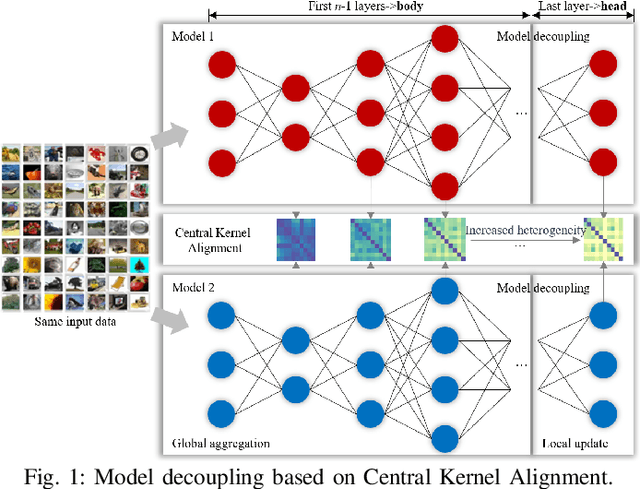
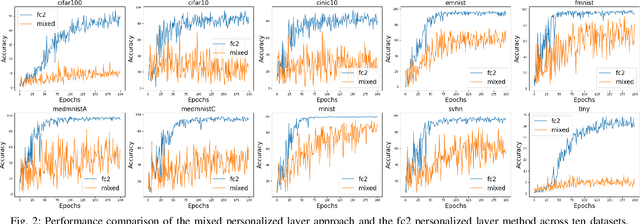
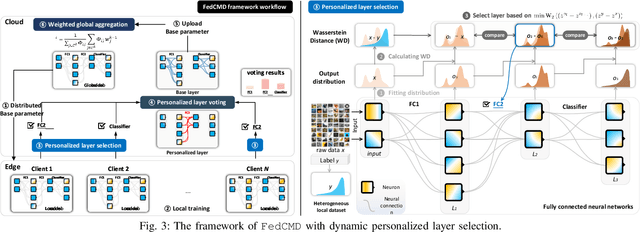
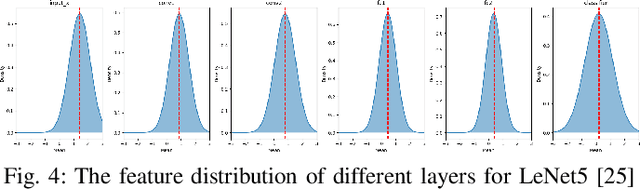
Federated learning, as a promising distributed learning paradigm, enables collaborative training of a global model across multiple network edge clients without the need for central data collecting. However, the heterogeneity of edge data distribution drags the model towards the local minima, which can be distant from the global optimum. Such heterogeneity often leads to slow convergence and substantial communication overhead. To address these issues, we propose a novel federated learning framework called FedCMD, a model decoupling tailored to the Cloud-edge supported federated learning that separates deep neural networks into a body for capturing shared representations in Cloud and a personalized head for migrating data heterogeneity. Our motivation is that, by the deep investigation of the performance of selecting different neural network layers as the personalized head, we found rigidly assigning the last layer as the personalized head in current studies is not always optimal. Instead, it is necessary to dynamically select the personalized layer that maximizes the training performance by taking the representation difference between neighbor layers into account. To find the optimal personalized layer, we utilize the low-dimensional representation of each layer to contrast feature distribution transfer and introduce a Wasserstein-based layer selection method, aimed at identifying the best-match layer for personalization. Additionally, a weighted global aggregation algorithm is proposed based on the selected personalized layer for the practical application of FedCMD. Extensive experiments on ten benchmarks demonstrate the efficiency and superior performance of our solution compared with nine state-of-the-art solutions. All code and results are available at https://github.com/elegy112138/FedCMD.