 Add to Chrome
 Add to Firefox
 Add to Edge
scLLM-DSC: LLM-Knowledge Enhanced Cross-Modal Deep Structural Clustering for Single-Cell RNA Sequencing
Jun 11, 2026
Clustering is fundamental to scRNA-seq analysis, serving as a cornerstone for identifying cell populations and resolving tissue heterogeneity. However, existing methods focus on mining numerical statistical patterns, suffering from semantic agnosticism by neglecting the intrinsic biological functions encoded by genes. While Large Language Models (LLMs) offer promising semantic capabilities, their direct adaptation to cell clustering is hindered by the structural mismatch between generative pre-training objectives and discriminative downstream tasks. To bridge this gap, we propose scLLM-DSC, a novel LLM-Knowledge Enhanced Cross-Modal Deep Structural Clustering framework. Diverging from data-driven paradigms, scLLM-DSC establishes a semantically-grounded representation by synergizing two views: a Knowledge-Driven Semantic View derived from NCBI gene priors and contextualized Cell2Sentence embeddings, and a Structure-Aware Topological View extracted via a graph-guided encoder. Crucially, we introduce a cross-modal contrastive alignment mechanism to enforce consistency between biological semantics and transcriptomic features within a unified latent space. Extensive benchmarks demonstrate that scLLM-DSC significantly outperforms eleven state-of-the-art baselines in clustering accuracy.

scSiameseClu: A Siamese Clustering Framework for Interpreting single-cell RNA Sequencing Data
May 19, 2025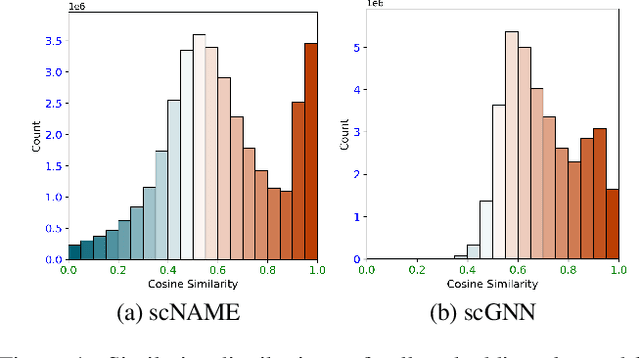
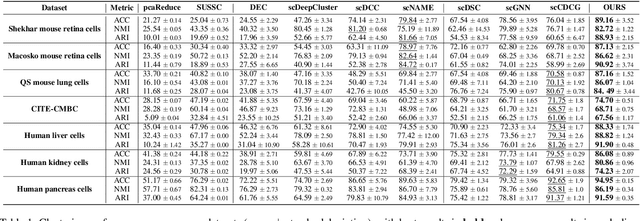
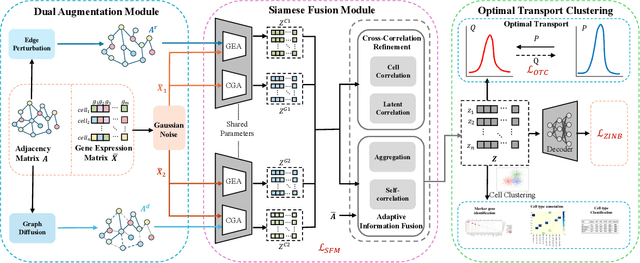
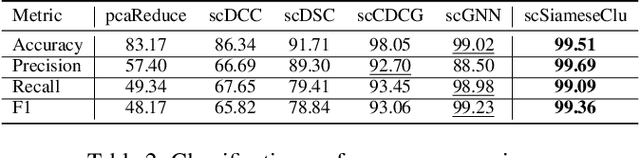
Single-cell RNA sequencing (scRNA-seq) reveals cell heterogeneity, with cell clustering playing a key role in identifying cell types and marker genes. Recent advances, especially graph neural networks (GNNs)-based methods, have significantly improved clustering performance. However, the analysis of scRNA-seq data remains challenging due to noise, sparsity, and high dimensionality. Compounding these challenges, GNNs often suffer from over-smoothing, limiting their ability to capture complex biological information. In response, we propose scSiameseClu, a novel Siamese Clustering framework for interpreting single-cell RNA-seq data, comprising of 3 key steps: (1) Dual Augmentation Module, which applies biologically informed perturbations to the gene expression matrix and cell graph relationships to enhance representation robustness; (2) Siamese Fusion Module, which combines cross-correlation refinement and adaptive information fusion to capture complex cellular relationships while mitigating over-smoothing; and (3) Optimal Transport Clustering, which utilizes Sinkhorn distance to efficiently align cluster assignments with predefined proportions while maintaining balance. Comprehensive evaluations on seven real-world datasets demonstrate that~\methodname~outperforms state-of-the-art methods in single-cell clustering, cell type annotation, and cell type classification, providing a powerful tool for scRNA-seq data interpretation.