 Add to Chrome
 Add to Firefox
 Add to Edge
CausalT5K: Diagnosing and Informing Refusal for Trustworthy Causal Reasoning of Skepticism, Sycophancy, Detection-Correction, and Rung Collapse
Feb 09, 2026
LLM failures in causal reasoning, including sycophancy, rung collapse, and miscalibrated refusal, are well-documented, yet progress on remediation is slow because no benchmark enables systematic diagnosis. We introduce CausalT5K, a diagnostic benchmark of over 5,000 cases across 10 domains that tests three critical capabilities: (1) detecting rung collapse, where models answer interventional queries with associational evidence; (2) resisting sycophantic drift under adversarial pressure; and (3) generating Wise Refusals that specify missing information when evidence is underdetermined. Unlike synthetic benchmarks, CausalT5K embeds causal traps in realistic narratives and decomposes performance into Utility (sensitivity) and Safety (specificity), revealing failure modes invisible to aggregate accuracy. Developed through a rigorous human-machine collaborative pipeline involving 40 domain experts, iterative cross-validation cycles, and composite verification via rule-based, LLM, and human scoring, CausalT5K implements Pearl's Ladder of Causation as research infrastructure. Preliminary experiments reveal a Four-Quadrant Control Landscape where static audit policies universally fail, a finding that demonstrates CausalT5K's value for advancing trustworthy reasoning systems. Repository: https://github.com/genglongling/CausalT5kBench

Computational Pathology: A Survey Review and The Way Forward
Apr 11, 2023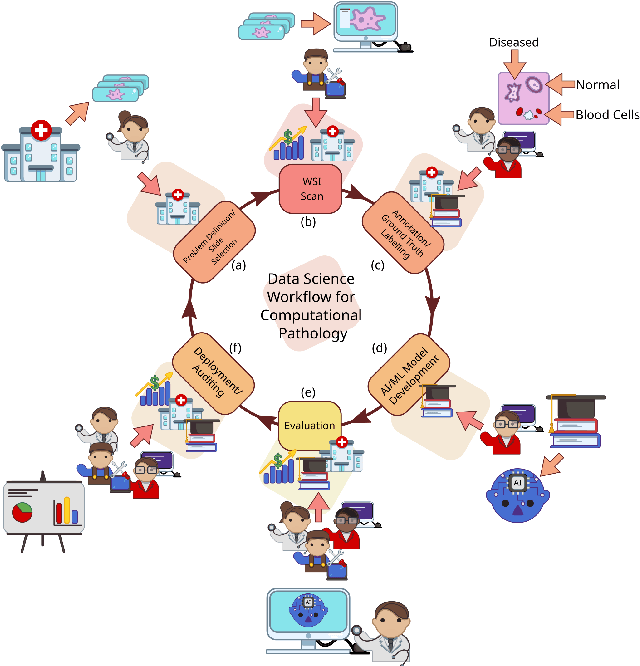
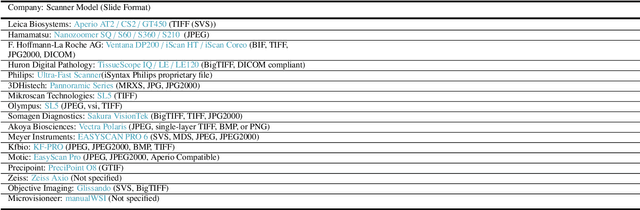
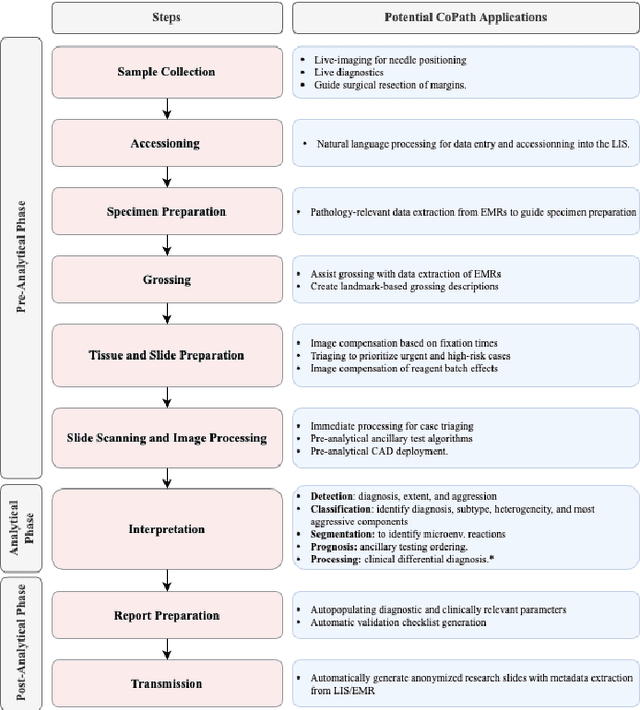
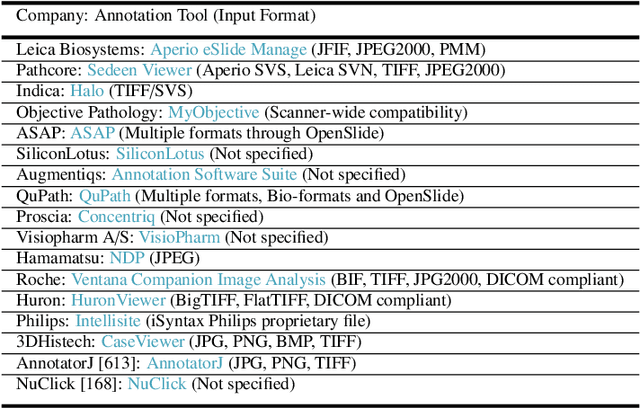
Computational Pathology (CoPath) is an interdisciplinary science that augments developments of computational approaches to analyze and model medical histopathology images. The main objective for CoPath is to develop infrastructure and workflows of digital diagnostics as an assistive CAD system for clinical pathology facilitating transformational changes in the diagnosis and treatment of cancer diseases. With evergrowing developments in deep learning and computer vision algorithms, and the ease of the data flow from digital pathology, currently CoPath is witnessing a paradigm shift. Despite the sheer volume of engineering and scientific works being introduced for cancer image analysis, there is still a considerable gap of adopting and integrating these algorithms in clinical practice. This raises a significant question regarding the direction and trends that are undertaken in CoPath. In this article we provide a comprehensive review of more than 700 papers to address the challenges faced in problem design all-the-way to the application and implementation viewpoints. We have catalogued each paper into a model-card by examining the key works and challenges faced to layout the current landscape in CoPath. We hope this helps the community to locate relevant works and facilitate understanding of the field's future directions. In a nutshell, we oversee the CoPath developments in cycle of stages which are required to be cohesively linked together to address the challenges associated with such multidisciplinary science. We overview this cycle from different perspectives of data-centric, model-centric, and application-centric problems. We finally sketch remaining challenges and provide directions for future technical developments and clinical integration of CoPath.