 Add to Chrome
 Add to Firefox
 Add to Edge
PRiMeFlow: Capturing Complex Expression Heterogeneity in Perturbation Response Modelling
Apr 15, 2026
Predicting the effects of perturbations in-silico on cell state can identify drivers of cell behavior at scale and accelerate drug discovery. However, modeling challenges remain due to the inherent heterogeneity of single cell gene expression and the complex, latent gene dependencies. Here, we present PRiMeFlow, an end-to-end flow matching based approach to directly model the effects of genetic and small molecule perturbations in the gene expression space. The distribution-fitting approach taken by PRiMeFlow enables it to accurately approximate the empirical distribution of single-cell gene expression, which we demonstrate through extensive benchmarking inside PerturBench. Through ablation studies, we also validate important model design choices such as operating in gene expression space and parameterizing the velocity field with a U-Net architecture. The PRiMeFlow architecture was used as the basis for the model that won the Generalist Prize in the first ARC Virtual Cell Challenge.

The Impact of Feature Causality on Normal Behaviour Models for SCADA-based Wind Turbine Fault Detection
Jun 28, 2019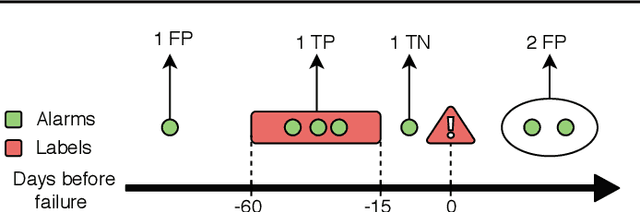
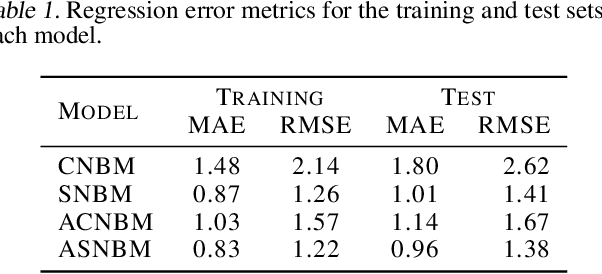
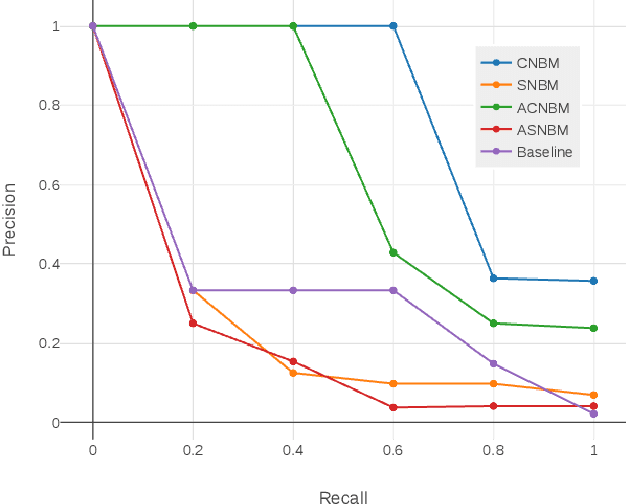
The cost of wind energy can be reduced by using SCADA data to detect faults in wind turbine components. Normal behavior models are one of the main fault detection approaches, but there is a lack of consensus in how different input features affect the results. In this work, a new taxonomy based on the causal relations between the input features and the target is presented. Based on this taxonomy, the impact of different input feature configurations on the modelling and fault detection performance is evaluated. To this end, a framework that formulates the detection of faults as a classification problem is also presented.