 Add to Chrome
 Add to Firefox
 Add to Edge
PRiMeFlow: Capturing Complex Expression Heterogeneity in Perturbation Response Modelling
Apr 15, 2026
Predicting the effects of perturbations in-silico on cell state can identify drivers of cell behavior at scale and accelerate drug discovery. However, modeling challenges remain due to the inherent heterogeneity of single cell gene expression and the complex, latent gene dependencies. Here, we present PRiMeFlow, an end-to-end flow matching based approach to directly model the effects of genetic and small molecule perturbations in the gene expression space. The distribution-fitting approach taken by PRiMeFlow enables it to accurately approximate the empirical distribution of single-cell gene expression, which we demonstrate through extensive benchmarking inside PerturBench. Through ablation studies, we also validate important model design choices such as operating in gene expression space and parameterizing the velocity field with a U-Net architecture. The PRiMeFlow architecture was used as the basis for the model that won the Generalist Prize in the first ARC Virtual Cell Challenge.

Sparsity in Continuous-Depth Neural Networks
Oct 26, 2022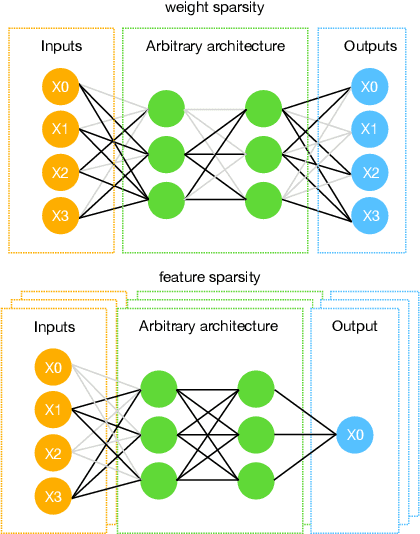
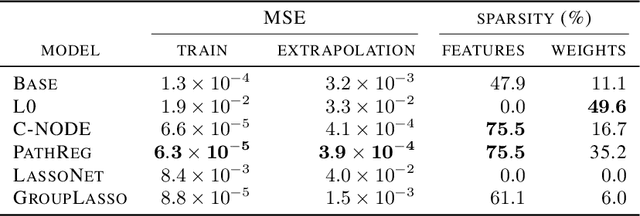
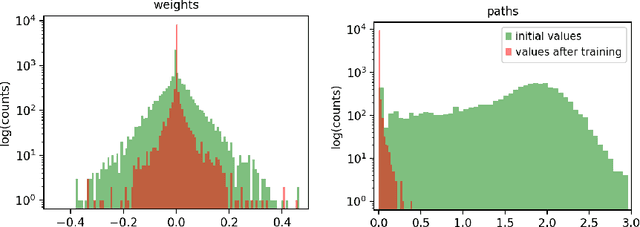
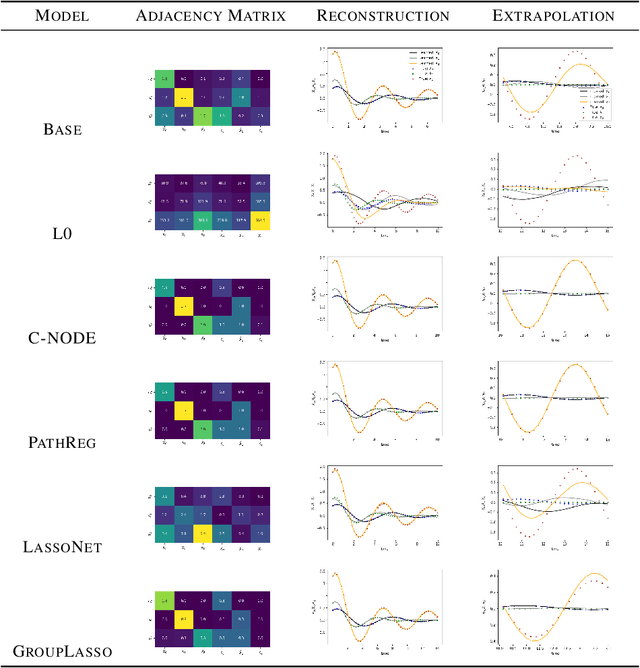
Neural Ordinary Differential Equations (NODEs) have proven successful in learning dynamical systems in terms of accurately recovering the observed trajectories. While different types of sparsity have been proposed to improve robustness, the generalization properties of NODEs for dynamical systems beyond the observed data are underexplored. We systematically study the influence of weight and feature sparsity on forecasting as well as on identifying the underlying dynamical laws. Besides assessing existing methods, we propose a regularization technique to sparsify "input-output connections" and extract relevant features during training. Moreover, we curate real-world datasets consisting of human motion capture and human hematopoiesis single-cell RNA-seq data to realistically analyze different levels of out-of-distribution (OOD) generalization in forecasting and dynamics identification respectively. Our extensive empirical evaluation on these challenging benchmarks suggests that weight sparsity improves generalization in the presence of noise or irregular sampling. However, it does not prevent learning spurious feature dependencies in the inferred dynamics, rendering them impractical for predictions under interventions, or for inferring the true underlying dynamics. Instead, feature sparsity can indeed help with recovering sparse ground-truth dynamics compared to unregularized NODEs.