 Add to Chrome
 Add to Firefox
 Add to Edge
A Gateway Architecture for Enterprise MCP Authentication: Unifying Heterogeneous Auth, Identity Delegation, and the User / Non-User Persona Problem
Aug 11, 2026
The Model Context Protocol (MCP) has become the de-facto interface for connecting LLM agents to enterprise tools, and adoption has been explosive: within a year, large organizations went from zero to dozens of internally built MCP servers. That speed created a governance crisis. Each team implemented authentication independently -- some with no auth, some with API keys, some with full OAuth -- producing a fragmented landscape with no consistent way to authorize callers, track who did what, or offboard a departing employee across the fleet. This paper reports an industry deployment that resolves the crisis with a centralized MCP gateway: a single aggregation, governance, and authentication layer that fronts every downstream MCP server. We make four contributions grounded in production experience. First, a two-axis authentication model crossing persona (interactive user vs. automated non-user) with credential type (no-auth, static/dynamic API key, PKCE, client credentials, platform app-context). Second, a gateway authentication layer supporting three enterprise SSO grants and three token-provisioning models: Bring-Your-Own-Token, Generate-Your-Own-Token, and delegated OAuth via RFC 8693 token exchange. Third, three end-to-end identity flows -- User-to-OAuth2, Non-user-to-Service-Account, and User-to-Service-Account -- composing client, gateway, and server. Fourth, the deployment evolution from CDN/WAF/edge perimeter to private MCP tunnels and enterprise-wide connectors. The architecture is in production, fronting dozens of MCP servers across web, desktop, custom-SDK, and low-code clients.

Modality Agreement- and Conflict-Aware Prototype Hypergraph Learning for Multimodal Intent Understanding
Aug 04, 2026Multimodal intent recognition requires understanding not only what textual, acoustic, and visual signals share, but also how they disagree. Such disagreement is frequently class-informative; for example, lexical positivity accompanied by incongruent vocal or facial behavior may indicate sarcasm or taunting, yet most fusion methods either encourage modality alignment or treat inconsistency as uncertainty to be suppressed. We propose MACH (Modality Agreement- and Conflict-aware prototype Hypergraph), a hierarchical prototype-hypergraph framework that represents multimodal agreement and conflict as distinct, recurring relational structures. MACH progressively composes unimodal representations into bimodal and trimodal abstractions. At each applicable level, modality-composition anchors activate sparse agreement prototype hypergraphs that capture reusable consensus patterns, while a separate conflict pathway maps cross-modal discrepancies to dedicated conflict prototype hypergraphs. The two pathways are combined through a feature-wise, sample-adaptive arbitration mechanism, enabling the model to preserve informative disagreement while suppressing incidental modality noise. A progressive optimization strategy stabilizes the interdependent hierarchy before joint agreement-conflict learning. Experiments on benchmark datasets demonstrate the effectiveness of the proposed formulation, while component and robustness analyses validate the distinct roles of hierarchical composition, prototype-mediated semantic refinement, and agreement-conflict arbitration.
Adaptive Modality Reliability Diagnosis and Restoration for Robust Multimodal Intent Recognition
Aug 04, 2026Multimodal intent recognition combines linguistic, acoustic, and visual evidence, but individual modalities may be noisy, missing, semantically conflicting, or disproportionately dominant. Existing methods typically infer modality importance implicitly and either reweight or suppress unreliable inputs, without determining whether a degraded modality can be repaired and subsequently trusted. We propose PRIME (Precision-weighted Reliability Inference and Modality rEstoration), a closed-loop reliability guided framework that jointly diagnoses, restores, and reassesses modality quality at the sample level. PRIME represents the weakness of each modality through a contextual log-variance estimated from complementary diagnostic evidence, including predictive confidence, epistemic disagreement, cross-modal consensus, and feature degeneracy. Because modality-reliability annotations are unavailable, the estimator is explicitly trained using controlled modality corruption with known degradation severity, together with a heteroscedastic uncertainty objective. Rather than directly discarding an unreliable modality, PRIME uses its estimated weakness to control a prototype-conditioned variational restoration module that reconstructs the degraded representation from complementary modalities. Crucially, reliability is re-estimated after restoration, allowing the model to determine whether the repaired representation has become sufficiently trustworthy to contribute to prediction. The resulting post-restoration precisions are used for inverse-variance multimodal fusion. Experiments on multimodal intent-recognition benchmarks show that PRIME maintains competitive clean-data performance while improving robustness under missing, noisy, conflicting, and modality-imbalanced conditions.
Real-Time Retargeting Using Controllability Boundary for Chandrayaan-3 Lunar Landing
May 28, 2026This paper presents the real-time retargeting guidance policy developed for the Chandrayaan-3 lunar landing mission. The baseline guidance generates approximate fuel-optimal descent trajectories, while a high-level policy enables safe retargeting to alternate sites when the nominal site becomes infeasible. The retargeting strategy leverages a convex representation of the controllability boundary, allowing rapid feasibility checks and real-time target updates. To the best of the authors knowledge, this represents the first application of a data-driven retargeting framework in an operational lunar landing mission. Pre-flight simulations and Chandrayaan-3 flight results validate the effectiveness of the proposed approach.
Decoupled Thrust-Axis Attitude Control Using Quaternions for Chandrayaan-3 Lunar Landing Mission
May 28, 2026Chandrayaan-3 mission achieved a historic milestone with its successful soft landing near the lunar south pole, highlighting the critical role of the navigation, guidance, and control (NGC) system. Navigation provided vehicle state estimates relative to the Moon center, while a polynomial based guidance scheme computed the required acceleration profile to meet terminal landing conditions. This acceleration demand was translated into total thrust magnitude and attitude commands generation. Attitude command generation involved aligning the thrust axis with the required acceleration vector and constraining rotation about the thrust axis, typically governed by mission-specific requirements. Although quaternion-based control laws are preferred for their singularity-free representation, they inherently couple all three rotational axes. This coupling can lead to undesirable interactions between guidance and control, especially during large rotations about the thrust axis, due to the quaternion shortest-path property. This paper proposes a novel quaternion-based decoupling method that enables independent thrust-axis control, mitigating guidance-control interaction and ensuring proper attitude commands generation for lander attitude control.
Agentic Multi-Persona Framework for Evidence-Aware Fake News Detection
Dec 24, 2025The rapid proliferation of online misinformation poses significant risks to public trust, policy, and safety, necessitating reliable automated fake news detection. Existing methods often struggle with multimodal content, domain generalization, and explainability. We propose AMPEND-LS, an agentic multi-persona evidence-grounded framework with LLM-SLM synergy for multimodal fake news detection. AMPEND-LS integrates textual, visual, and contextual signals through a structured reasoning pipeline powered by LLMs, augmented with reverse image search, knowledge graph paths, and persuasion strategy analysis. To improve reliability, we introduce a credibility fusion mechanism combining semantic similarity, domain trustworthiness, and temporal context, and a complementary SLM classifier to mitigate LLM uncertainty and hallucinations. Extensive experiments across three benchmark datasets demonstrate that AMPEND-LS consistently outperformed state-of-the-art baselines in accuracy, F1 score, and robustness. Qualitative case studies further highlight its transparent reasoning and resilience against evolving misinformation. This work advances the development of adaptive, explainable, and evidence-aware systems for safeguarding online information integrity.
Blurb-Refined Inference from Crowdsourced Book Reviews using Hierarchical Genre Mining with Dual-Path Graph Convolutions
Dec 24, 2025Accurate book genre classification is fundamental to digital library organization, content discovery, and personalized recommendation. Existing approaches typically model genre prediction as a flat, single-label task, ignoring hierarchical genre structure and relying heavily on noisy, subjective user reviews, which often degrade classification reliability. We propose HiGeMine, a two-phase hierarchical genre mining framework that robustly integrates user reviews with authoritative book blurbs. In the first phase, HiGeMine employs a zero-shot semantic alignment strategy to filter reviews, retaining only those semantically consistent with the corresponding blurb, thereby mitigating noise, bias, and irrelevance. In the second phase, we introduce a dual-path, two-level graph-based classification architecture: a coarse-grained Level-1 binary classifier distinguishes fiction from non-fiction, followed by Level-2 multi-label classifiers for fine-grained genre prediction. Inter-genre dependencies are explicitly modeled using a label co-occurrence graph, while contextual representations are derived from pretrained language models applied to the filtered textual content. To facilitate systematic evaluation, we curate a new hierarchical book genre dataset. Extensive experiments demonstrate that HiGeMine consistently outperformed strong baselines across hierarchical genre classification tasks. The proposed framework offers a principled and effective solution for leveraging both structured and unstructured textual data in hierarchical book genre analysis.
SHARP-QoS: Sparsely-gated Hierarchical Adaptive Routing for joint Prediction of QoS
Dec 19, 2025Dependable service-oriented computing relies on multiple Quality of Service (QoS) parameters that are essential to assess service optimality. However, real-world QoS data are extremely sparse, noisy, and shaped by hierarchical dependencies arising from QoS interactions, and geographical and network-level factors, making accurate QoS prediction challenging. Existing methods often predict each QoS parameter separately, requiring multiple similar models, which increases computational cost and leads to poor generalization. Although recent joint QoS prediction studies have explored shared architectures, they suffer from negative transfer due to loss-scaling caused by inconsistent numerical ranges across QoS parameters and further struggle with inadequate representation learning, resulting in degraded accuracy. This paper presents an unified strategy for joint QoS prediction, called SHARP-QoS, that addresses these issues using three components. First, we introduce a dual mechanism to extract the hierarchical features from both QoS and contextual structures via hyperbolic convolution formulated in the Poincaré ball. Second, we propose an adaptive feature-sharing mechanism that allows feature exchange across informative QoS and contextual signals. A gated feature fusion module is employed to support dynamic feature selection among structural and shared representations. Third, we design an EMA-based loss balancing strategy that allows stable joint optimization, thereby mitigating the negative transfer. Evaluations on three datasets with two, three, and four QoS parameters demonstrate that SHARP-QoS outperforms both single- and multi-task baselines. Extensive study shows that our model effectively addresses major challenges, including sparsity, robustness to outliers, and cold-start, while maintaining moderate computational overhead, underscoring its capability for reliable joint QoS prediction.
Learning based Modelling of Throttleable Engine Dynamics for Lunar Landing Mission
Nov 05, 2025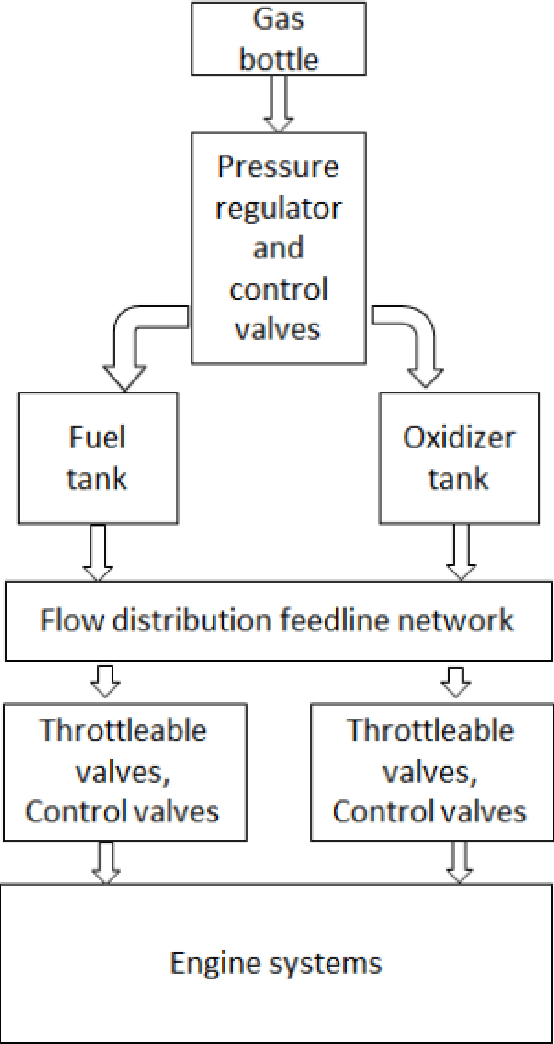
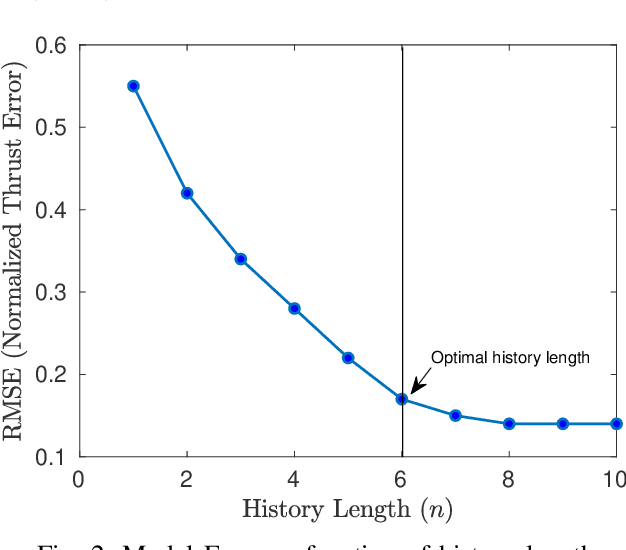
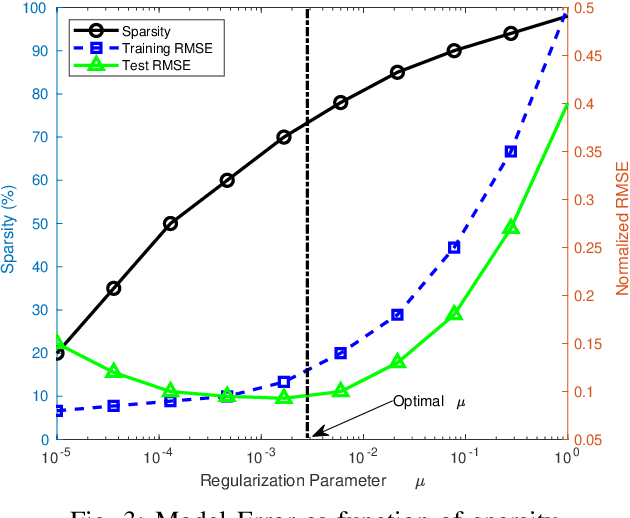
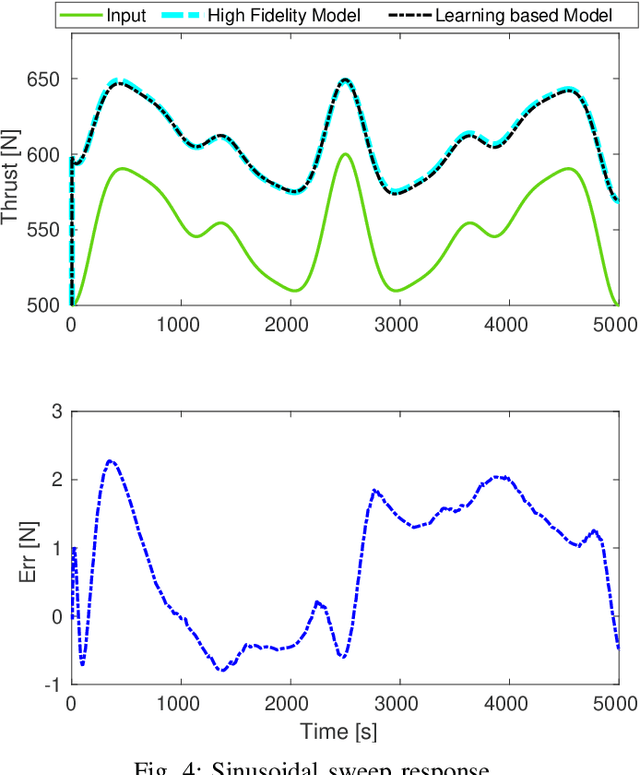
Typical lunar landing missions involve multiple phases of braking to achieve soft-landing. The propulsion system configuration for these missions consists of throttleable engines. This configuration involves complex interconnected hydraulic, mechanical, and pneumatic components each exhibiting non-linear dynamic characteristics. Accurate modelling of the propulsion dynamics is essential for analyzing closed-loop guidance and control schemes during descent. This paper presents a learning-based system identification approach for modelling of throttleable engine dynamics using data obtained from high-fidelity propulsion model. The developed model is validated with experimental results and used for closed-loop guidance and control simulations.
ProtoSiTex: Learning Semi-Interpretable Prototypes for Multi-label Text Classification
Oct 14, 2025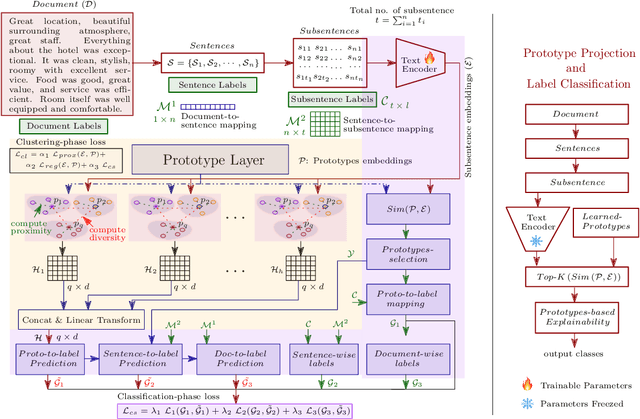
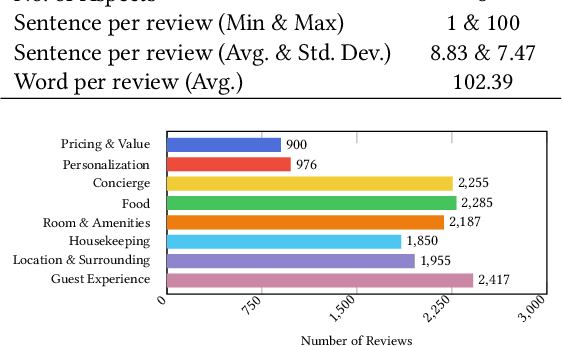
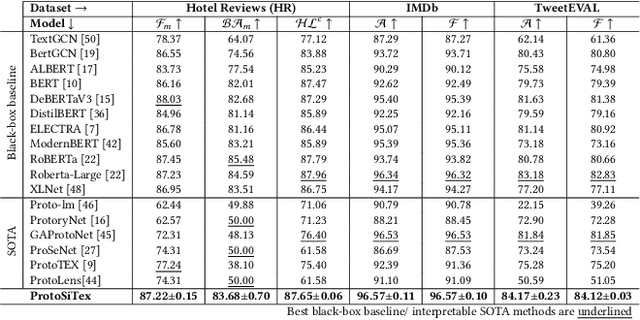
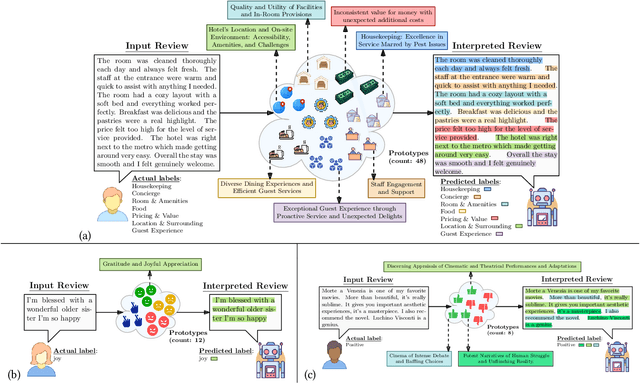
The surge in user-generated reviews has amplified the need for interpretable models that can provide fine-grained insights. Existing prototype-based models offer intuitive explanations but typically operate at coarse granularity (sentence or document level) and fail to address the multi-label nature of real-world text classification. We propose ProtoSiTex, a semi-interpretable framework designed for fine-grained multi-label text classification. ProtoSiTex employs a dual-phase alternating training strategy: an unsupervised prototype discovery phase that learns semantically coherent and diverse prototypes, and a supervised classification phase that maps these prototypes to class labels. A hierarchical loss function enforces consistency across sub-sentence, sentence, and document levels, enhancing interpretability and alignment. Unlike prior approaches, ProtoSiTex captures overlapping and conflicting semantics using adaptive prototypes and multi-head attention. We also introduce a benchmark dataset of hotel reviews annotated at the sub-sentence level with multiple labels. Experiments on this dataset and two public benchmarks (binary and multi-class) show that ProtoSiTex achieves state-of-the-art performance while delivering faithful, human-aligned explanations, establishing it as a robust solution for semi-interpretable multi-label text classification.