 Add to Chrome
 Add to Firefox
 Add to Edge
Real-Time Retargeting Using Controllability Boundary for Chandrayaan-3 Lunar Landing
May 28, 2026
This paper presents the real-time retargeting guidance policy developed for the Chandrayaan-3 lunar landing mission. The baseline guidance generates approximate fuel-optimal descent trajectories, while a high-level policy enables safe retargeting to alternate sites when the nominal site becomes infeasible. The retargeting strategy leverages a convex representation of the controllability boundary, allowing rapid feasibility checks and real-time target updates. To the best of the authors knowledge, this represents the first application of a data-driven retargeting framework in an operational lunar landing mission. Pre-flight simulations and Chandrayaan-3 flight results validate the effectiveness of the proposed approach.

Decoupled Thrust-Axis Attitude Control Using Quaternions for Chandrayaan-3 Lunar Landing Mission
May 28, 2026Chandrayaan-3 mission achieved a historic milestone with its successful soft landing near the lunar south pole, highlighting the critical role of the navigation, guidance, and control (NGC) system. Navigation provided vehicle state estimates relative to the Moon center, while a polynomial based guidance scheme computed the required acceleration profile to meet terminal landing conditions. This acceleration demand was translated into total thrust magnitude and attitude commands generation. Attitude command generation involved aligning the thrust axis with the required acceleration vector and constraining rotation about the thrust axis, typically governed by mission-specific requirements. Although quaternion-based control laws are preferred for their singularity-free representation, they inherently couple all three rotational axes. This coupling can lead to undesirable interactions between guidance and control, especially during large rotations about the thrust axis, due to the quaternion shortest-path property. This paper proposes a novel quaternion-based decoupling method that enables independent thrust-axis control, mitigating guidance-control interaction and ensuring proper attitude commands generation for lander attitude control.
Learning based Modelling of Throttleable Engine Dynamics for Lunar Landing Mission
Nov 05, 2025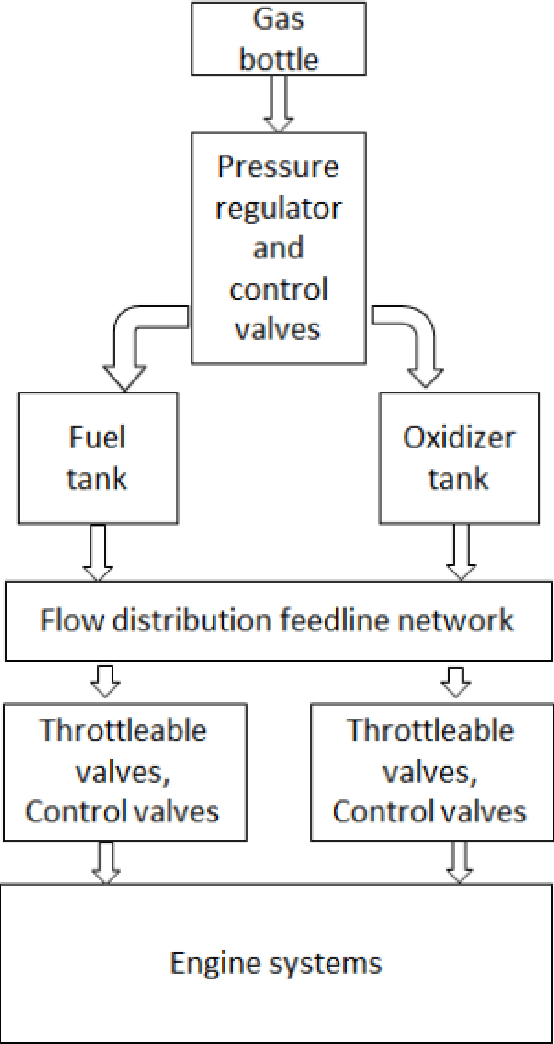
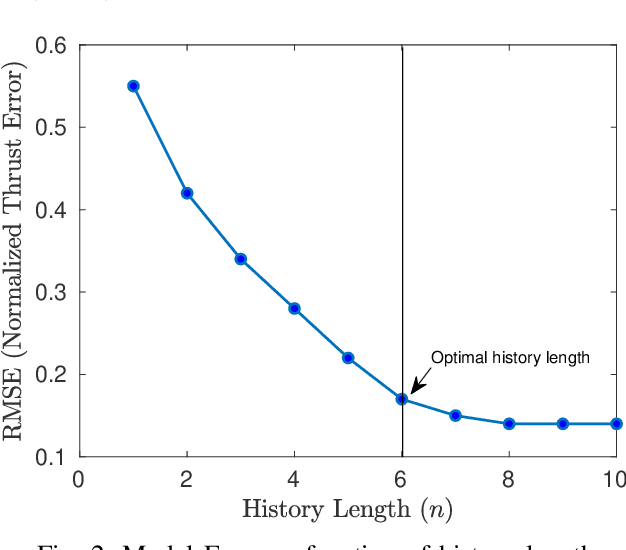
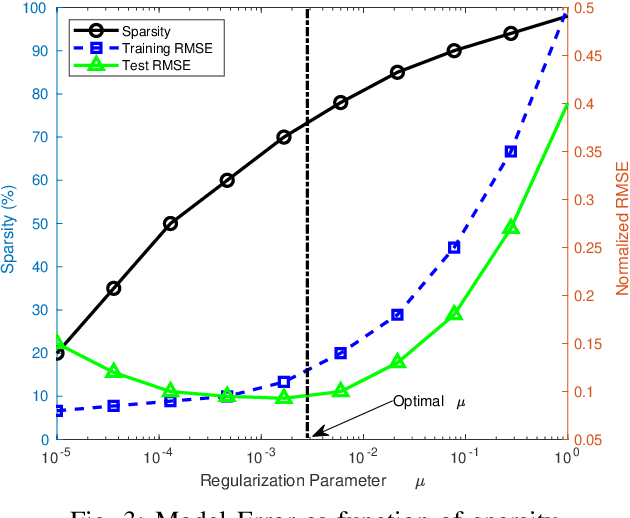
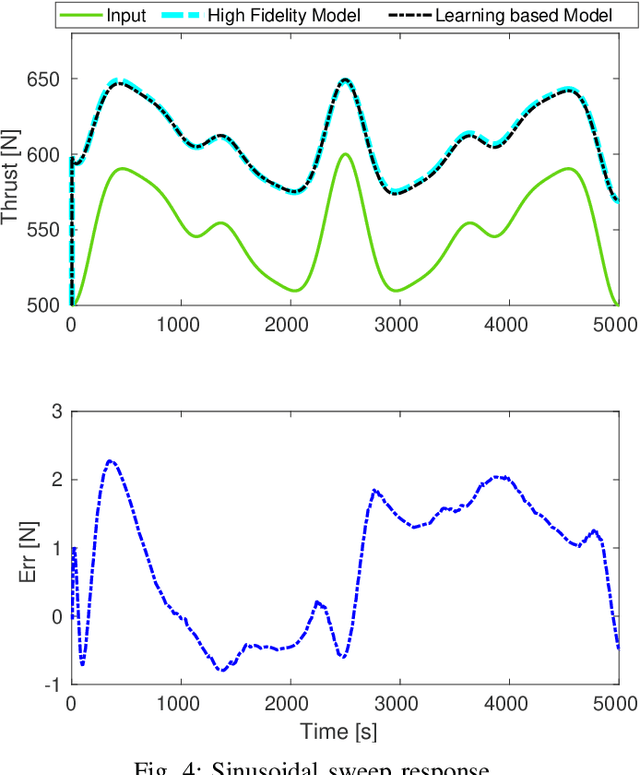
Typical lunar landing missions involve multiple phases of braking to achieve soft-landing. The propulsion system configuration for these missions consists of throttleable engines. This configuration involves complex interconnected hydraulic, mechanical, and pneumatic components each exhibiting non-linear dynamic characteristics. Accurate modelling of the propulsion dynamics is essential for analyzing closed-loop guidance and control schemes during descent. This paper presents a learning-based system identification approach for modelling of throttleable engine dynamics using data obtained from high-fidelity propulsion model. The developed model is validated with experimental results and used for closed-loop guidance and control simulations.