 Add to Chrome
 Add to Firefox
 Add to Edge
Modality Agreement- and Conflict-Aware Prototype Hypergraph Learning for Multimodal Intent Understanding
Aug 04, 2026
Multimodal intent recognition requires understanding not only what textual, acoustic, and visual signals share, but also how they disagree. Such disagreement is frequently class-informative; for example, lexical positivity accompanied by incongruent vocal or facial behavior may indicate sarcasm or taunting, yet most fusion methods either encourage modality alignment or treat inconsistency as uncertainty to be suppressed. We propose MACH (Modality Agreement- and Conflict-aware prototype Hypergraph), a hierarchical prototype-hypergraph framework that represents multimodal agreement and conflict as distinct, recurring relational structures. MACH progressively composes unimodal representations into bimodal and trimodal abstractions. At each applicable level, modality-composition anchors activate sparse agreement prototype hypergraphs that capture reusable consensus patterns, while a separate conflict pathway maps cross-modal discrepancies to dedicated conflict prototype hypergraphs. The two pathways are combined through a feature-wise, sample-adaptive arbitration mechanism, enabling the model to preserve informative disagreement while suppressing incidental modality noise. A progressive optimization strategy stabilizes the interdependent hierarchy before joint agreement-conflict learning. Experiments on benchmark datasets demonstrate the effectiveness of the proposed formulation, while component and robustness analyses validate the distinct roles of hierarchical composition, prototype-mediated semantic refinement, and agreement-conflict arbitration.

Adaptive Modality Reliability Diagnosis and Restoration for Robust Multimodal Intent Recognition
Aug 04, 2026Multimodal intent recognition combines linguistic, acoustic, and visual evidence, but individual modalities may be noisy, missing, semantically conflicting, or disproportionately dominant. Existing methods typically infer modality importance implicitly and either reweight or suppress unreliable inputs, without determining whether a degraded modality can be repaired and subsequently trusted. We propose PRIME (Precision-weighted Reliability Inference and Modality rEstoration), a closed-loop reliability guided framework that jointly diagnoses, restores, and reassesses modality quality at the sample level. PRIME represents the weakness of each modality through a contextual log-variance estimated from complementary diagnostic evidence, including predictive confidence, epistemic disagreement, cross-modal consensus, and feature degeneracy. Because modality-reliability annotations are unavailable, the estimator is explicitly trained using controlled modality corruption with known degradation severity, together with a heteroscedastic uncertainty objective. Rather than directly discarding an unreliable modality, PRIME uses its estimated weakness to control a prototype-conditioned variational restoration module that reconstructs the degraded representation from complementary modalities. Crucially, reliability is re-estimated after restoration, allowing the model to determine whether the repaired representation has become sufficiently trustworthy to contribute to prediction. The resulting post-restoration precisions are used for inverse-variance multimodal fusion. Experiments on multimodal intent-recognition benchmarks show that PRIME maintains competitive clean-data performance while improving robustness under missing, noisy, conflicting, and modality-imbalanced conditions.
Deep Learning-Based Sign Language Recognition from Videos and Cross-Lingual Translation to Indian Vernaculars
Jun 21, 2026Sign language is a primary mode of communication for the global deaf and hard-of-hearing community, yet automated tools that recognize sign gestures from video and translate them into natural language text remain limited, particularly for low-resource Indian languages. We present a two-stage deep learning pipeline that (i) classifies short sign language video clips into English word labels using a fine-tuned VideoMAE video transformer, and (ii) translates the predicted English label into Hindi, Telugu, and Bengali using Meta AI's No Language Left Behind (NLLB-200) multilingual translation model. The classification model is fine-tuned on a 13-class subset of the AI4Bharat Indian Sign Language video corpus from IIT Madras, processing 16-frame clips sampled uniformly from each video at 224 x 224 resolution. Under a small-scale academic setting (13 classes, 197 clips, 80-20 split), the fine-tuned model reaches 99% training accuracy and 78% validation accuracy after 15 epochs. We provide a per-class breakdown via a confusion matrix and classification report, identify the dominant failure modes (confusable adjective pairs such as ugly, deaf, blind, hat, and dress), and describe a Streamlit-based inference demo that takes a user-uploaded video and returns the predicted English label alongside its Hindi, Telugu, and Bengali translations. We discuss the scope, limitations (small label set, isolated-word rather than continuous signing, single-signer style sensitivity, ambiguity of single-word machine translation), and directions for future work, including expanding to sentence-level generation and a larger vocabulary. Code is released to support reproducibility.
SAiW: Source-Attributable Invisible Watermarking for Proactive Deepfake Defense
Mar 24, 2026Deepfakes generated by modern generative models pose a serious threat to information integrity, digital identity, and public trust. Existing detection methods are largely reactive, attempting to identify manipulations after they occur and often failing to generalize across evolving generation techniques. This motivates the need for proactive mechanisms that secure media authenticity at the time of creation. In this work, we introduce SAiW, a Source-Attributed Invisible watermarking Framework for proactive deepfake defense and media provenance verification. Unlike conventional watermarking methods that treat watermark payloads as generic signals, SAiW formulates watermark embedding as a source-conditioned representation learning problem, where watermark identity encodes the originating source and modulates the embedding process to produce discriminative and traceable signatures. The framework integrates feature-wise linear modulation to inject source identity into the embedding network, enabling scalable multi-source watermark generation. A perceptual guidance module derived from human visual system priors ensures that watermark perturbations remain visually imperceptible while maintaining robustness. In addition, a dual-purpose forensic decoder simultaneously reconstructs the embedded watermark and performs source attribution, providing both automated verification and interpretable forensic evidence. Extensive experiments across multiple deepfake datasets demonstrate that SAiW achieves high perceptual quality while maintaining strong robustness against compression, filtering, noise, geometric transformations, and adversarial perturbations. By binding digital media to its origin through invisible yet verifiable markers, SAiW enables reliable authentication and source attribution, providing a scalable foundation for proactive deepfake defense and trustworthy media provenance.
Agentic Multi-Persona Framework for Evidence-Aware Fake News Detection
Dec 24, 2025The rapid proliferation of online misinformation poses significant risks to public trust, policy, and safety, necessitating reliable automated fake news detection. Existing methods often struggle with multimodal content, domain generalization, and explainability. We propose AMPEND-LS, an agentic multi-persona evidence-grounded framework with LLM-SLM synergy for multimodal fake news detection. AMPEND-LS integrates textual, visual, and contextual signals through a structured reasoning pipeline powered by LLMs, augmented with reverse image search, knowledge graph paths, and persuasion strategy analysis. To improve reliability, we introduce a credibility fusion mechanism combining semantic similarity, domain trustworthiness, and temporal context, and a complementary SLM classifier to mitigate LLM uncertainty and hallucinations. Extensive experiments across three benchmark datasets demonstrate that AMPEND-LS consistently outperformed state-of-the-art baselines in accuracy, F1 score, and robustness. Qualitative case studies further highlight its transparent reasoning and resilience against evolving misinformation. This work advances the development of adaptive, explainable, and evidence-aware systems for safeguarding online information integrity.
Blurb-Refined Inference from Crowdsourced Book Reviews using Hierarchical Genre Mining with Dual-Path Graph Convolutions
Dec 24, 2025Accurate book genre classification is fundamental to digital library organization, content discovery, and personalized recommendation. Existing approaches typically model genre prediction as a flat, single-label task, ignoring hierarchical genre structure and relying heavily on noisy, subjective user reviews, which often degrade classification reliability. We propose HiGeMine, a two-phase hierarchical genre mining framework that robustly integrates user reviews with authoritative book blurbs. In the first phase, HiGeMine employs a zero-shot semantic alignment strategy to filter reviews, retaining only those semantically consistent with the corresponding blurb, thereby mitigating noise, bias, and irrelevance. In the second phase, we introduce a dual-path, two-level graph-based classification architecture: a coarse-grained Level-1 binary classifier distinguishes fiction from non-fiction, followed by Level-2 multi-label classifiers for fine-grained genre prediction. Inter-genre dependencies are explicitly modeled using a label co-occurrence graph, while contextual representations are derived from pretrained language models applied to the filtered textual content. To facilitate systematic evaluation, we curate a new hierarchical book genre dataset. Extensive experiments demonstrate that HiGeMine consistently outperformed strong baselines across hierarchical genre classification tasks. The proposed framework offers a principled and effective solution for leveraging both structured and unstructured textual data in hierarchical book genre analysis.
ProtoSiTex: Learning Semi-Interpretable Prototypes for Multi-label Text Classification
Oct 14, 2025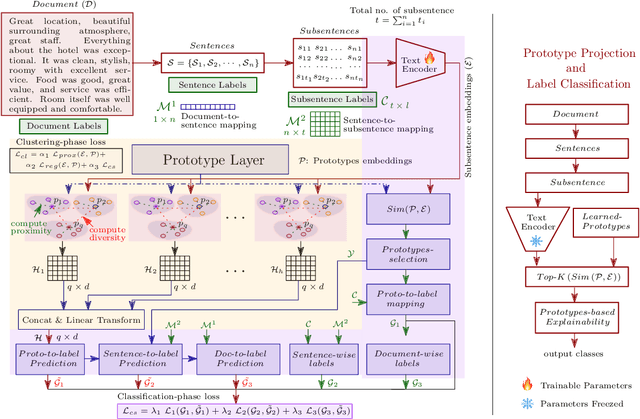
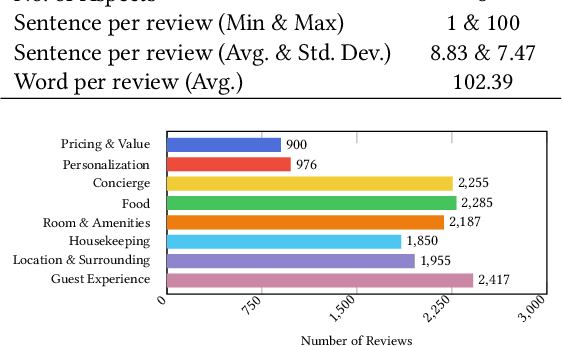
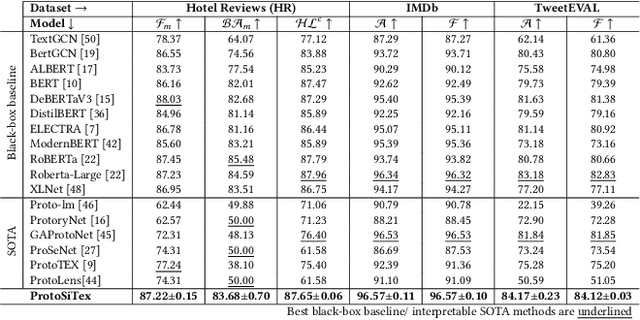
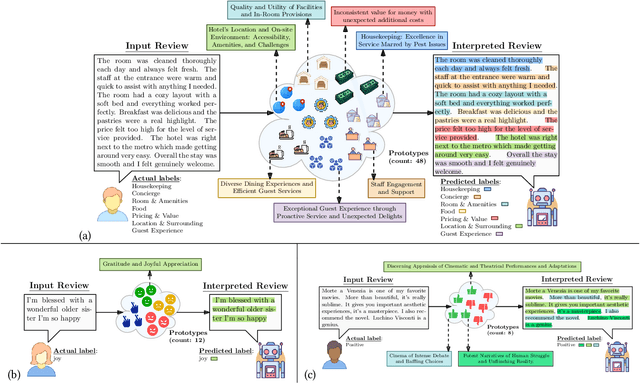
The surge in user-generated reviews has amplified the need for interpretable models that can provide fine-grained insights. Existing prototype-based models offer intuitive explanations but typically operate at coarse granularity (sentence or document level) and fail to address the multi-label nature of real-world text classification. We propose ProtoSiTex, a semi-interpretable framework designed for fine-grained multi-label text classification. ProtoSiTex employs a dual-phase alternating training strategy: an unsupervised prototype discovery phase that learns semantically coherent and diverse prototypes, and a supervised classification phase that maps these prototypes to class labels. A hierarchical loss function enforces consistency across sub-sentence, sentence, and document levels, enhancing interpretability and alignment. Unlike prior approaches, ProtoSiTex captures overlapping and conflicting semantics using adaptive prototypes and multi-head attention. We also introduce a benchmark dataset of hotel reviews annotated at the sub-sentence level with multiple labels. Experiments on this dataset and two public benchmarks (binary and multi-class) show that ProtoSiTex achieves state-of-the-art performance while delivering faithful, human-aligned explanations, establishing it as a robust solution for semi-interpretable multi-label text classification.
An Adaptive Data-Resilient Multi-Modal Framework for Hierarchical Multi-Label Book Genre Identification
May 05, 2025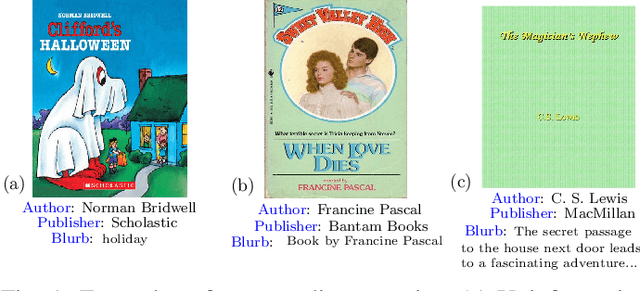
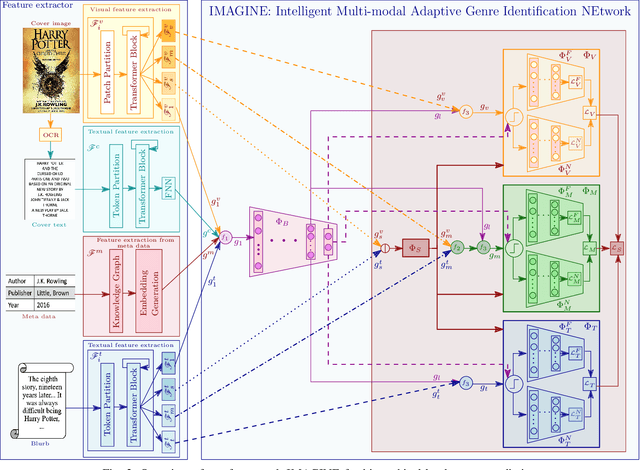
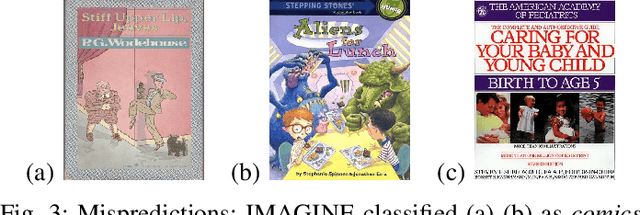
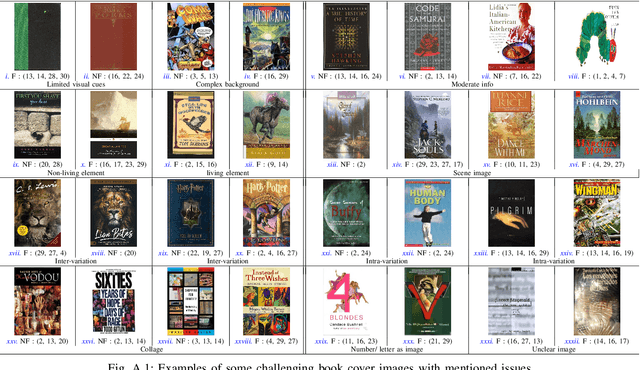
Identifying the finer details of a book's genres enhances user experience by enabling efficient book discovery and personalized recommendations, ultimately improving reader engagement and satisfaction. It also provides valuable insights into market trends and consumer preferences, allowing publishers and marketers to make data-driven decisions regarding book production and marketing strategies. While traditional book genre classification methods primarily rely on review data or textual analysis, incorporating additional modalities, such as book covers, blurbs, and metadata, can offer richer context and improve prediction accuracy. However, the presence of incomplete or noisy information across these modalities presents a significant challenge. This paper introduces IMAGINE (Intelligent Multi-modal Adaptive Genre Identification NEtwork), a framework designed to address these complexities. IMAGINE extracts robust feature representations from multiple modalities and dynamically selects the most informative sources based on data availability. It employs a hierarchical classification strategy to capture genre relationships and remains adaptable to varying input conditions. Additionally, we curate a hierarchical genre classification dataset that structures genres into a well-defined taxonomy, accommodating the diverse nature of literary works. IMAGINE integrates information from multiple sources and assigns multiple genre labels to each book, ensuring a more comprehensive classification. A key feature of our framework is its resilience to incomplete data, enabling accurate predictions even when certain modalities, such as text, images, or metadata, are missing or incomplete. Experimental results show that IMAGINE outperformed existing baselines in genre classification accuracy, particularly in scenarios with insufficient modality-specific data.
Reinforcing Competitive Multi-Agents for Playing So Long Sucker
Nov 17, 2024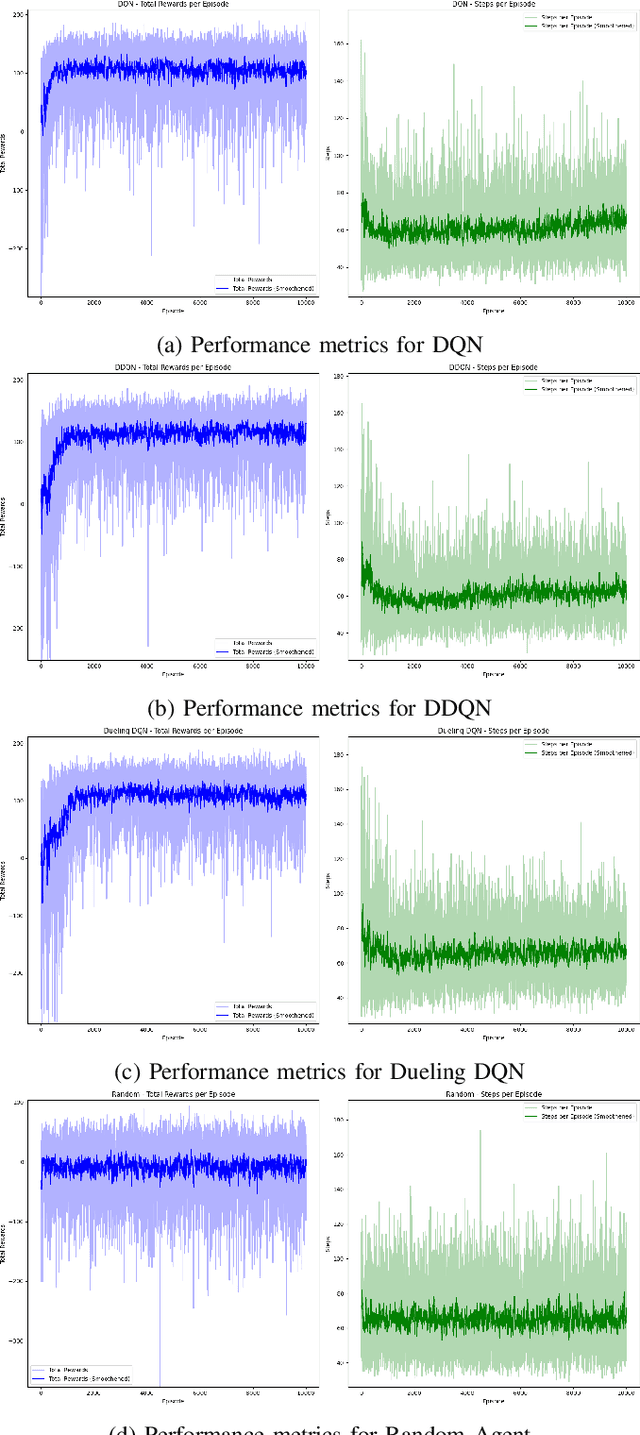
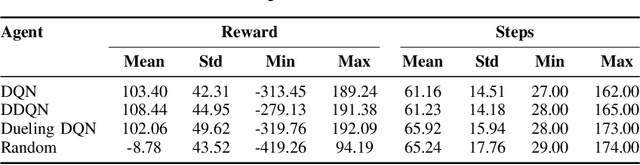
This paper examines the use of classical deep reinforcement learning (DRL) algorithms, DQN, DDQN, and Dueling DQN, in the strategy game So Long Sucker (SLS), a diplomacy-driven game defined by coalition-building and strategic betrayal. SLS poses unique challenges due to its blend of cooperative and adversarial dynamics, making it an ideal platform for studying multi-agent learning and game theory. The study's primary goal is to teach autonomous agents the game's rules and strategies using classical DRL methods. To support this effort, the authors developed a novel, publicly available implementation of SLS, featuring a graphical user interface (GUI) and benchmarking tools for DRL algorithms. Experimental results reveal that while considered basic by modern DRL standards, DQN, DDQN, and Dueling DQN agents achieved roughly 50% of the maximum possible game reward. This suggests a baseline understanding of the game's mechanics, with agents favoring legal moves over illegal ones. However, a significant limitation was the extensive training required, around 2000 games, for agents to reach peak performance, compared to human players who grasp the game within a few rounds. Even after prolonged training, agents occasionally made illegal moves, highlighting both the potential and limitations of these classical DRL methods in semi-complex, socially driven games. The findings establish a foundational benchmark for training agents in SLS and similar negotiation-based environments while underscoring the need for advanced or hybrid DRL approaches to improve learning efficiency and adaptability. Future research could incorporate game-theoretic strategies to enhance agent decision-making in dynamic multi-agent contexts.
Anomaly Resilient Temporal QoS Prediction using Hypergraph Convoluted Transformer Network
Oct 23, 2024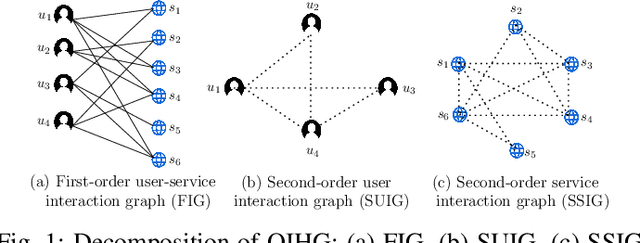
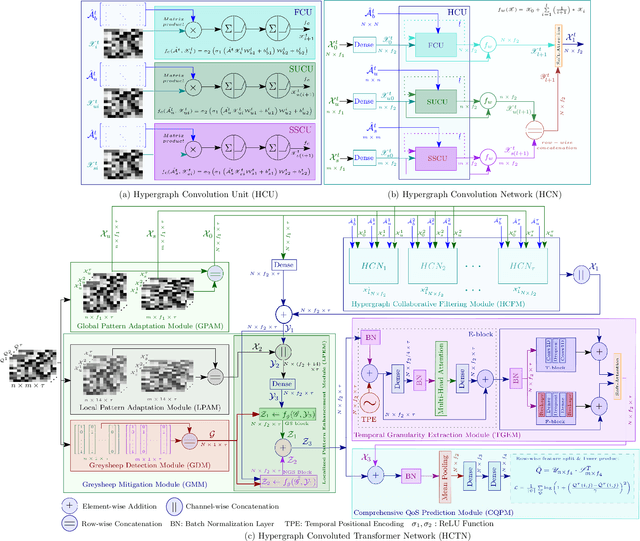
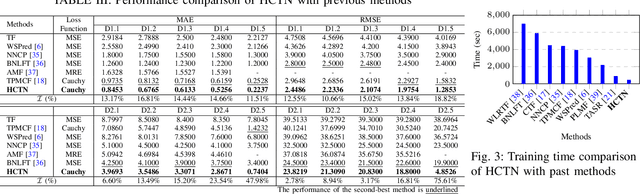
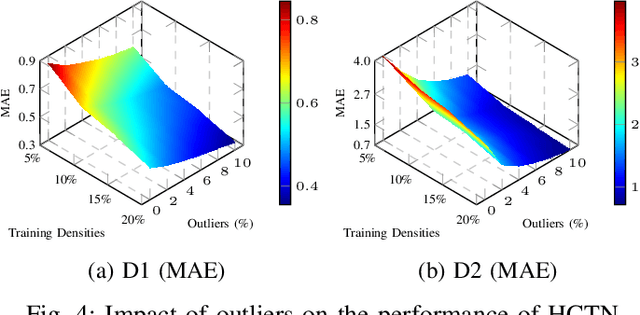
Quality-of-Service (QoS) prediction is a critical task in the service lifecycle, enabling precise and adaptive service recommendations by anticipating performance variations over time in response to evolving network uncertainties and user preferences. However, contemporary QoS prediction methods frequently encounter data sparsity and cold-start issues, which hinder accurate QoS predictions and limit the ability to capture diverse user preferences. Additionally, these methods often assume QoS data reliability, neglecting potential credibility issues such as outliers and the presence of greysheep users and services with atypical invocation patterns. Furthermore, traditional approaches fail to leverage diverse features, including domain-specific knowledge and complex higher-order patterns, essential for accurate QoS predictions. In this paper, we introduce a real-time, trust-aware framework for temporal QoS prediction to address the aforementioned challenges, featuring an end-to-end deep architecture called the Hypergraph Convoluted Transformer Network (HCTN). HCTN combines a hypergraph structure with graph convolution over hyper-edges to effectively address high-sparsity issues by capturing complex, high-order correlations. Complementing this, the transformer network utilizes multi-head attention along with parallel 1D convolutional layers and fully connected dense blocks to capture both fine-grained and coarse-grained dynamic patterns. Additionally, our approach includes a sparsity-resilient solution for detecting greysheep users and services, incorporating their unique characteristics to improve prediction accuracy. Trained with a robust loss function resistant to outliers, HCTN demonstrated state-of-the-art performance on the large-scale WSDREAM-2 datasets for response time and throughput.