 Add to Chrome
 Add to Firefox
 Add to Edge
Enhancing Creativity in 3D Generative Design via a TRIZ-Inspired Text-to-CAD Framework
Jun 19, 2026
Recent advances in large language models (LLMs) have demonstrated significant potential in supporting engineering design tasks, including computer-aided design (CAD) automation. However, most existing LLM-based 3D CAD generation approaches primarily focus on geometric precision and instruction-following performance, often overlooking the fundamental aspect of creative design exploration. This study presents a TRIZ-inspired text-to-CAD framework that leverages LLMs to generate high-quality, editable CAD models while systematically exploring creative design alternatives. The framework integrates the Theory of Inventive Problem Solving (TRIZ)-embedding deep human insights from extensive patent records-into LLM prompting strategies, enabling autonomous generation of innovative CAD variants that address technical contradictions. Through a comprehensive three-stage pipeline of design generation, enhancement, and optimization, the framework produces structurally diverse CAD models from well-crafted prompts. The present study implements and evaluates the first two stages, while positioning the design optimization stage as future work. A product design case study (chair) demonstrates that the TRIZ-inspired text-to-CAD framework generates multiple creative design alternatives by systematically applying TRIZ inventive principles such as segmentation, anti-weight, dynamics, and composite materials, achieving 4.0-14.7% mass reduction across all enhanced designs while maintaining structural integrity. The key findings suggest that integrating systematic innovation methodologies with LLM-based 3D CAD generation bridges the gap between precision-focused synthesis and creativity-focused exploration, advancing toward autonomous design systems where AI makes design decisions independently, supporting human decision-making in human-AI collaborative design for engineering applications.

DeepJEB++: Foundation Model-Driven Large-Scale 3D Engineering Dataset via 2D Latent Space Augmentation
Jun 11, 2026Data-driven engineering design is constrained by the lack of large-scale 3D datasets that pair geometry with physics-based performance labels. In particular, existing 3D data augmentation techniques have limitations in preserving subtle and diverse geometric variations, and it remains difficult to automate the subsequent simulation-labeling process, where boundary conditions vary depending on the generated geometry. We present DeepJEB++, a foundation-model-driven data-augmentation framework that expands a small seed set of jet engine brackets into a large, simulation-labeled 3D dataset under constrained resources. Our key idea is to augment in the data-rich 2D latent space, then transfer to 3D. In Stage 1, we fine-tune a pretrained 2D latent diffusion model on multi-view renders and synthesize novel views by latent interpolation, retaining manufacturable designs through a vision-language-model (VLM) quality filter. In Stage 2, the validated images are lifted to 3D meshes by a domain-adapted generative foundation model. In Stage 3, an automated pipeline recognizes the load and bolt interfaces on each mesh and assigns finite-element labels -- mass, stress, and displacement -- without manual intervention. We assess augmentation quality along three intrinsic axes: manufacturability, label fidelity against the SimJEB ground truth, and distributional consistency. Starting from fewer than 400 seed designs, DeepJEB++ yields 15,360 simulation-labeled 3D brackets -- a 40x expansion -- using a single GPU per stage. The dataset will be made publicly available to support reproducible engineering-AI research.
AI-powered Digital Twin of the Ocean: Reliable Uncertainty Quantification for Real-time Wave Height Prediction with Deep Ensemble
Dec 07, 2024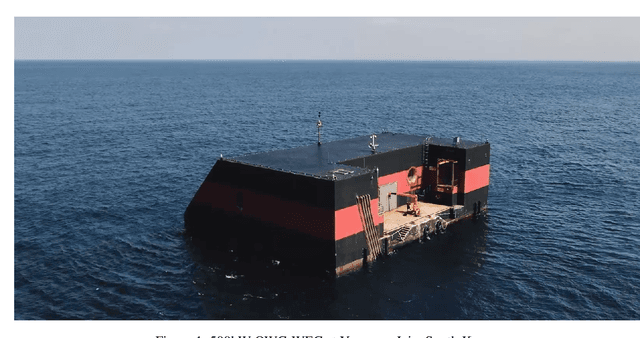

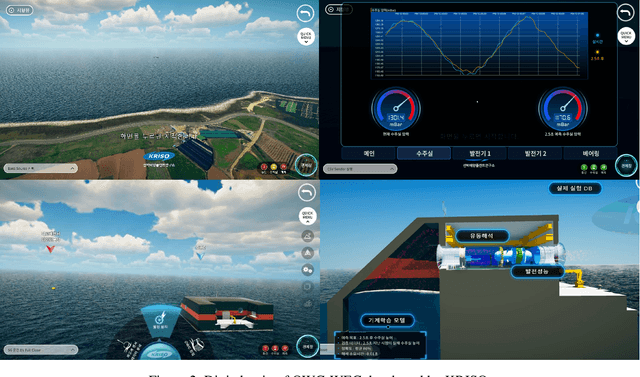
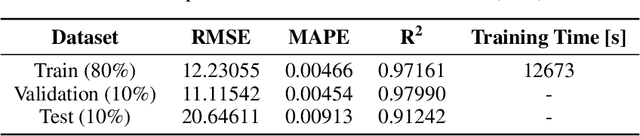
Environmental pollution and the depletion of fossil fuels have prompted the need for eco-friendly power generation methods based on renewable energy. However, renewable energy sources often face challenges in providing stable power due to low energy density and non-stationary. Wave energy converters (WECs), in particular, need reliable real-time wave height prediction to address these issues caused by irregular wave patterns, which can lead to the inefficient and unstable operation of WECs. In this study, we propose an AI-powered reliable real-time wave height prediction model, aiming both high predictive accuracy and reliable uncertainty quantification (UQ). The proposed architecture LSTM-DE, integrates long short-term memory (LSTM) networks for temporal prediction with deep ensemble (DE) for robust UQ, achieving accuracy and reliability in wave height prediction. To further enhance the reliability of the predictive models, uncertainty calibration is applied, which has proven to significantly improve the quality of the quantified uncertainty. Based on the real operational data obtained from an oscillating water column-wave energy converter (OWC-WEC) system in Jeju, South Korea, we demonstrate that the proposed LSTM-DE model architecture achieves notable predictive accuracy (R2 > 0.9) while increasing the uncertainty quality by over 50% through simple calibration technique. Furthermore, a comprehensive parametric study is conducted to explore the effects of key model hyperparameters, offering valuable guidelines for diverse operational scenarios, characterized by differences in wavelength, amplitude, and period. The findings show that the proposed method provides robust and reliable real-time wave height predictions, facilitating digital twin of the ocean.