 Add to Chrome
 Add to Firefox
 Add to Edge
SBCO: Self-Supervised, Verifier-Grounded Harness Optimization For Planning Agents
Aug 10, 2026
Self-improving agents seek to reduce the human engineering effort behind AI systems by enabling them to evolve and self-improve their performance over time. Recently, methods like the Darwin Gödel Machine and the Huxley Gödel Machine have been proposed which enable open-ended, recursive self-improvement through self-reference where a coding agent edits its own code. Such self-referential self-improvement methods require that the competence required to perform the task coincides or aligns well with the competence required for self-modification which is the case for coding tasks. For domains or tasks, which do not satisfy the alignment needed, self-referential self-improvement is not available. In such cases, it is possible to adapt the above algorithms to other tasks by removing the self-referential aspect or introducing explicit self-modification of a meta-agent -- both computationally expensive, relying on population or self-modification search over many candidate agents. For planning tasks with explicit constraints, we propose a far cheaper alternative. We introduce SBCO (Self-supervised Block Coordinate Optimizer), a verifier-grounded harness optimizer in the same closed-loop, improve-from-experience family as the Gödel-machine methods, but self-supervised rather than self-referential. Given an agentic harness, SBCO learns a decomposed bank of verifiers and a harness policy via approximate block coordinate ascent, improving the agent's outputs from its own graded feedback---with a fixed meta-agent and no human labels. Across two domains SBCO matches or exceeds a customized self-modifying baseline while using 4-5.5 times less compute budget.

PROGRESS: Coverage-guided RL to Train Search-augmented LLM Agent
Aug 02, 2026Existing search-augmented LLM agents are trained using Reinforcement Learning to boost its reasoning capabilities. However, these approaches primarily rely on outcome-level rewards, which provide little supervision over search behavior and overlook agent's ability to decompose complex queries properly. To mitigate this issue, we propose PROGRESS which utilizes teacher-guided coverage reward to explicitly shape decomposed query generation of the policy model. During training, frozen teacher models are used to decompose complex queries into essential search queries. These essential search queries are utilized to guide the search behavior of the policy model. Integrated into an R1-style training framework, our approach provides lightweight guidance over query decomposition decisions without dense process-level supervision. Experiments show that coverage-guided RL improves overall task performance, highlighting the importance of explicitly supervising search strategies in agentic LLMs.
Search-GRT: Guided Retrieval Training of Search Agents to Optimize for Complex Question Answering
Aug 02, 2026The effective use of search engines by large language models (LLMs) remains a significant challenge, particularly in complex, multi-hop question-answering (MHQA) tasks. These tasks require the model to decompose questions into subqueries, retrieve relevant information, and synthesize answers from multiple sources, often leading to cascading errors due to poor retrieval in early stages. Reinforcement learning (RL) has shown promise in improving LLMs' search capabilities, but it often suffers from sparse rewards during training, hindering the model's ability to learn effectively. To address these challenges, we introduce Guided Retrieval Training (GRT), a novel method that improves the performance of a search agent by restricting the retrieval process during RL training using ground truth information. By focusing on a curated set of relevant documents, GRT provides the model with a stronger learning signal, mitigating the problem of sparse rewards and improving its ability to generate accurate subqueries and synthesize correct answers. Our experimental results demonstrate that GRT achieves consistent performance improvements over existing methods, such as Search-R1, across a wide range of question-answering (QA) tasks. Notably, GRT excels in MHQA tasks, achieving over 40% improvements in performance. Additionally, GRT enhances training efficiency by achieving better QA performance with fewer training steps.
A Hierarchical Framework for Graph Structure Learning in Histopathology Image Classification
Jul 28, 2026The spatial organization of cells and tissues provides important diagnostic cues in histopathology images. Although graph-based approaches can model these relationships, many rely on fixed or heuristic graph structures that may not accurately represent tissue connectivity. In this work, we propose $G_2^*$-Net, an optimized two-level graph learning framework for classifying large-scale histopathology images, such as whole-slide images (WSIs) or large regions of interest (ROIs). Here, $G_2$ denotes the two-level hierarchical graph representation, and the superscript $*$ indicates the optimized image-level graph structure learned from the proposed framework. The method first divides each WSI or large ROI into image patches, constructs cell-level graphs within each patch to capture local tissue architecture, and then represents each patch as a node in a learnable image-level graph. $G_2^*$-Net formulates image-level graph structure learning as a second-order bilevel optimization problem, separating graph connectivity learning from classifier optimization while coupling them through validation-driven feedback. To make this formulation computationally practical, we adopt a DARTS-inspired one-step unrolled approximation for efficient hypergradient estimation. Experimental validation on three distinct histopathology datasets demonstrates the effectiveness of our proposed method.
TRUSTMEM: Learning Trustworthy Memory Consolidation for LLM Agents with Long-Term Memory
Jun 23, 2026Large language model (LLM) agents rely on long-term memory to support extended interactions and personalized assistance beyond finite context windows. Existing memory agents actively update external memory through generated write, revise, and delete operations, but these updates may omit important information, corrupt existing memory, or introduce unsupported hallucinated content. Once stored, such errors become persistent system-state failures that can affect future reasoning and generation. In this paper, we propose TrustMem, a framework designed to improve the trustworthiness of memory consolidation. TrustMem relies on a Memory Transition Verifier to evaluate the transition process of memory updates in terms of coverage, preservation, and faithfulness. It further constructs preference pairs among candidate updates under the same memory state, enabling preference-guided reinforcement learning to directly optimize memory updating behaviors. Extensive experiments demonstrate that TrustMem improves both memory utility and reliability: it achieves state-of-the-art results across MemoryAgentBench, HaluMem, and the Mem-alpha validation set, improves HaluMem memory extraction by 12.14 F1 points, and reduces transition-level omission, corruption, and hallucination by 40.1\%, 79.1\%, and 50.0\%, respectively, compared with the strongest baseline for each error type.
LINGUAL: Language-INtegrated GUidance in Active Learning for Medical Image Segmentation
Nov 18, 2025Although active learning (AL) in segmentation tasks enables experts to annotate selected regions of interest (ROIs) instead of entire images, it remains highly challenging, labor-intensive, and cognitively demanding due to the blurry and ambiguous boundaries commonly observed in medical images. Also, in conventional AL, annotation effort is a function of the ROI- larger regions make the task cognitively easier but incur higher annotation costs, whereas smaller regions demand finer precision and more attention from the expert. In this context, language guidance provides an effective alternative, requiring minimal expert effort while bypassing the cognitively demanding task of precise boundary delineation in segmentation. Towards this goal, we introduce LINGUAL: a framework that receives natural language instructions from an expert, translates them into executable programs through in-context learning, and automatically performs the corresponding sequence of sub-tasks without any human intervention. We demonstrate the effectiveness of LINGUAL in active domain adaptation (ADA) achieving comparable or superior performance to AL baselines while reducing estimated annotation time by approximately 80%.
C2P-GCN: Cell-to-Patch Graph Convolutional Network for Colorectal Cancer Grading
Mar 08, 2024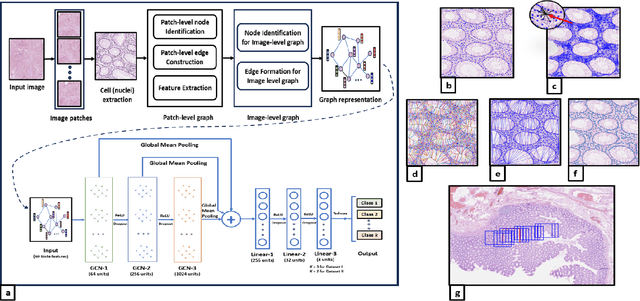
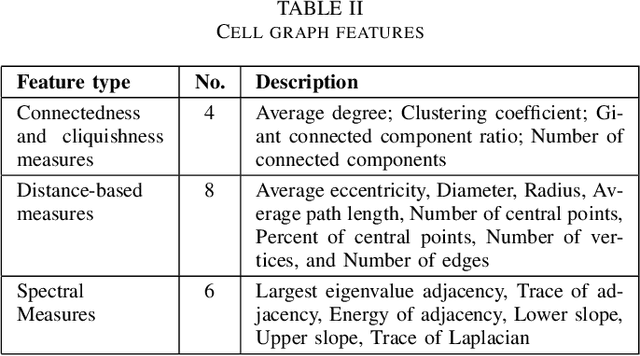
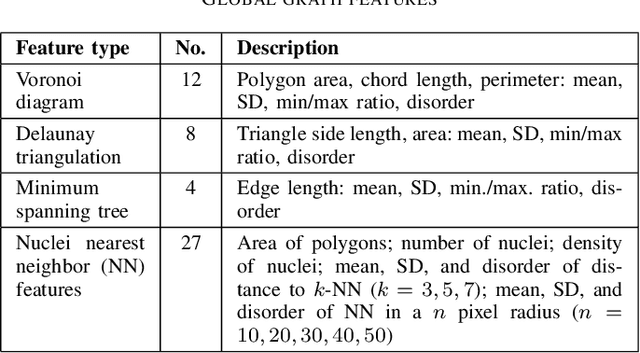
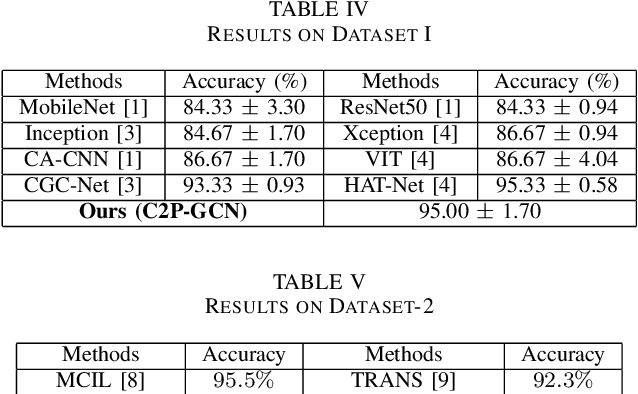
Graph-based learning approaches, due to their ability to encode tissue/organ structure information, are increasingly favored for grading colorectal cancer histology images. Recent graph-based techniques involve dividing whole slide images (WSIs) into smaller or medium-sized patches, and then building graphs on each patch for direct use in training. This method, however, fails to capture the tissue structure information present in an entire WSI and relies on training from a significantly large dataset of image patches. In this paper, we propose a novel cell-to-patch graph convolutional network (C2P-GCN), which is a two-stage graph formation-based approach. In the first stage, it forms a patch-level graph based on the cell organization on each patch of a WSI. In the second stage, it forms an image-level graph based on a similarity measure between patches of a WSI considering each patch as a node of a graph. This graph representation is then fed into a multi-layer GCN-based classification network. Our approach, through its dual-phase graph construction, effectively gathers local structural details from individual patches and establishes a meaningful connection among all patches across a WSI. As C2P-GCN integrates the structural data of an entire WSI into a single graph, it allows our model to work with significantly fewer training data compared to the latest models for colorectal cancer. Experimental validation of C2P-GCN on two distinct colorectal cancer datasets demonstrates the effectiveness of our method.
Towards Granularity-adjusted Pixel-level Semantic Annotation
Dec 05, 2023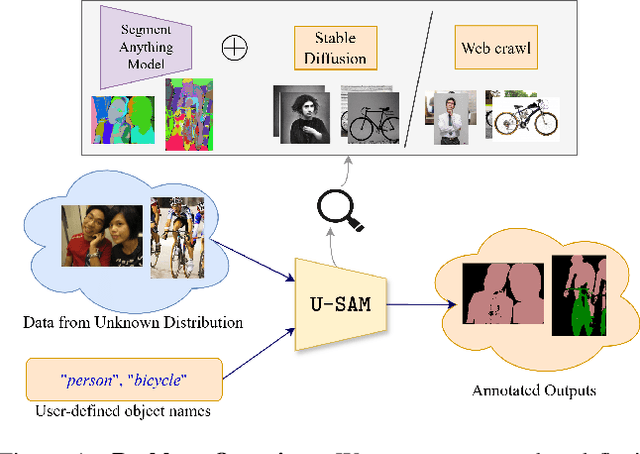
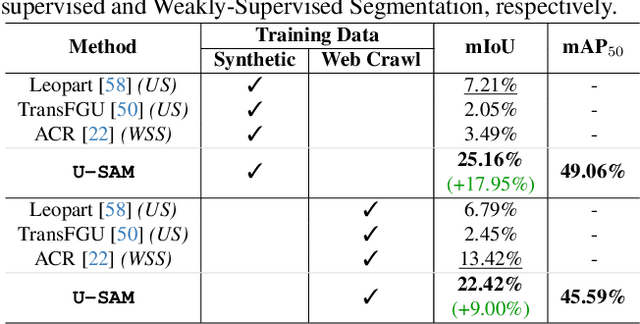
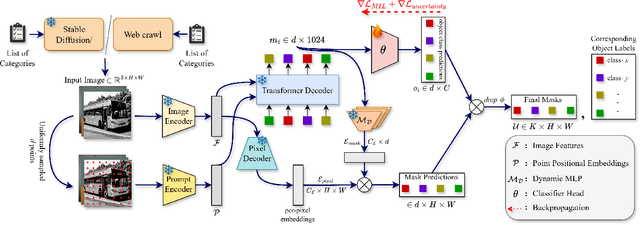
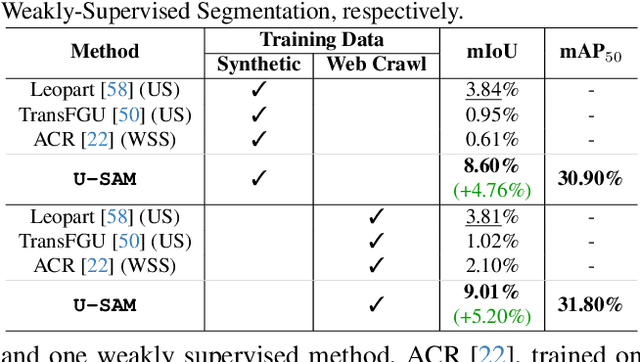
Recent advancements in computer vision predominantly rely on learning-based systems, leveraging annotations as the driving force to develop specialized models. However, annotating pixel-level information, particularly in semantic segmentation, presents a challenging and labor-intensive task, prompting the need for autonomous processes. In this work, we propose GranSAM which distinguishes itself by providing semantic segmentation at the user-defined granularity level on unlabeled data without the need for any manual supervision, offering a unique contribution in the realm of semantic mask annotation method. Specifically, we propose an approach to enable the Segment Anything Model (SAM) with semantic recognition capability to generate pixel-level annotations for images without any manual supervision. For this, we accumulate semantic information from synthetic images generated by the Stable Diffusion model or web crawled images and employ this data to learn a mapping function between SAM mask embeddings and object class labels. As a result, SAM, enabled with granularity-adjusted mask recognition, can be used for pixel-level semantic annotation purposes. We conducted experiments on the PASCAL VOC 2012 and COCO-80 datasets and observed a +17.95% and +5.17% increase in mIoU, respectively, compared to existing state-of-the-art methods when evaluated under our problem setting.
Active Sparse Conversations for Improved Audio-Visual Embodied Navigation
Jun 06, 2023


Efficient navigation towards an audio-goal necessitates an embodied agent to not only possess the ability to use audio-visual cues effectively, but also be equipped to actively (but occasionally) seek human/oracle assistance without sacrificing autonomy, e.g., when it is uncertain of where to navigate towards locating a noisy or sporadic audio goal. To this end, we present CAVEN -- a conversational audio-visual embodied navigation agent that is capable of posing navigation questions to a human/oracle and processing the oracle responses; both in free-form natural language. At the core of CAVEN is a multimodal hierarchical reinforcement learning (RL) setup that is equipped with a high-level policy that is trained to choose from one of three low-level policies (at every step), namely: (i) to navigate using audio-visual cues, or (ii) to frame a question to the oracle and receive a short or detailed response, or (iii) ask generic questions (when unsure of what to ask) and receive instructions. Key to generating the agent's questions is our novel TrajectoryNet that forecasts the most likely next steps to the goal and a QuestionNet that uses these steps to produce a question. All the policies are learned end-to-end via the RL setup, with penalties to enforce sparsity in receiving navigation instructions from the oracle. To evaluate the performance of CAVEN, we present extensive experiments on the SoundSpaces framework for the task of semantic audio-visual navigation. Our results show that CAVEN achieves upto 12% gain in performance over competing methods, especially in localizing new sound sources, even in the presence of auditory distractions.
AVLEN: Audio-Visual-Language Embodied Navigation in 3D Environments
Oct 14, 2022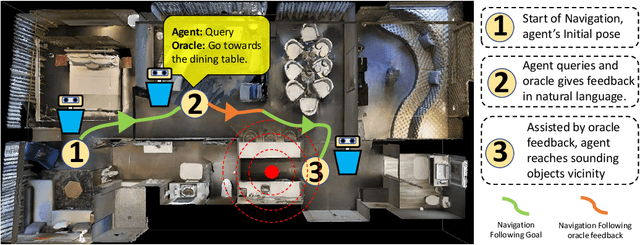
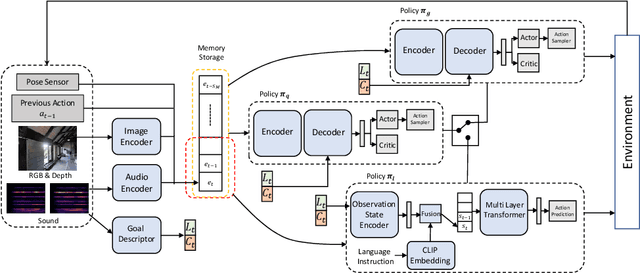
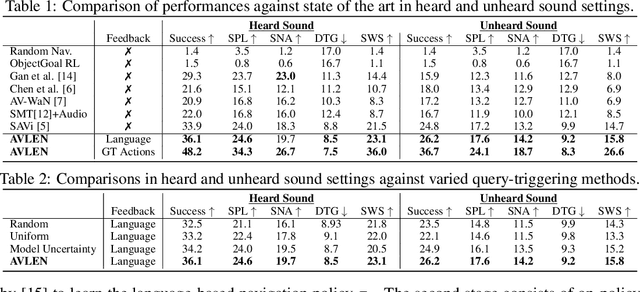

Recent years have seen embodied visual navigation advance in two distinct directions: (i) in equipping the AI agent to follow natural language instructions, and (ii) in making the navigable world multimodal, e.g., audio-visual navigation. However, the real world is not only multimodal, but also often complex, and thus in spite of these advances, agents still need to understand the uncertainty in their actions and seek instructions to navigate. To this end, we present AVLEN~ -- an interactive agent for Audio-Visual-Language Embodied Navigation. Similar to audio-visual navigation tasks, the goal of our embodied agent is to localize an audio event via navigating the 3D visual world; however, the agent may also seek help from a human (oracle), where the assistance is provided in free-form natural language. To realize these abilities, AVLEN uses a multimodal hierarchical reinforcement learning backbone that learns: (a) high-level policies to choose either audio-cues for navigation or to query the oracle, and (b) lower-level policies to select navigation actions based on its audio-visual and language inputs. The policies are trained via rewarding for the success on the navigation task while minimizing the number of queries to the oracle. To empirically evaluate AVLEN, we present experiments on the SoundSpaces framework for semantic audio-visual navigation tasks. Our results show that equipping the agent to ask for help leads to a clear improvement in performance, especially in challenging cases, e.g., when the sound is unheard during training or in the presence of distractor sounds.