 Add to Chrome
 Add to Firefox
 Add to Edge
Diffusion-GR2: Diffusion Generative Reasoning Re-ranker
Jul 01, 2026
Generative reasoning re-rankers achieve strong recommendation accuracy by emitting a chain-of-thought before re-ordering a candidate list, but they are slow at inference: an autoregressive (AR) decoder spends one sequential forward pass per reasoning token, and the reasoning trace far exceeds the ranking it produces. To reduce this cost, block-diffusion language models decode many positions in parallel over a few denoising steps and are substantially faster, yet naively converting an AR re-ranker into one opens two accuracy gaps: (1) a structural gap: answer positions are denoised in parallel and scored independently, so the decoder emits invalid rankings (duplicated, dropped, or out-of-set identifiers) that AR avoids through left-to-right masking; and (2) a distributional gap: fine-tuning the converted model on fixed teacher trajectories is off-policy relative to its own decoding at inference, leaving a residual accuracy gap. To close both gaps while keeping the speedup, we propose \textbf{Diffusion-GR2}, a recipe that converts our AR reasoning re-ranker (GR2) into a block-diffusion re-ranker. First, conversion fine-tuning (CFT) adapts the AR-initialized diffusion model to denoise the answer into a valid permutation on its own, without an external constrained decoder. Next, on-policy distillation (OPD) then supervises the model on its own decoded trajectories with dense per-token targets from the AR teacher. Finally, we apply a reinforcement-learning (RL) stage against a re-ranking reward on top of OPD's on-policy policy. Experiments on Amazon Beauty demonstrate that Diffusion-GR2 recovers to near-parity with the AR re-ranker, while block-parallel decoding raises decode throughput by $2.4$--$3.5\times$ at the model's reasoning output length. Ablations show that CFT recovers most of the conversion gap, and that on-policy distillation further closes it to the AR reference.

GR2 Technical Report
Jun 30, 2026Industrial recommendation systems serve billions of users through a multi-stage funnel -- retrieval, early-stage ranking, and re-ranking -- where the final re-ranking step disproportionately shapes user engagement and downstream performance, particularly for carousel and grid display formats. Despite growing enthusiasm for Large Language Models (LLMs) in recommendation, three gaps hinder industrial adoption: (1) most efforts target retrieval and ranking, leaving re-ranking -- the stage closest to the final user experience -- largely underexplored; (2) LLMs are typically deployed zero-shot or via supervised fine-tuning, underutilizing the reasoning capabilities unlocked by reinforcement learning (RL) on verifiable rewards; (3) deployed catalogs index billions of items with non-semantic identifiers that lie outside any base-LLM vocabulary. We present GR2 (Generative Reasoning Re-Ranker), an end-to-end framework that combines (i) mid-training on semantic IDs produced by a tokenizer with >=99% uniqueness, (ii) reasoning-trace distilled from a stronger teacher via targeted prompting and rejection sampling, and (iii) RL with verifiable rewards purpose-built for re-ranking. To make GR2 resource-viable, we further (iv) introduce a context compressor that amortizes training cost, On-Policy Distillation (OPD) as a scalable alternative to SFT -- which we find collapses at industrial scale -- and reasoning distillation for low-latency serving. GR2 delivers +18.7% R@1, +7.1% R@3, and +9.6% N@3 over legacy baselines on industrial-scale traffic. We further find that reward design is critical in re-ranking: LLMs often hack rewards by preserving the incoming order or exploiting position bias, motivating conditional verifiable rewards as essential industrial components.
More Skills, Worse Agents? Skill Shadowing Degrades Performance When Expanding Skill Libraries
May 21, 2026Skill libraries allow LLM agents to load task-specific instructions on demand, letting non-expert users solve domain-specific tasks through natural language without knowing which skills exist or how they work. However, performance degrades as libraries grow -- by up to 21\% when scaling from a small set of helpful skills to a 202-skill library. In this work, we formulate this performance degradation as the pass rate drop between loading a library of known-helpful skills and the full library. Moreover, we propose to decompose the pass rate drop by conditioning on the skill(s) invocation -- which skills the agent selects during a trajectory -- into two effects: \emph{skill shadowing}, where the agent selects wrong skills more often as the library expands, and \emph{context overhead}, where the enlarged context degrades execution even when selection is correct. We derive upper bounds on both effects to characterize their magnitudes of impacts to the pass rate drop. Our empirical estimates of the effects and their upper bounds both show that the \emph{skill shadowing} effect grows with library size and significantly contributes to the performance degradation, whereas the \emph{context overhead} effect remains small and indistinguishable from zero. This observed asymmetry establishes that the skill selection failure, not the enlarged context, is the primary bottleneck when expanding the skill libraries.
GAN based Data Augmentation to Resolve Class Imbalance
Jun 12, 2022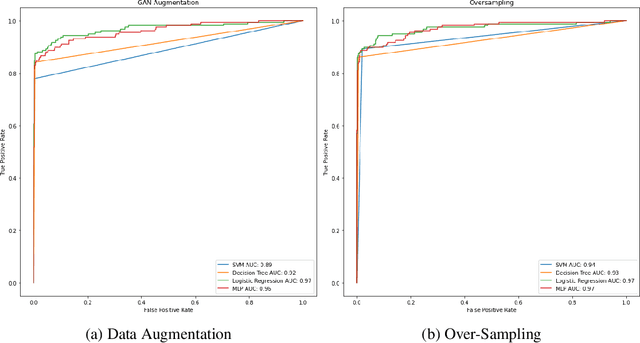
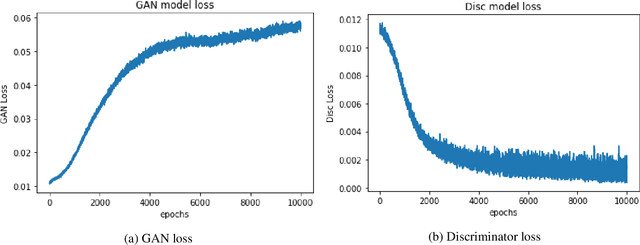

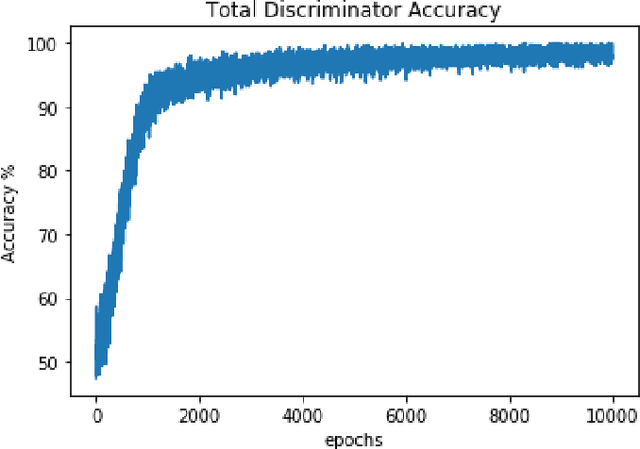
The number of credit card fraud has been growing as technology grows and people can take advantage of it. Therefore, it is very important to implement a robust and effective method to detect such frauds. The machine learning algorithms are appropriate for these tasks since they try to maximize the accuracy of predictions and hence can be relied upon. However, there is an impending flaw where in machine learning models may not perform well due to the presence of an imbalance across classes distribution within the sample set. So, in many related tasks, the datasets have a very small number of observed fraud cases (sometimes around 1 percent positive fraud instances found). Therefore, this imbalance presence may impact any learning model's behavior by predicting all labels as the majority class, hence allowing no scope for generalization in the predictions made by the model. We trained Generative Adversarial Network(GAN) to generate a large number of convincing (and reliable) synthetic examples of the minority class that can be used to alleviate the class imbalance within the training set and hence generalize the learning of the data more effectively.