 Add to Chrome
 Add to Firefox
 Add to Edge
Escaping the Context Bottleneck: Active Context Curation for LLM Agents via Reinforcement Learning
Apr 13, 2026
Large Language Models (LLMs) struggle with long-horizon tasks due to the "context bottleneck" and the "lost-in-the-middle" phenomenon, where accumulated noise from verbose environments degrades reasoning over multi-turn interactions. To address this issue, we introduce a symbiotic framework that decouples context management from task execution. Our architecture pairs a lightweight, specialized policy model, ContextCurator, with a powerful frozen foundation model, TaskExecutor. Trained via reinforcement learning, ContextCurator actively reduces information entropy in the working memory. It aggressively prunes environmental noise while preserving reasoning anchors, that is, sparse data points that are critical for future deductions. On WebArena, our framework improves the success rate of Gemini-3.0-flash from 36.4% to 41.2% while reducing token consumption by 8.8% (from 47.4K to 43.3K). On DeepSearch, it achieves a 57.1% success rate, compared with 53.9%, while reducing token consumption by a factor of 8. Remarkably, a 7B ContextCurator matches the context management performance of GPT-4o, providing a scalable and computationally efficient paradigm for autonomous long-horizon agents.

COINBench: Moving Beyond Individual Perspectives to Collective Intent Understanding
Mar 22, 2026Understanding human intent is a high-level cognitive challenge for Large Language Models (LLMs), requiring sophisticated reasoning over noisy, conflicting, and non-linear discourse. While LLMs excel at following individual instructions, their ability to distill Collective Intent - the process of extracting consensus, resolving contradictions, and inferring latent trends from multi-source public discussions - remains largely unexplored. To bridge this gap, we introduce COIN-BENCH, a dynamic, real-world, live-updating benchmark specifically designed to evaluate LLMs on collective intent understanding within the consumer domain. Unlike traditional benchmarks that focus on transactional outcomes, COIN-BENCH operationalizes intent as a hierarchical cognitive structure, ranging from explicit scenarios to deep causal reasoning. We implement a robust evaluation pipeline that combines a rule-based method with an LLM-as-the-Judge approach. This framework incorporates COIN-TREE for hierarchical cognitive structuring and retrieval-augmented verification (COIN-RAG) to ensure expert-level precision in analyzing raw, collective human discussions. An extensive evaluation of 20 state-of-the-art LLMs across four dimensions - depth, breadth, informativeness, and correctness - reveals that while current models can handle surface-level aggregation, they still struggle with the analytical depth required for complex intent synthesis. COIN-BENCH establishes a new standard for advancing LLMs from passive instruction followers to expert-level analytical agents capable of deciphering the collective voice of the real world. See our project page on COIN-BENCH.
Can video generation replace cinematographers? Research on the cinematic language of generated video
Dec 16, 2024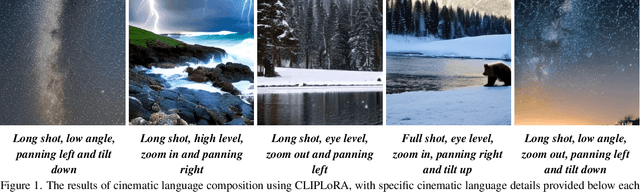
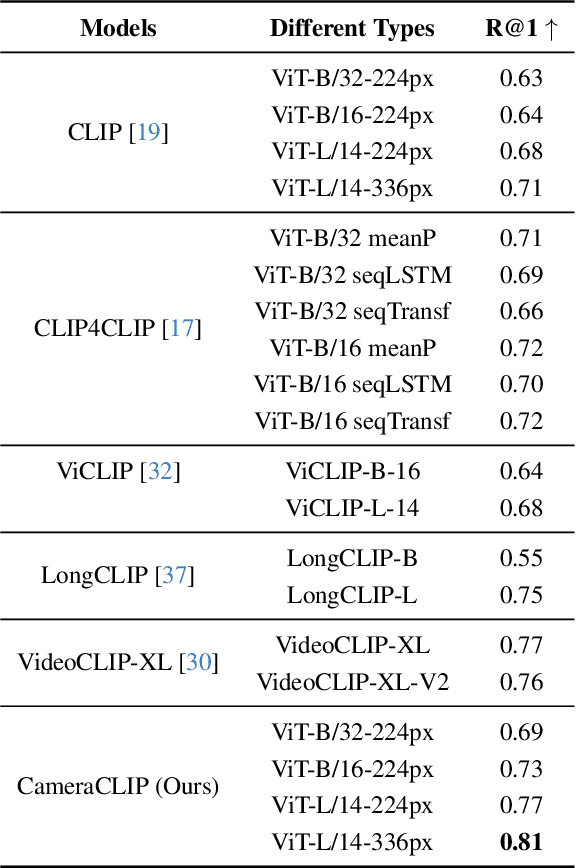
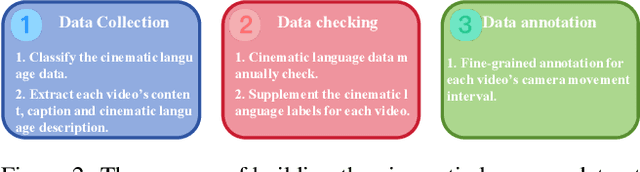
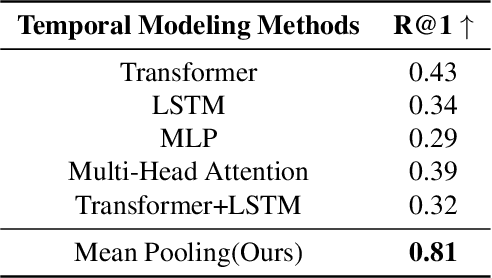
Recent advancements in text-to-video (T2V) generation have leveraged diffusion models to enhance the visual coherence of videos generated from textual descriptions. However, most research has primarily focused on object motion, with limited attention given to cinematic language in videos, which is crucial for cinematographers to convey emotion and narrative pacing. To address this limitation, we propose a threefold approach to enhance the ability of T2V models to generate controllable cinematic language. Specifically, we introduce a cinematic language dataset that encompasses shot framing, angle, and camera movement, enabling models to learn diverse cinematic styles. Building on this, to facilitate robust cinematic alignment evaluation, we present CameraCLIP, a model fine-tuned on the proposed dataset that excels in understanding complex cinematic language in generated videos and can further provide valuable guidance in the multi-shot composition process. Finally, we propose CLIPLoRA, a cost-guided dynamic LoRA composition method that facilitates smooth transitions and realistic blending of cinematic language by dynamically fusing multiple pre-trained cinematic LoRAs within a single video. Our experiments demonstrate that CameraCLIP outperforms existing models in assessing the alignment between cinematic language and video, achieving an R@1 score of 0.81. Additionally, CLIPLoRA improves the ability for multi-shot composition, potentially bridging the gap between automatically generated videos and those shot by professional cinematographers.