 Add to Chrome
 Add to Firefox
 Add to Edge
Enhanced ShockBurst for Ultra Low-Power On-Demand Sensing
Apr 08, 2026
On demand sensing is emerging as a key paradigm in Internet of Things (IoT) systems, where devices remain in low power states and transmit data only upon event triggers. Such an operation requires wireless communication schemes that provide low latency, minimal wake up overhead, and high energy efficiency. However, widely adopted protocols such as Bluetooth Low Energy (BLE) rely on connection oriented mechanisms that incur non negligible latency and energy overhead during sleep wake transitions, limiting their effectiveness for event driven sensing. In this work, Nordic Semiconductor's proprietary Enhanced ShockBurst (ESB) protocol is investigated as an alternative communication scheme for low power on demand IoT systems. A systematic experimental comparison between ESB and BLE is presented on the same hardware platform, evaluating packet level latency, transmission energy, achievable throughput, wake up overhead under duty cycled operation, and bidirectional communication characteristics. Results show that ESB achieves a packet latency of 0.68 ms for a 244 byte payload, reduces per packet transmission time and energy by nearly 2x, increases maximum throughput by approximately 2x, and lowers wake up time and energy by up to 10x compared with BLE. To demonstrate system level impact, an implantable loop recorder prototype with FIFO triggered electrocardiogram transmission is implemented. The ESB based system enables rapid event driven communication with a minimum communication power of 0.5 mW and reduces total system power consumption by approximately 60 percent relative to BLE. These results highlight the limitations of connection oriented protocols for on demand sensing and establish ESB as a lightweight and effective communication alternative for energy constrained IoT applications, including biomedical implants and event driven monitoring systems.

Safety Guaranteed Manipulation Based on Reinforcement Learning Planner and Model Predictive Control Actor
Apr 26, 2023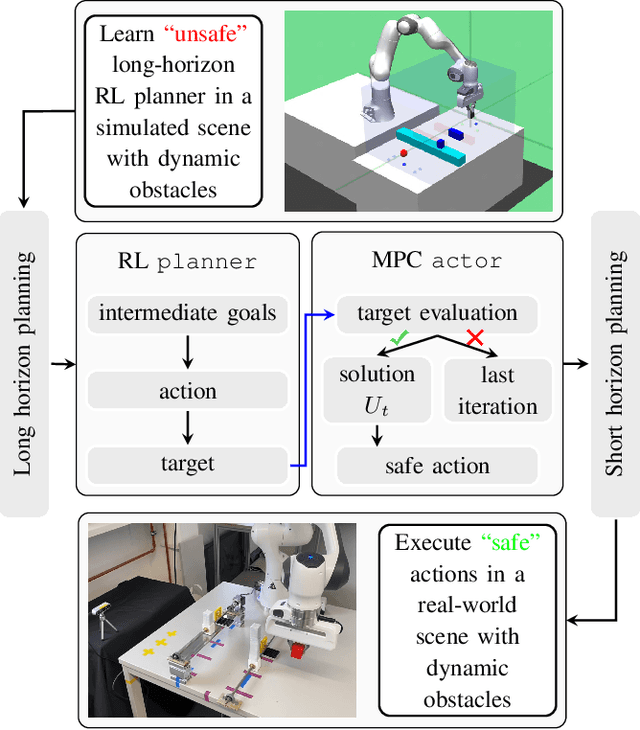
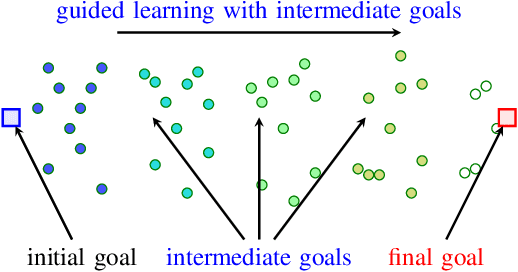
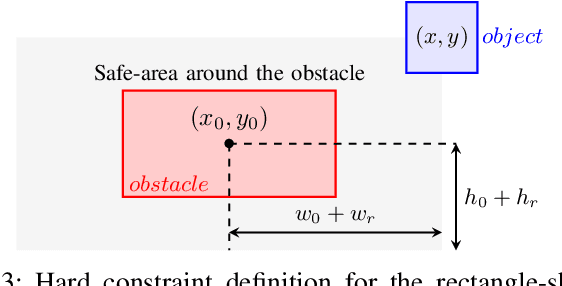
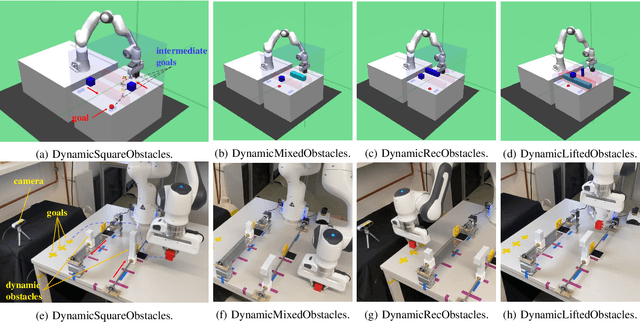
Deep reinforcement learning (RL) has been endowed with high expectations in tackling challenging manipulation tasks in an autonomous and self-directed fashion. Despite the significant strides made in the development of reinforcement learning, the practical deployment of this paradigm is hindered by at least two barriers, namely, the engineering of a reward function and ensuring the safety guaranty of learning-based controllers. In this paper, we address these challenging limitations by proposing a framework that merges a reinforcement learning \lstinline[columns=fixed]{planner} that is trained using sparse rewards with a model predictive controller (MPC) \lstinline[columns=fixed]{actor}, thereby offering a safe policy. On the one hand, the RL \lstinline[columns=fixed]{planner} learns from sparse rewards by selecting intermediate goals that are easy to achieve in the short term and promising to lead to target goals in the long term. On the other hand, the MPC \lstinline[columns=fixed]{actor} takes the suggested intermediate goals from the RL \lstinline[columns=fixed]{planner} as the input and predicts how the robot's action will enable it to reach that goal while avoiding any obstacles over a short period of time. We evaluated our method on four challenging manipulation tasks with dynamic obstacles and the results demonstrate that, by leveraging the complementary strengths of these two components, the agent can solve manipulation tasks in complex, dynamic environments safely with a $100\%$ success rate. Videos are available at \url{https://videoviewsite.wixsite.com/mpc-hgg}.