 Add to Chrome
 Add to Firefox
 Add to Edge
Unsupervised Collaborative Domain Adaptation for Driving Scene Parsing
Jun 01, 2026
Reliable driving scene parsing is a fundamental capability for autonomous vehicles operating in open and dynamic driving environments. However, adapting perception models to new deployment domains remains challenging because pixel-level annotations are expensive to obtain, while source-domain data are often inaccessible due to privacy, security, or ownership constraints. Existing source-free unsupervised domain adaptation methods typically rely on a single pre-trained source model, which makes the adapted perception system vulnerable to source-specific biases and limits its robustness under diverse road layouts, illumination conditions, weather patterns, and traffic conditions. This article presents an unsupervised collaborative domain adaptation (UCDA) framework for driving scene parsing in a source-free setting, which transfers complementary knowledge from multiple pre-trained source models to a unified target model without accessing any original source samples. To compare predictions from independently trained models, UCDA constructs a class-level prototype memory bank and estimates cross-model prediction reliability through prototype similarity, reducing the effect of inconsistent confidence scales across source models. Based on the resulting complementary supervision, UCDA adopts a two-stage transfer strategy: multiple source models are first refined on unlabeled target-domain driving data through collaborative optimization with positive and negative consistency constraints, and their validated expertise is then distilled into a single deployable target model. Comprehensive evaluations on public driving-scene datasets and real-world data collected from an autonomous vehicle platform demonstrate that UCDA effectively consolidates complementary multi-source knowledge, improving target-domain scene parsing reliability and generalization across diverse driving environments.

Structured prototype regularization for synthetic-to-real driving scene parsing
Mar 17, 2026Driving scene parsing is critical for autonomous vehicles to operate reliably in complex real-world traffic environments. To reduce the reliance on costly pixel-level annotations, synthetic datasets with automatically generated labels have become a popular alternative. However, models trained on synthetic data often perform poorly when applied to real-world scenes due to the synthetic-to-real domain gap. Despite the success of unsupervised domain adaptation in narrowing this gap, most existing methods mainly focus on global feature alignment while overlooking the semantic structure of the feature space. As a result, semantic relations among classes are insufficiently modeled, limiting the model's ability to generalize. To address these challenges, this study introduces a novel unsupervised domain adaptation framework that explicitly regularizes semantic feature structures to significantly enhance driving scene parsing performance in real-world scenarios. Specifically, the proposed method enforces inter-class separation and intra-class compactness by leveraging class-specific prototypes, thereby enhancing the discriminability and structural coherence of feature clusters. An entropy-based noise filtering strategy improves the reliability of pseudo labels, while a pixel-level attention mechanism further refines feature alignment. Extensive experiments on representative benchmarks demonstrate that the proposed method consistently outperforms recent state-of-the-art methods. These results underscore the importance of preserving semantic structure for robust synthetic-to-real adaptation in driving scene parsing tasks.
CLIPose: Category-Level Object Pose Estimation with Pre-trained Vision-Language Knowledge
Feb 24, 2024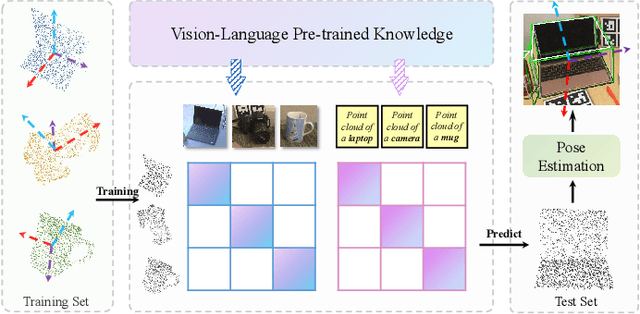
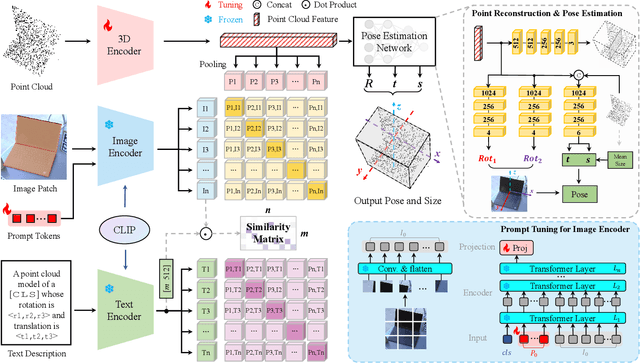
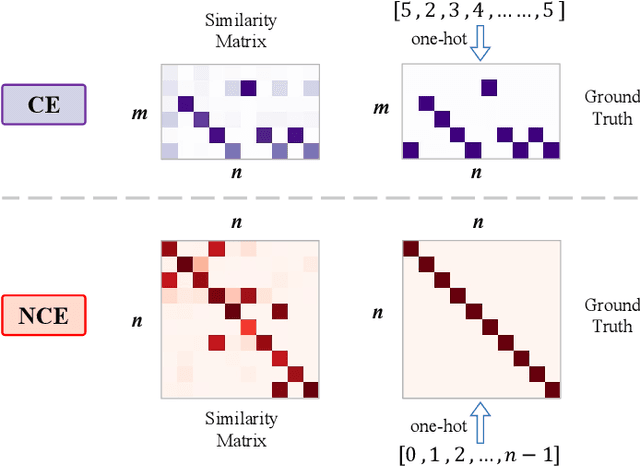
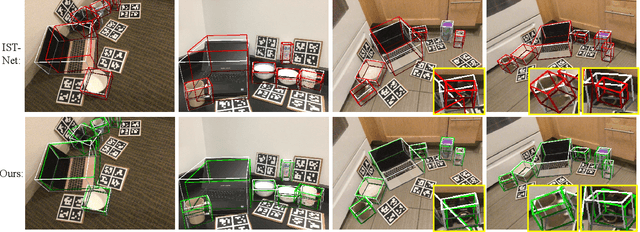
Most of existing category-level object pose estimation methods devote to learning the object category information from point cloud modality. However, the scale of 3D datasets is limited due to the high cost of 3D data collection and annotation. Consequently, the category features extracted from these limited point cloud samples may not be comprehensive. This motivates us to investigate whether we can draw on knowledge of other modalities to obtain category information. Inspired by this motivation, we propose CLIPose, a novel 6D pose framework that employs the pre-trained vision-language model to develop better learning of object category information, which can fully leverage abundant semantic knowledge in image and text modalities. To make the 3D encoder learn category-specific features more efficiently, we align representations of three modalities in feature space via multi-modal contrastive learning. In addition to exploiting the pre-trained knowledge of the CLIP's model, we also expect it to be more sensitive with pose parameters. Therefore, we introduce a prompt tuning approach to fine-tune image encoder while we incorporate rotations and translations information in the text descriptions. CLIPose achieves state-of-the-art performance on two mainstream benchmark datasets, REAL275 and CAMERA25, and runs in real-time during inference (40FPS).