 Add to Chrome
 Add to Firefox
 Add to Edge
Power Echoes: Investigating Moderation Biases in Online Power-Asymmetric Conflicts
Mar 02, 2026
Online power-asymmetric conflicts are prevalent, and most platforms rely on human moderators to conduct moderation currently. Previous studies have been continuously focusing on investigating human moderation biases in different scenarios, while moderation biases under power-asymmetric conflicts remain unexplored. Therefore, we aim to investigate the types of power-related biases human moderators exhibit in power-asymmetric conflict moderation (RQ1) and further explore the influence of AI's suggestions on these biases (RQ2). For this goal, we conducted a mixed design experiment with 50 participants by leveraging the real conflicts between consumers and merchants as a scenario. Results suggest several biases towards supporting the powerful party within these two moderation modes. AI assistance alleviates most biases of human moderation, but also amplifies a few. Based on these results, we propose several insights into future research on human moderation and human-AI collaborative moderation systems for power-asymmetric conflicts.

Conformal Depression Prediction
May 29, 2024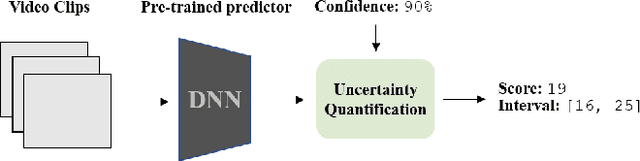
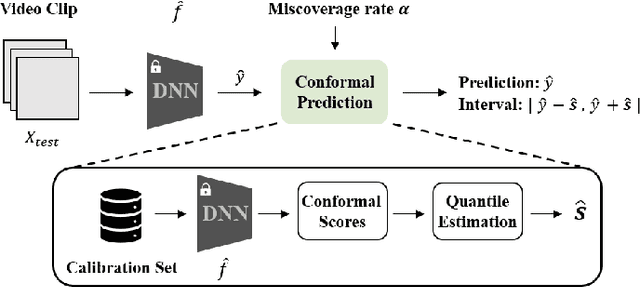
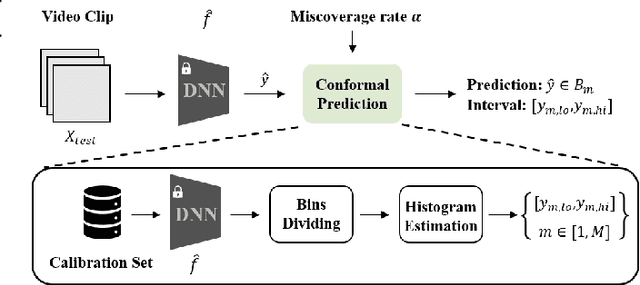
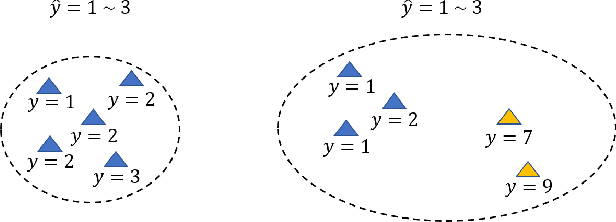
While existing depression recognition methods based on deep learning show promise, their practical application is hindered by the lack of trustworthiness, as these deep models are often deployed as \textit{black box} models, leaving us uncertain about the confidence of the model predictions. For high-risk clinical applications like depression recognition, uncertainty quantification is essential in decision-making. In this paper, we introduce conformal depression prediction (CDP), a depression recognition method with uncertainty quantification based on conformal prediction (CP), giving valid confidence intervals with theoretical coverage guarantees for the model predictions. CDP is a plug-and-play module that requires neither model retraining nor an assumption about the depression data distribution. As CDP provides only an average performance guarantee across all inputs rather than per-input performance guarantee, we propose CDP-ACC, an improved conformal prediction with approximate conditional coverage. CDP-ACC firstly estimates the prediction distribution through neighborhood relaxation, and then introduces a conformal score function by constructing nested sequences, so as to provide tighter prediction interval for each specific input. We empirically demonstrate the application of uncertainty quantification in depression recognition, and the effectiveness and superiority of CDP and CDP-ACC on the AVEC 2013 and AVEC 2014 datasets