 Add to Chrome
 Add to Firefox
 Add to Edge
Future-Interactions-Aware Trajectory Prediction via Braid Theory
Mar 23, 2026
To safely operate, an autonomous vehicle must know the future behavior of a potentially high number of interacting agents around it, a task often posed as multi-agent trajectory prediction. Many previous attempts to model social interactions and solve the joint prediction task either add extensive computational requirements or rely on heuristics to label multi-agent behavior types. Braid theory, in contrast, provides a powerful exact descriptor of multi-agent behavior by projecting future trajectories into braids that express how trajectories cross with each other over time; a braid then corresponds to a specific mode of coordination between the multiple agents in the future. In past work, braids have been used lightly to reason about interacting agents and restrict the attention window of predicted agents. We show that leveraging more fully the expressivity of the braid representation and using it to condition the trajectories themselves leads to even further gains in joint prediction performance, with negligible added complexity either in training or at inference time. We do so by proposing a novel auxiliary task, braid prediction, done in parallel with the trajectory prediction task. By classifying edges between agents into their correct crossing types in the braid representation, the braid prediction task is able to imbue the model with improved social awareness, which is reflected in joint predictions that more closely adhere to the actual multi-agent behavior. This simple auxiliary task allowed us to obtain significant improvements in joint metrics on three separate datasets. We show how the braid prediction task infuses the model with future intention awareness, leading to more accurate joint predictions. Code is available at github.com/caiocj1/traj-pred-braid-theory.

Improving Consistency in Vehicle Trajectory Prediction Through Preference Optimization
Jul 03, 2025Trajectory prediction is an essential step in the pipeline of an autonomous vehicle. Inaccurate or inconsistent predictions regarding the movement of agents in its surroundings lead to poorly planned maneuvers and potentially dangerous situations for the end-user. Current state-of-the-art deep-learning-based trajectory prediction models can achieve excellent accuracy on public datasets. However, when used in more complex, interactive scenarios, they often fail to capture important interdependencies between agents, leading to inconsistent predictions among agents in the traffic scene. Inspired by the efficacy of incorporating human preference into large language models, this work fine-tunes trajectory prediction models in multi-agent settings using preference optimization. By taking as input automatically calculated preference rankings among predicted futures in the fine-tuning process, our experiments--using state-of-the-art models on three separate datasets--show that we are able to significantly improve scene consistency while minimally sacrificing trajectory prediction accuracy and without adding any excess computational requirements at inference time.
AVS-Net: Audio-Visual Scale Net for Self-supervised Monocular Metric Depth Estimation
Dec 02, 2024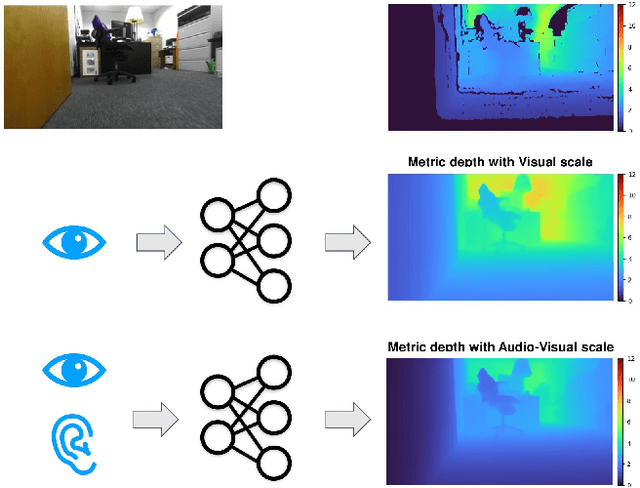

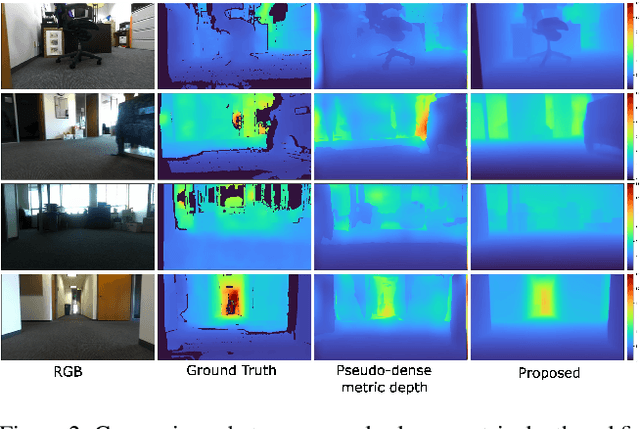
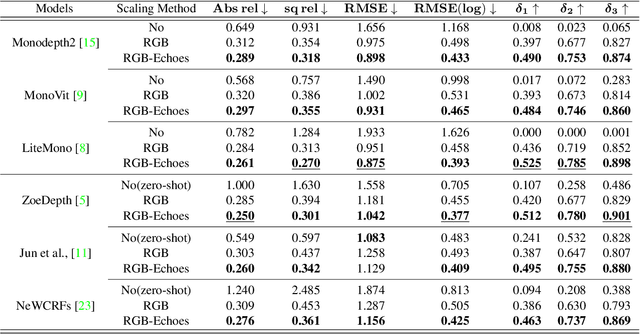
Metric depth prediction from monocular videos suffers from bad generalization between datasets and requires supervised depth data for scale-correct training. Self-supervised training using multi-view reconstruction can benefit from large scale natural videos but not provide correct scale, limiting its benefits. Recently, reflecting audible Echoes off objects is investigated for improved depth prediction and was shown to be sufficient to reconstruct objects at scale even without a visual signal. Because Echoes travel at fixed speed, they have the potential to resolve ambiguities in object scale and appearance. However, predicting depth end-to-end from sound and vision cannot benefit from unsupervised depth prediction approaches, which can process large scale data without sound annotation. In this work we show how Echoes can benefit depth prediction in two ways: When learning metric depth learned from supervised data and as supervisory signal for scale-correct self-supervised training. We show how we can improve the predictions of several state-of-the-art approaches and how the method can scale-correct a self-supervised depth approach.
NeRAF: 3D Scene Infused Neural Radiance and Acoustic Fields
May 28, 2024Sound plays a major role in human perception, providing essential scene information alongside vision for understanding our environment. Despite progress in neural implicit representations, learning acoustics that match a visual scene is still challenging. We propose NeRAF, a method that jointly learns acoustic and radiance fields. NeRAF is designed as a Nerfstudio module for convenient access to realistic audio-visual generation. It synthesizes both novel views and spatialized audio at new positions, leveraging radiance field capabilities to condition the acoustic field with 3D scene information. At inference, each modality can be rendered independently and at spatially separated positions, providing greater versatility. We demonstrate the advantages of our method on the SoundSpaces dataset. NeRAF achieves substantial performance improvements over previous works while being more data-efficient. Furthermore, NeRAF enhances novel view synthesis of complex scenes trained with sparse data through cross-modal learning.
Mesoscale Traffic Forecasting for Real-Time Bottleneck and Shockwave Prediction
Feb 08, 2024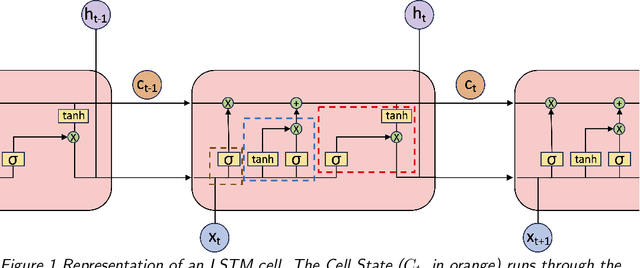
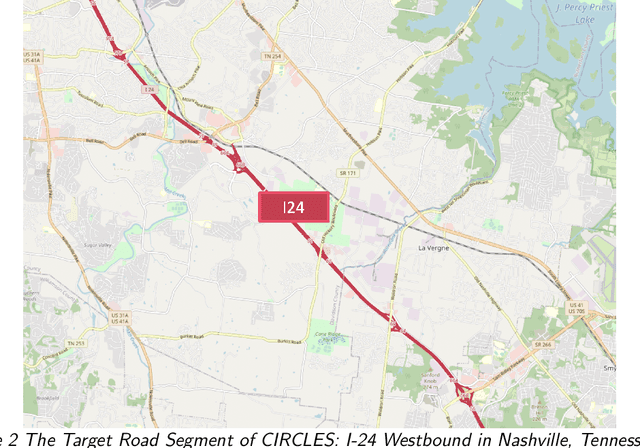
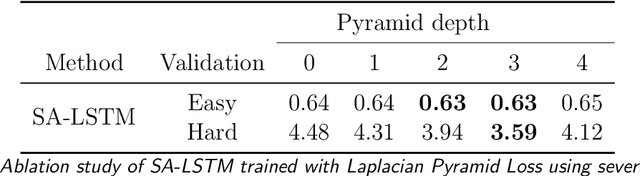
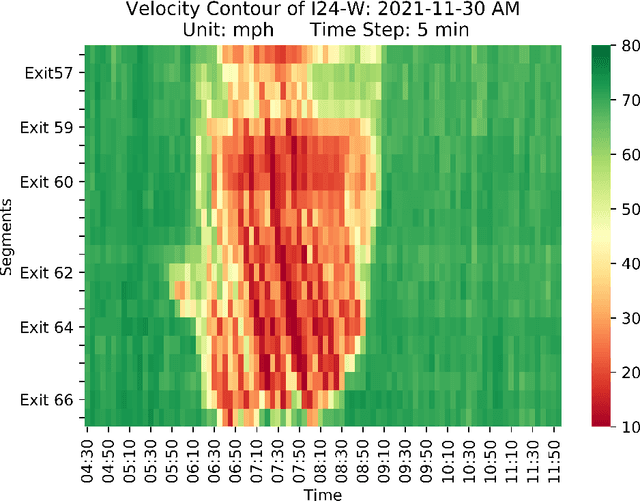
Accurate real-time traffic state forecasting plays a pivotal role in traffic control research. In particular, the CIRCLES consortium project necessitates predictive techniques to mitigate the impact of data source delays. After the success of the MegaVanderTest experiment, this paper aims at overcoming the current system limitations and develop a more suited approach to improve the real-time traffic state estimation for the next iterations of the experiment. In this paper, we introduce the SA-LSTM, a deep forecasting method integrating Self-Attention (SA) on the spatial dimension with Long Short-Term Memory (LSTM) yielding state-of-the-art results in real-time mesoscale traffic forecasting. We extend this approach to multi-step forecasting with the n-step SA-LSTM, which outperforms traditional multi-step forecasting methods in the trade-off between short-term and long-term predictions, all while operating in real-time.
MBAPPE: MCTS-Built-Around Prediction for Planning Explicitly
Sep 15, 2023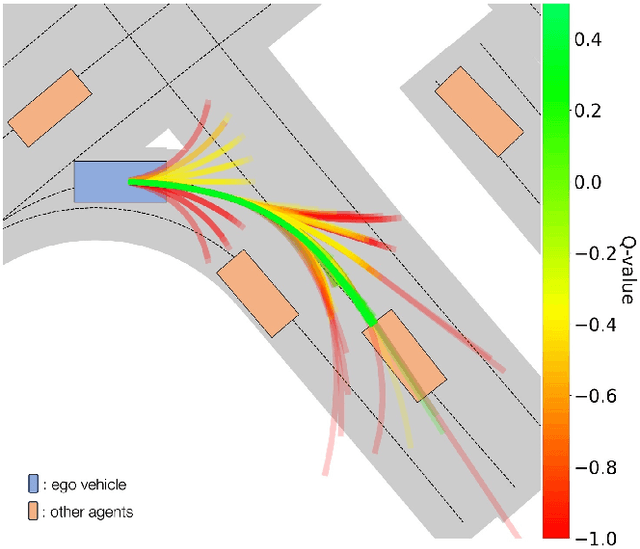
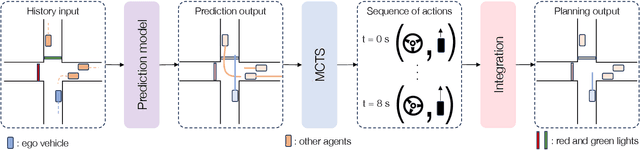
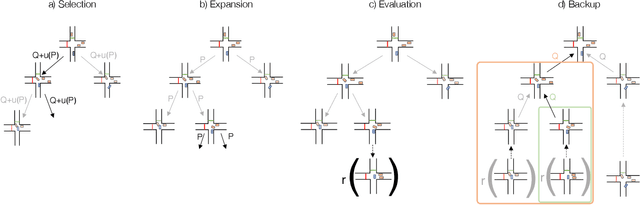
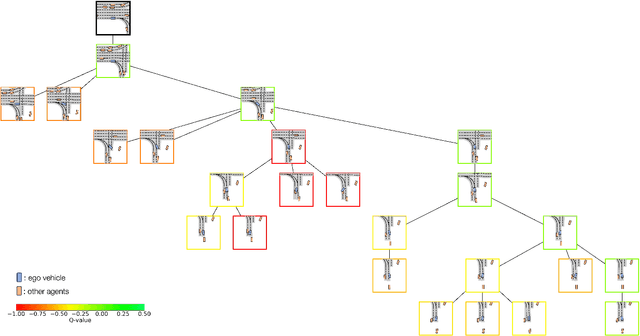
We present MBAPPE, a novel approach to motion planning for autonomous driving combining tree search with a partially-learned model of the environment. Leveraging the inherent explainable exploration and optimization capabilities of the Monte-Carlo Search Tree (MCTS), our method addresses complex decision-making in a dynamic environment. We propose a framework that combines MCTS with supervised learning, enabling the autonomous vehicle to effectively navigate through diverse scenarios. Experimental results demonstrate the effectiveness and adaptability of our approach, showcasing improved real-time decision-making and collision avoidance. This paper contributes to the field by providing a robust solution for motion planning in autonomous driving systems, enhancing their explainability and reliability.
The Audio-Visual BatVision Dataset for Research on Sight and Sound
Mar 14, 2023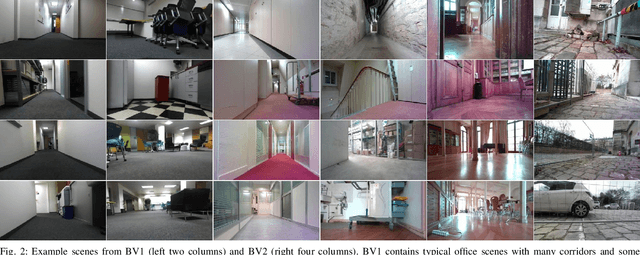
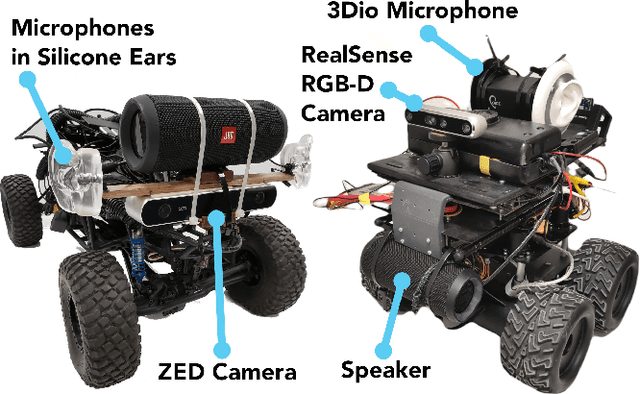
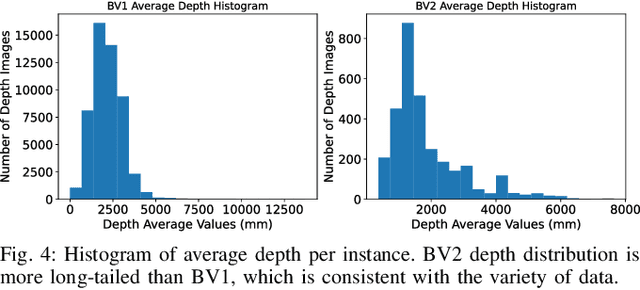
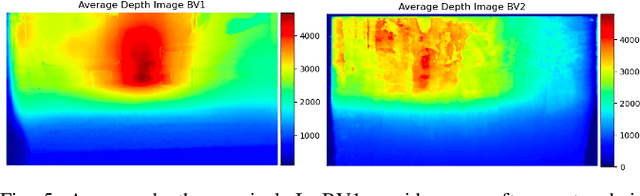
Vision research showed remarkable success in understanding our world, propelled by datasets of images and videos. Sensor data from radar, LiDAR and cameras supports research in robotics and autonomous driving for at least a decade. However, while visual sensors may fail in some conditions, sound has recently shown potential to complement sensor data. Simulated room impulse responses (RIR) in 3D apartment-models became a benchmark dataset for the community, fostering a range of audiovisual research. In simulation, depth is predictable from sound, by learning bat-like perception with a neural network. Concurrently, the same was achieved in reality by using RGB-D images and echoes of chirping sounds. Biomimicking bat perception is an exciting new direction but needs dedicated datasets to explore the potential. Therefore, we collected the BatVision dataset to provide large-scale echoes in complex real-world scenes to the community. We equipped a robot with a speaker to emit chirps and a binaural microphone to record their echoes. Synchronized RGB-D images from the same perspective provide visual labels of traversed spaces. We sampled modern US office spaces to historic French university grounds, indoor and outdoor with large architectural variety. This dataset will allow research on robot echolocation, general audio-visual tasks and sound phaenomena unavailable in simulated data. We show promising results for audio-only depth prediction and show how state-of-the-art work developed for simulated data can also succeed on our dataset. The data can be downloaded at https://forms.gle/W6xtshMgoXGZDwsE7
GRI: General Reinforced Imitation and its Application to Vision-Based Autonomous Driving
Nov 16, 2021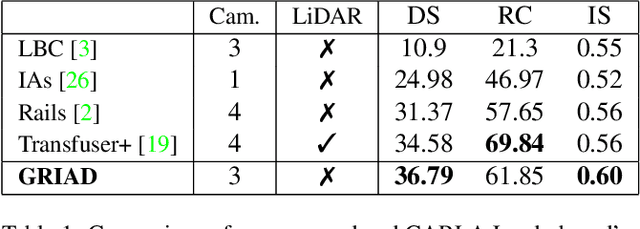
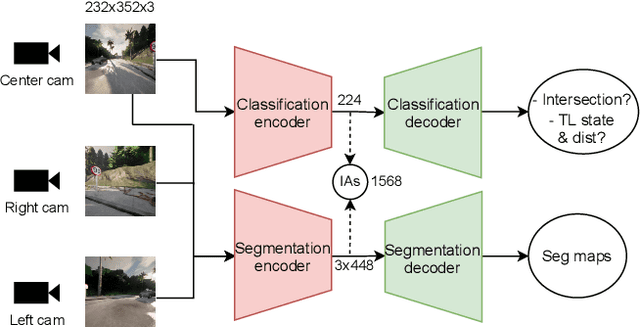
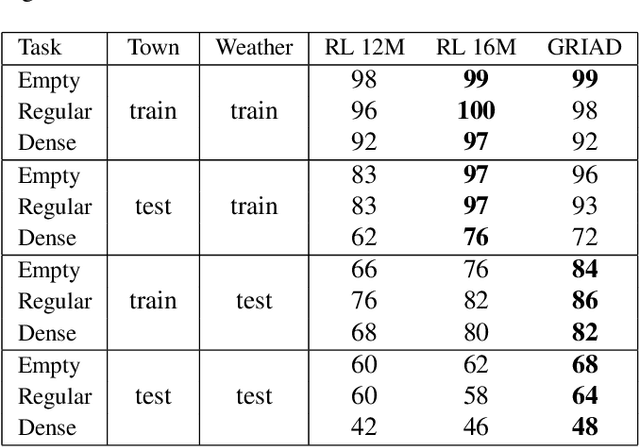
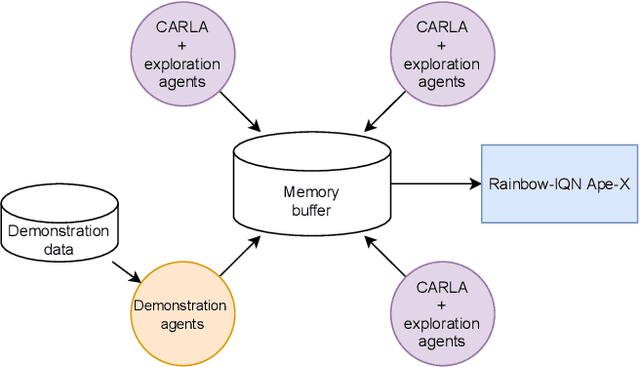
Deep reinforcement learning (DRL) has been demonstrated to be effective for several complex decision-making applications such as autonomous driving and robotics. However, DRL is notoriously limited by its high sample complexity and its lack of stability. Prior knowledge, e.g. as expert demonstrations, is often available but challenging to leverage to mitigate these issues. In this paper, we propose General Reinforced Imitation (GRI), a novel method which combines benefits from exploration and expert data and is straightforward to implement over any off-policy RL algorithm. We make one simplifying hypothesis: expert demonstrations can be seen as perfect data whose underlying policy gets a constant high reward. Based on this assumption, GRI introduces the notion of offline demonstration agents. This agent sends expert data which are processed both concurrently and indistinguishably with the experiences coming from the online RL exploration agent. We show that our approach enables major improvements on vision-based autonomous driving in urban environments. We further validate the GRI method on Mujoco continuous control tasks with different off-policy RL algorithms. Our method ranked first on the CARLA Leaderboard and outperforms World on Rails, the previous state-of-the-art, by 17%.
Unsupervised Discriminative Learning of Sounds for Audio Event Classification
May 20, 2021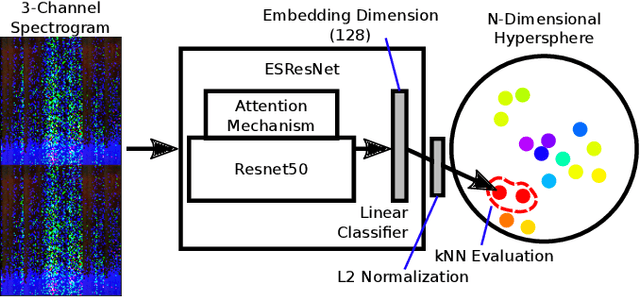
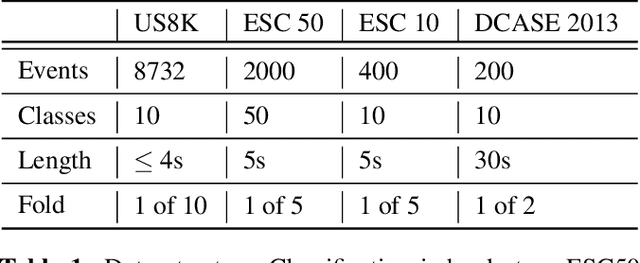
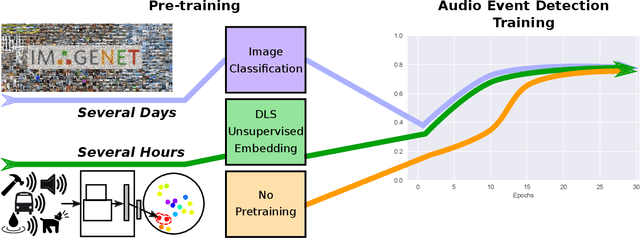
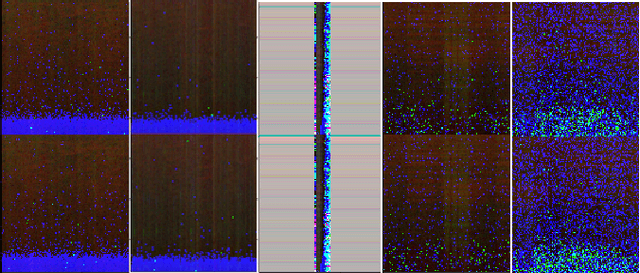
Recent progress in network-based audio event classification has shown the benefit of pre-training models on visual data such as ImageNet. While this process allows knowledge transfer across different domains, training a model on large-scale visual datasets is time consuming. On several audio event classification benchmarks, we show a fast and effective alternative that pre-trains the model unsupervised, only on audio data and yet delivers on-par performance with ImageNet pre-training. Furthermore, we show that our discriminative audio learning can be used to transfer knowledge across audio datasets and optionally include ImageNet pre-training.
BatVision with GCC-PHAT Features for Better Sound to Vision Predictions
Jun 14, 2020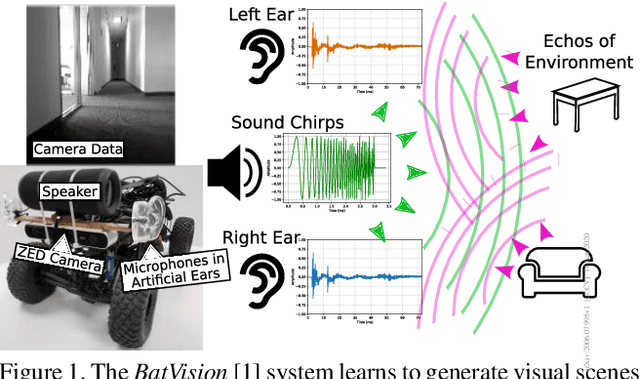
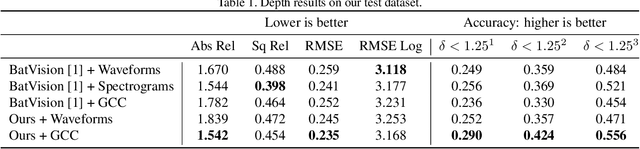
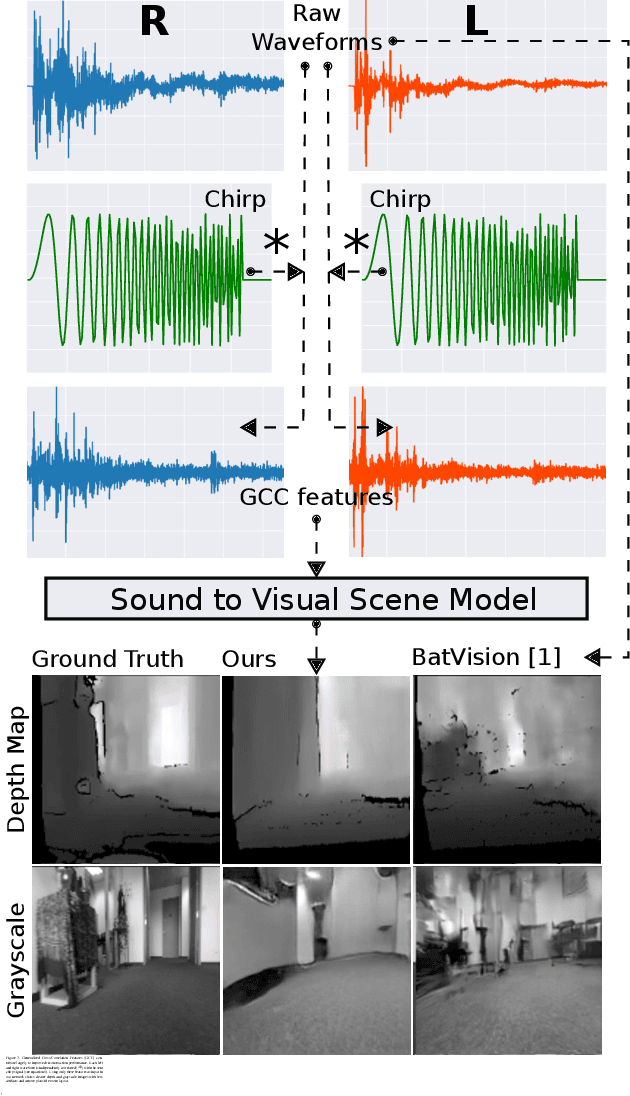
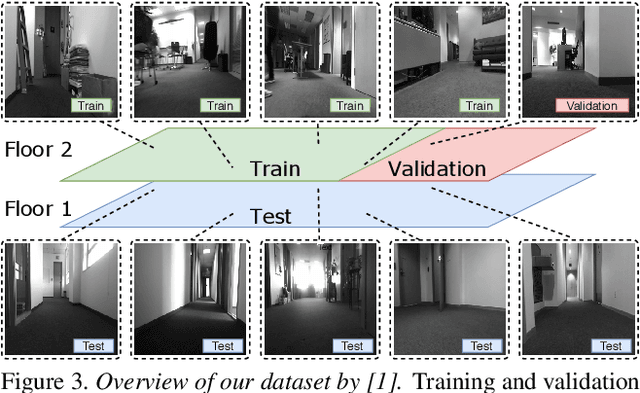
Inspired by sophisticated echolocation abilities found in nature, we train a generative adversarial network to predict plausible depth maps and grayscale layouts from sound. To achieve this, our sound-to-vision model processes binaural echo-returns from chirping sounds. We build upon previous work with BatVision that consists of a sound-to-vision model and a self-collected dataset using our mobile robot and low-cost hardware. We improve on the previous model by introducing several changes to the model, which leads to a better depth and grayscale estimation, and increased perceptual quality. Rather than using raw binaural waveforms as input, we generate generalized cross-correlation (GCC) features and use these as input instead. In addition, we change the model generator and base it on residual learning and use spectral normalization in the discriminator. We compare and present both quantitative and qualitative improvements over our previous BatVision model.