 Add to Chrome
 Add to Firefox
 Add to Edge
Classifying by Proxy: Explainable and Reproducible Ensemble of Proxy Tasks for Child Sexual Abuse Imagery Classification
Jun 14, 2026
Child Sexual Abuse Imagery (CSAI) classification systems are needed solutions for lessening the psychological impacts often felt by law enforcement agents responsible for evaluating these materials and for efficient removal of these materials from the web. However, due to the nature of the task, researching and developing such systems is not a trivial endeavor. The images are highly sensitive, and the related datasets are under restrictive access regimes, which means most studies in the area are not reproducible or distributable and are therefore hard to compare and validate. More concerning still, most models for this task today lack an aspect often desired by law enforcement agents: explainability. In this paper, we apply an ensemble of Proxy Tasks -- tasks that correlate to CSAI classification -- yielding improvements in reproducibility, explainability, and security for distribution. This concept is applied for the first time to real CSAI, with a novel selection of relevant Proxy Tasks (selected from the CSAI literature) and training adaptations to the original framework. Our final model achieves competitive results, yielding 91.9% balanced accuracy on the RCPD dataset with the best Proxy Task combination. We furthermore contrast these results with the best-in-class representation learning model, DINO, and show that our ensemble improves accuracy and provides explanations for its classification results, a feature that a single deep learning model can seldom provide.

Toward Ethical Facial Age Estimation: A Generalized Zero-Shot Benchmark Without Training on Children's Data
May 28, 2026Age estimation from facial images typically relies on training data that includes images of minors, a practice that raises serious ethical, legal, and privacy concerns. In this work, we propose a generalized zero-shot benchmark for facial age estimation that explicitly excludes children's data during training while still assessing model performance on younger populations. We revisit six widely used datasets and introduce standardized splits with strict age-group separation: samples aged 18-59 for training, validation, and testing; samples under 18 reserved exclusively for zero-shot evaluation; and samples 60+ as an unseen validation set for model selection under distribution shift. For datasets with identity annotations, subject-exclusive splits prevent identity leakage and better reflect real-world deployment conditions. Evaluating nine state-of-the-art age estimation methods under this protocol reveals that all evaluated methods consistently fail to generalize to unseen age groups, suffering substantial performance degradation -- on average 46.4%, and up to 52.8% -- relative to the supervised baseline. Moreover, models do not simply degrade: they systematically anchor predictions for unseen ages to nearby seen classes, a manifestation of the well-known seen-class bias in generalized zero-shot learning. By formalizing age estimation without children's data as a generalized zero-shot benchmark on existing datasets, this work highlights a critical gap between current modeling practices and real-world ethical constraints. Our benchmark provides a principled basis for evaluating models under restricted data regimes and encourages the development of methods that are robust to distribution shift and aligned with responsible data use.
CSA-Graphs: A Privacy-Preserving Structural Dataset for Child Sexual Abuse Research
Apr 08, 2026Child Sexual Abuse Imagery (CSAI) classification is an important yet challenging problem for computer vision research due to the strict legal and ethical restrictions that prevent the public sharing of CSAI datasets. This limitation hinders reproducibility and slows progress in developing automated methods. In this work, we introduce CSA-Graphs, a privacy-preserving structural dataset. Instead of releasing the original images, we provide structural representations that remove explicit visual content while preserving contextual information. CSA-Graphs includes two complementary graph-based modalities: scene graphs describing object relationships and skeleton graphs encoding human pose. Experiments show that both representations retain useful information for classifying CSAI, and that combining them further improves performance. This dataset enables broader research on computer vision methods for child safety while respecting legal and ethical constraints.
Human-Centric Perception for Child Sexual Abuse Imagery
Apr 02, 2026Law enforcement agencies and non-gonvernmental organizations handling reports of Child Sexual Abuse Imagery (CSAI) are overwhelmed by large volumes of data, requiring the aid of automation tools. However, defining sexual abuse in images of children is inherently challenging, encompassing sexually explicit activities and hints of sexuality conveyed by the individual's pose, or their attire. CSAI classification methods often rely on black-box approaches, targeting broad and abstract concepts such as pornography. Thus, our work is an in-depth exploration of tasks from the literature on Human-Centric Perception, across the domains of safe images, adult pornography, and CSAI, focusing on targets that enable more objective and explainable pipelines for CSAI classification in the future. We introduce the Body-Keypoint-Part Dataset (BKPD), gathering images of people from varying age groups and sexual explicitness to approximate the domain of CSAI, along with manually curated hierarchically structured labels for skeletal keypoints and bounding boxes for person and body parts, including head, chest, hip, and hands. We propose two methods, namely BKP-Association and YOLO-BKP, for simultaneous pose estimation and detection, with targets associated per individual for a comprehensive decomposed representation of each person. Our methods are benchmarked on COCO-Keypoints and COCO-HumanParts, as well as our human-centric dataset, achieving competitive results with models that jointly perform all tasks. Cross-domain ablation studies on BKPD and a case study on RCPD highlight the challenges posed by sexually explicit domains. Our study addresses previously unexplored targets in the CSAI domain, paving the way for novel research opportunities.
A General-Purpose Diversified 2D Seismic Image Dataset from NAMSS
Jan 27, 2026We introduce the Unicamp-NAMSS dataset, a large, diverse, and geographically distributed collection of migrated 2D seismic sections designed to support modern machine learning research in geophysics. We constructed the dataset from the National Archive of Marine Seismic Surveys (NAMSS), which contains decades of publicly available marine seismic data acquired across multiple regions, acquisition conditions, and geological settings. After a comprehensive collection and filtering process, we obtained 2588 cleaned and standardized seismic sections from 122 survey areas, covering a wide range of vertical and horizontal sampling characteristics. To ensure reliable experimentation, we balanced the dataset so that no survey dominates the distribution, and partitioned it into non-overlapping macro-regions for training, validation, and testing. This region-disjoint split allows robust evaluation of generalization to unseen geological and acquisition conditions. We validated the dataset through quantitative and embedding-space analyses using both convolutional and transformer-based models. These analyses showed that Unicamp-NAMSS exhibits substantial variability within and across regions, while maintaining coherent structure across acquisition macro-region and survey types. Comparisons with widely used interpretation datasets (Parihaka and F3 Block) further demonstrated that Unicamp-NAMSS covers a broader portion of the seismic appearance space, making it a strong candidate for machine learning model pretraining. The dataset, therefore, provides a valuable resource for machine learning tasks, including self-supervised representation learning, transfer learning, benchmarking supervised tasks such as super-resolution or attribute prediction, and studying domain adaptation in seismic interpretation.
Evaluation of AI Ethics Tools in Language Models: A Developers' Perspective Case Stud
Dec 16, 2025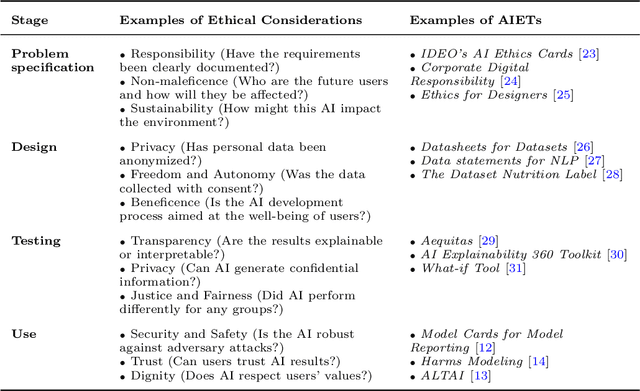
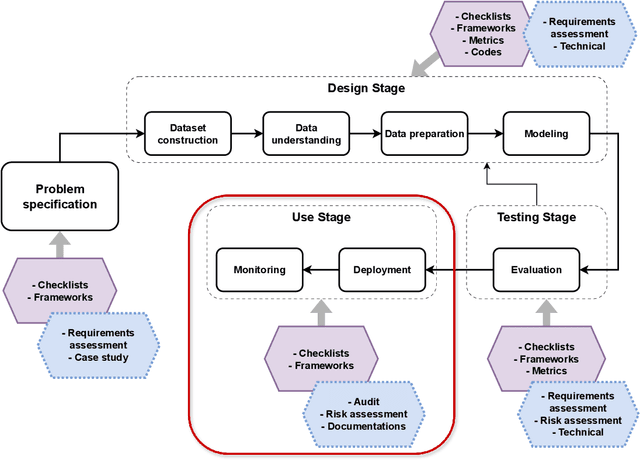
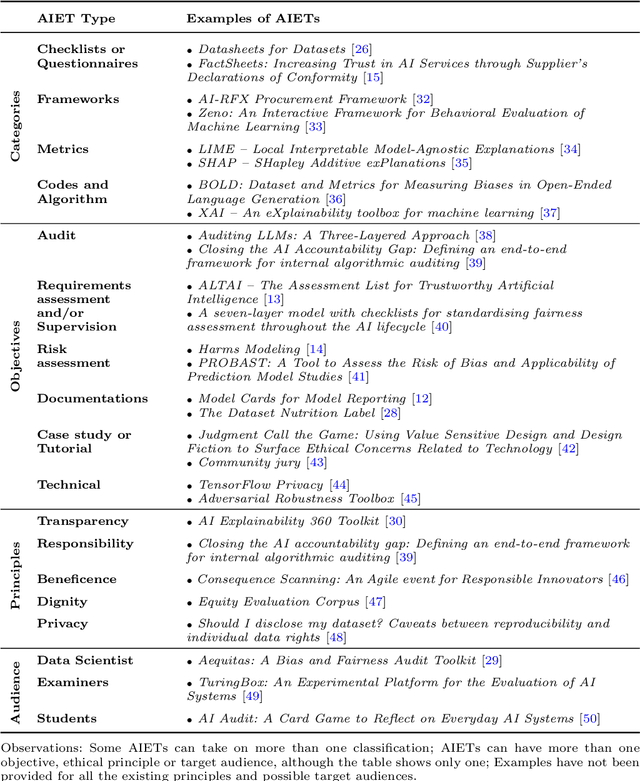
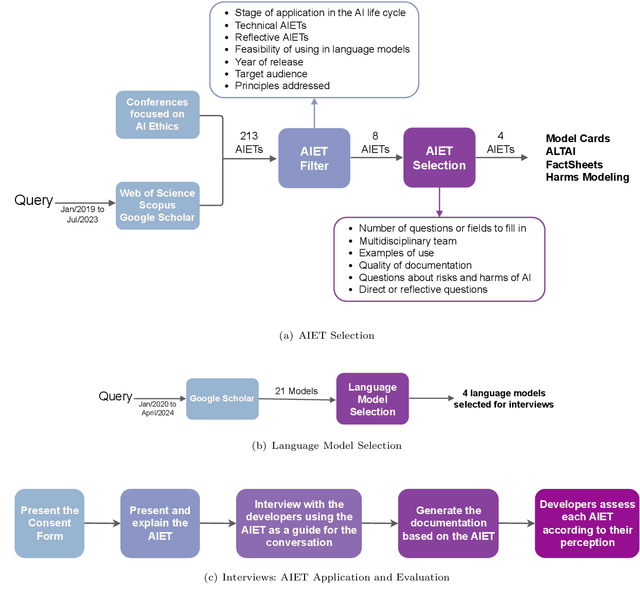
In Artificial Intelligence (AI), language models have gained significant importance due to the widespread adoption of systems capable of simulating realistic conversations with humans through text generation. Because of their impact on society, developing and deploying these language models must be done responsibly, with attention to their negative impacts and possible harms. In this scenario, the number of AI Ethics Tools (AIETs) publications has recently increased. These AIETs are designed to help developers, companies, governments, and other stakeholders establish trust, transparency, and responsibility with their technologies by bringing accepted values to guide AI's design, development, and use stages. However, many AIETs lack good documentation, examples of use, and proof of their effectiveness in practice. This paper presents a methodology for evaluating AIETs in language models. Our approach involved an extensive literature survey on 213 AIETs, and after applying inclusion and exclusion criteria, we selected four AIETs: Model Cards, ALTAI, FactSheets, and Harms Modeling. For evaluation, we applied AIETs to language models developed for the Portuguese language, conducting 35 hours of interviews with their developers. The evaluation considered the developers' perspective on the AIETs' use and quality in helping to identify ethical considerations about their model. The results suggest that the applied AIETs serve as a guide for formulating general ethical considerations about language models. However, we note that they do not address unique aspects of these models, such as idiomatic expressions. Additionally, these AIETs did not help to identify potential negative impacts of models for the Portuguese language.
Attention over Scene Graphs: Indoor Scene Representations Toward CSAI Classification
Sep 30, 2025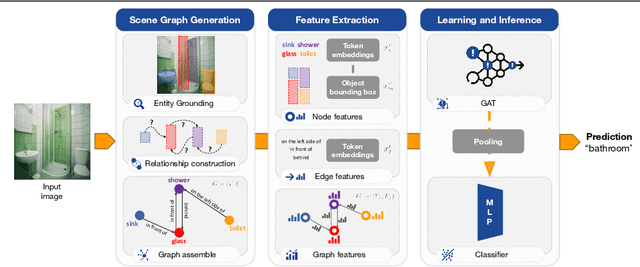
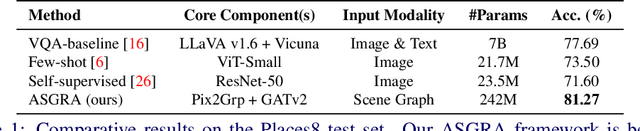
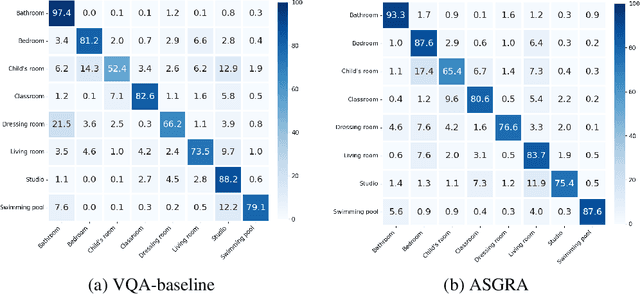

Indoor scene classification is a critical task in computer vision, with wide-ranging applications that go from robotics to sensitive content analysis, such as child sexual abuse imagery (CSAI) classification. The problem is particularly challenging due to the intricate relationships between objects and complex spatial layouts. In this work, we propose the Attention over Scene Graphs for Sensitive Content Analysis (ASGRA), a novel framework that operates on structured graph representations instead of raw pixels. By first converting images into Scene Graphs and then employing a Graph Attention Network for inference, ASGRA directly models the interactions between a scene's components. This approach offers two key benefits: (i) inherent explainability via object and relationship identification, and (ii) privacy preservation, enabling model training without direct access to sensitive images. On Places8, we achieve 81.27% balanced accuracy, surpassing image-based methods. Real-world CSAI evaluation with law enforcement yields 74.27% balanced accuracy. Our results establish structured scene representations as a robust paradigm for indoor scene classification and CSAI classification. Code is publicly available at https://github.com/tutuzeraa/ASGRA.
Yet another algorithmic bias: A Discursive Analysis of Large Language Models Reinforcing Dominant Discourses on Gender and Race
Aug 14, 2025With the advance of Artificial Intelligence (AI), Large Language Models (LLMs) have gained prominence and been applied in diverse contexts. As they evolve into more sophisticated versions, it is essential to assess whether they reproduce biases, such as discrimination and racialization, while maintaining hegemonic discourses. Current bias detection approaches rely mostly on quantitative, automated methods, which often overlook the nuanced ways in which biases emerge in natural language. This study proposes a qualitative, discursive framework to complement such methods. Through manual analysis of LLM-generated short stories featuring Black and white women, we investigate gender and racial biases. We contend that qualitative methods such as the one proposed here are fundamental to help both developers and users identify the precise ways in which biases manifest in LLM outputs, thus enabling better conditions to mitigate them. Results show that Black women are portrayed as tied to ancestry and resistance, while white women appear in self-discovery processes. These patterns reflect how language models replicate crystalized discursive representations, reinforcing essentialization and a sense of social immobility. When prompted to correct biases, models offered superficial revisions that maintained problematic meanings, revealing limitations in fostering inclusive narratives. Our results demonstrate the ideological functioning of algorithms and have significant implications for the ethical use and development of AI. The study reinforces the need for critical, interdisciplinary approaches to AI design and deployment, addressing how LLM-generated discourses reflect and perpetuate inequalities.
Minimizing Risk Through Minimizing Model-Data Interaction: A Protocol For Relying on Proxy Tasks When Designing Child Sexual Abuse Imagery Detection Models
May 10, 2025The distribution of child sexual abuse imagery (CSAI) is an ever-growing concern of our modern world; children who suffered from this heinous crime are revictimized, and the growing amount of illegal imagery distributed overwhelms law enforcement agents (LEAs) with the manual labor of categorization. To ease this burden researchers have explored methods for automating data triage and detection of CSAI, but the sensitive nature of the data imposes restricted access and minimal interaction between real data and learning algorithms, avoiding leaks at all costs. In observing how these restrictions have shaped the literature we formalize a definition of "Proxy Tasks", i.e., the substitute tasks used for training models for CSAI without making use of CSA data. Under this new terminology we review current literature and present a protocol for making conscious use of Proxy Tasks together with consistent input from LEAs to design better automation in this field. Finally, we apply this protocol to study -- for the first time -- the task of Few-shot Indoor Scene Classification on CSAI, showing a final model that achieves promising results on a real-world CSAI dataset whilst having no weights actually trained on sensitive data.
Neglected Risks: The Disturbing Reality of Children's Images in Datasets and the Urgent Call for Accountability
Apr 20, 2025Including children's images in datasets has raised ethical concerns, particularly regarding privacy, consent, data protection, and accountability. These datasets, often built by scraping publicly available images from the Internet, can expose children to risks such as exploitation, profiling, and tracking. Despite the growing recognition of these issues, approaches for addressing them remain limited. We explore the ethical implications of using children's images in AI datasets and propose a pipeline to detect and remove such images. As a use case, we built the pipeline on a Vision-Language Model under the Visual Question Answering task and tested it on the #PraCegoVer dataset. We also evaluate the pipeline on a subset of 100,000 images from the Open Images V7 dataset to assess its effectiveness in detecting and removing images of children. The pipeline serves as a baseline for future research, providing a starting point for more comprehensive tools and methodologies. While we leverage existing models trained on potentially problematic data, our goal is to expose and address this issue. We do not advocate for training or deploying such models, but instead call for urgent community reflection and action to protect children's rights. Ultimately, we aim to encourage the research community to exercise - more than an additional - care in creating new datasets and to inspire the development of tools to protect the fundamental rights of vulnerable groups, particularly children.