 Add to Chrome
 Add to Firefox
 Add to Edge
Rethinking PPG-based Sleep Staging: Datasets, Metrics, and Benchmarks
Aug 02, 2026
Automated sleep staging assigns discrete stage labels to successive time epochs throughout an overnight recording; conventionally each window spans at least 30 seconds, reflecting the minimum temporal resolution of the clinical scoring standard. Wearable photoplethysmography (PPG) has attracted sustained interest as an ambulatory alternative to laboratory-based polysomnography, which relies on electroencephalography (EEG) and other recording modalities that are impractical outside clinical environments. Yet PPG-based staging trails EEG-based methods by a substantial margin, and we argue this gap largely reflects a mismatch between signal and task. Within a stable stage, PPG's inter-stage feature differences are more subtle than those in EEG; yet at stage boundaries, PPG's principal cardiovascular features, heart rate variability and pulse morphology, shift sharply within seconds. The conventional practice of assigning one label to each 30-second epoch therefore suppresses feature that is concentrated near boundaries. We address this gap in two steps. First, we develop a label expansion pipeline based on Hidden Semi-Markov Models that converts coarse epoch labels into sec-level annotations. To assess whether these expanded labels are reliable enough for downstream supervision, we validate them on a separate expert-reviewed dataset and through an auxiliary sleep-wake task whose labels are independent of the expansion pipeline. Second, we use the resulting sec-level supervision on MESA to improve conventional four-class epoch-level staging across four architecturally diverse baselines by 3.7--5.7\,pp in accuracy against the original epoch labels, with supplementary zero-shot evaluation on CFS showing that the transfer benefit persists under cohort and annotation-protocol shift.

Combining scEEG and PPG for reliable sleep staging using lightweight wearables
Feb 04, 2026Reliable sleep staging remains challenging for lightweight wearable devices such as single-channel electroencephalography (scEEG) or photoplethysmography (PPG). scEEG offers direct measurement of cortical activity and serves as the foundation for sleep staging, yet exhibits limited performance on light sleep stages. PPG provides a low-cost complement that captures autonomic signatures effective for detecting light sleep. However, prior PPG-based methods rely on full night recordings (8 - 10 hours) as input context, which is less practical to provide timely feedback for sleep intervention. In this work, we investigate scEEG-PPG fusion for 4-class sleep staging under short-window (30 s - 30 min) constraints. First, we evaluate the temporal context required for each modality, to better understand the relationship of sleep staging performance with respect to monitoring window. Second, we investigate three fusion strategies: score-level fusion, cross-attention fusion enabling feature-level interactions, and Mamba-enhanced fusion incorporating temporal context modeling. Third, we train and evaluate on the Multi-Ethnic Study of Atherosclerosis (MESA) dataset and perform cross-dataset validation on the Cleveland Family Study (CFS) and the Apnea, Bariatric surgery, and CPAP (ABC) datasets. The Mamba-enhanced fusion achieves the best performance on MESA (Cohen's Kappa $κ$ = 0.798, Acc = 86.9%), with particularly notable improvement in light sleep classification (F1-score: 85.63% vs. 77.76%, recall: 82.85% vs. 69.95% for scEEG alone), and generalizes well to CFS and ABC datasets with different populations. These findings suggest that scEEG-PPG fusion is a promising approach for lightweight wearable based sleep monitoring, offering a pathway toward more accessible sleep health assessment. Source code of this project can be found at: https://github.com/DavyWJW/scEEG-PPGFusion
A Federated Data-Driven Evolutionary Algorithm
Feb 16, 2021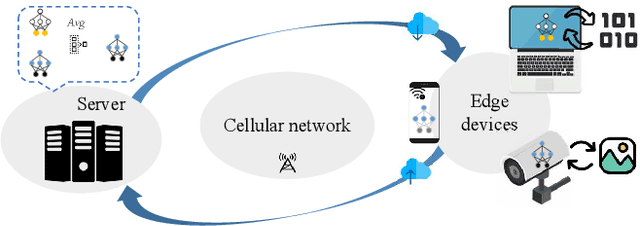
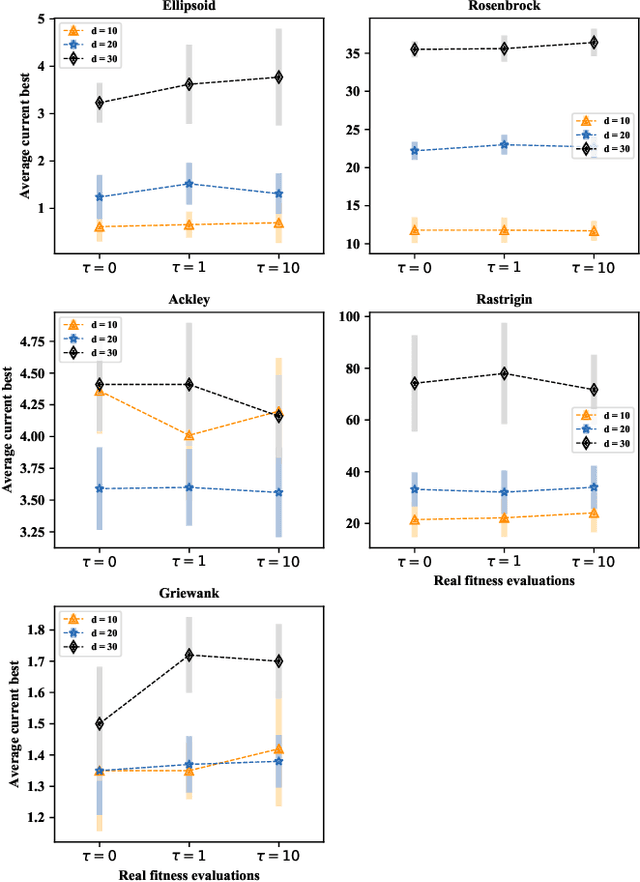
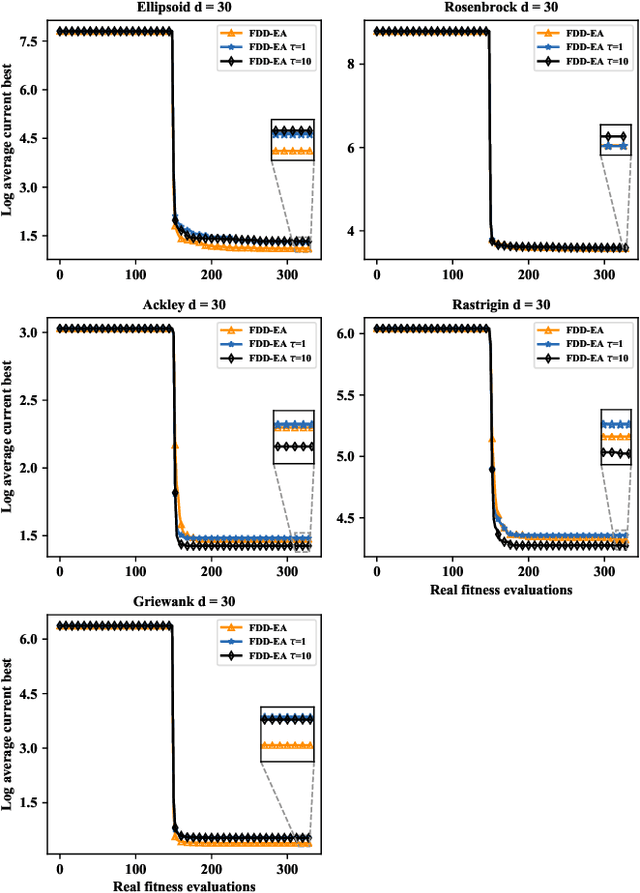
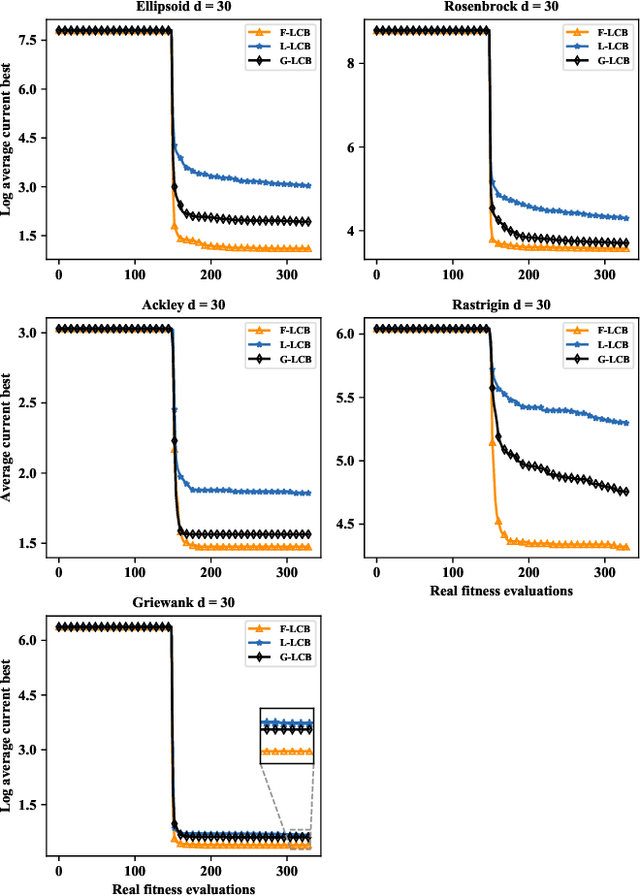
Data-driven evolutionary optimization has witnessed great success in solving complex real-world optimization problems. However, existing data-driven optimization algorithms require that all data are centrally stored, which is not always practical and may be vulnerable to privacy leakage and security threats if the data must be collected from different devices. To address the above issue, this paper proposes a federated data-driven evolutionary optimization framework that is able to perform data driven optimization when the data is distributed on multiple devices. On the basis of federated learning, a sorted model aggregation method is developed for aggregating local surrogates based on radial-basis-function networks. In addition, a federated surrogate management strategy is suggested by designing an acquisition function that takes into account the information of both the global and local surrogate models. Empirical studies on a set of widely used benchmark functions in the presence of various data distributions demonstrate the effectiveness of the proposed framework.