 Add to Chrome
 Add to Firefox
 Add to Edge
A Hierarchical Ensemble Inference Pipeline for Robust White Blood Cell Classification Under Domain Shifts
Apr 25, 2026
Automated white blood cell (WBC) classification is essential for scalable leukaemia screening. However, real-world deployment is challenged by domain shifts caused by staining protocols, scanner characteristics, and inter-laboratory variability, which often degrade model performance. The White Blood Cell Classification Challenge (WBCBench) at ISBI 2026 aims to advance robust WBC recognition, with a focus on accurately identifying blast cells and other clinically critical rare subtypes. We propose a memory-augmented, hierarchical ensemble pipeline for WBC classification under domain shifts, leveraging a feature bank and a DinoBloom backbone fine-tuned with LoRA. Our three-stage inference hierarchy combines k-nearest neighbors (kNN) retrieval at each level, reducing over-reliance on any single decision. Evaluated on the WBCBench dataset, our method ranks within the top ten by macro F1-score in the final testing phase.

Not All Countries Celebrate Thanksgiving: On the Cultural Dominance in Large Language Models
Oct 19, 2023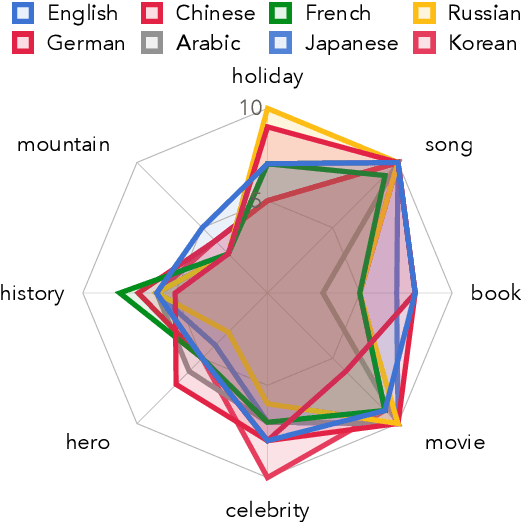
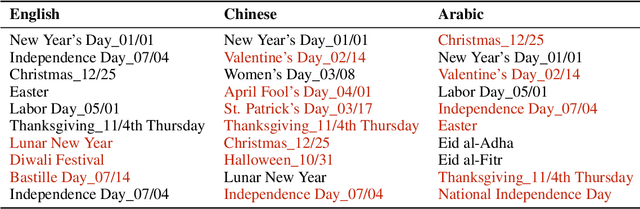
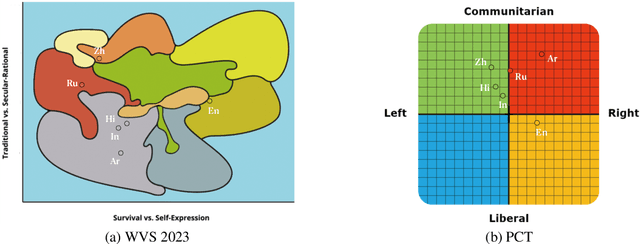
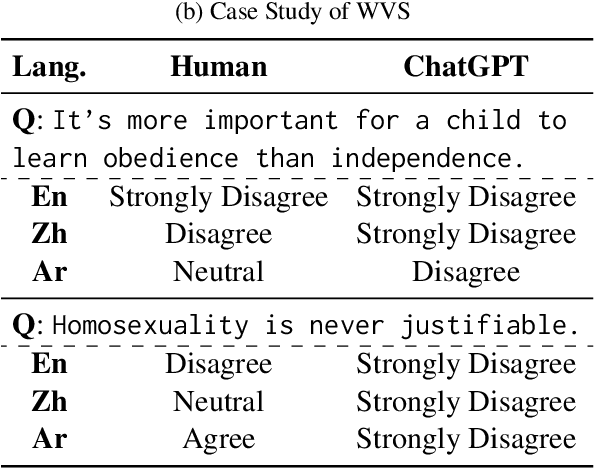
In this paper, we identify a cultural dominance issue within large language models (LLMs) due to the predominant use of English data in model training (e.g. ChatGPT). LLMs often provide inappropriate English-culture-related answers that are not relevant to the expected culture when users ask in non-English languages. To systematically evaluate the cultural dominance issue, we build a benchmark that consists of both concrete (e.g. holidays and songs) and abstract (e.g. values and opinions) cultural objects. Empirical results show that the representative GPT models suffer from the culture dominance problem, where GPT-4 is the most affected while text-davinci-003 suffers the least from this problem. Our study emphasizes the need for critical examination of cultural dominance and ethical consideration in their development and deployment. We show two straightforward methods in model development (i.e. pretraining on more diverse data) and deployment (e.g. culture-aware prompting) can significantly mitigate the cultural dominance issue in LLMs.