 Add to Chrome
 Add to Firefox
 Add to Edge
Agentic Metaverse Services: A New As-a-Service Paradigm
Jul 30, 2026
Generative Artificial Intelligence (GenAI) is reconstructing the digital virtual world, upgrading agents through enhancing their abilities in autonomous learning, multi-modal interaction, content generation, and collaborative decision-making. In particular, the shift from conversational chatbots to agentic AI, the most recent significant technical breakthrough of GenAI, has brought a new form of services, agentic services and Agent-as-a-Service (AaaS), in which the agent's abilities are encapsulated, such as perception, decision-making, execution, collaboration, and content generation, to provide the customized agent services to users. The metaverse is a virtual ecosystem for human life, work, creation, and entertainment, supported by the new generation of digital technologies. Through combining agentic services and the metaverse, an Agentic Metaverse Service, denoted as AMServ, is produced for metaverse business processing, as a new form of metaverse service. The AaaS in the metaverse environment, denoted as Meta-AaaS, as an approach to realize AMServ, has become a new paradigm of agentic services and service computing. This paper overviews the evolution and new features of agents and services empowered by GenAI, reveals the roles and principles of agentic services in the metaverse environment, presents the forms, characteristics, and principles of the AMServ and the Meta-AaaS, discusses the typical application examples of the AMServ and the Meta-AaaS, and finally points out the new tendencies and research directions of the AMServ and the Meta-AaaS. The AMServ and the Meta-AaaS will bring great opportunities to human society and services in the AI era, and promote the rapid development of emerging service industries in the future.

Perturbation-based Graph Active Learning for Weakly-Supervised Belief Representation Learning
Oct 24, 2024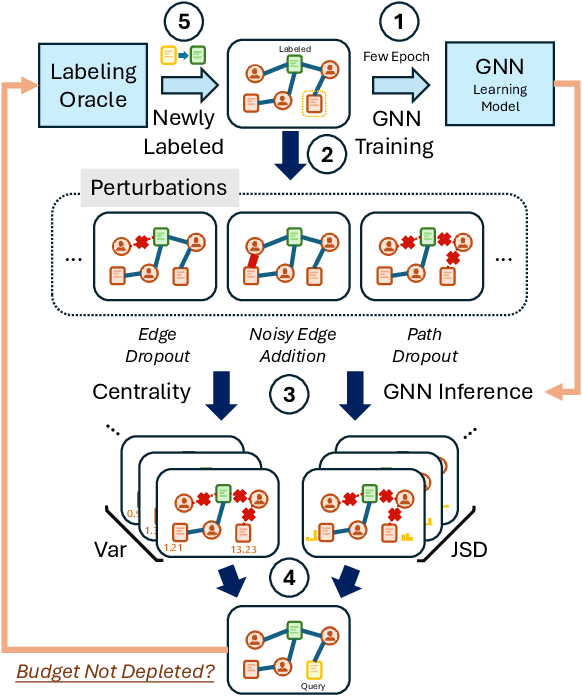
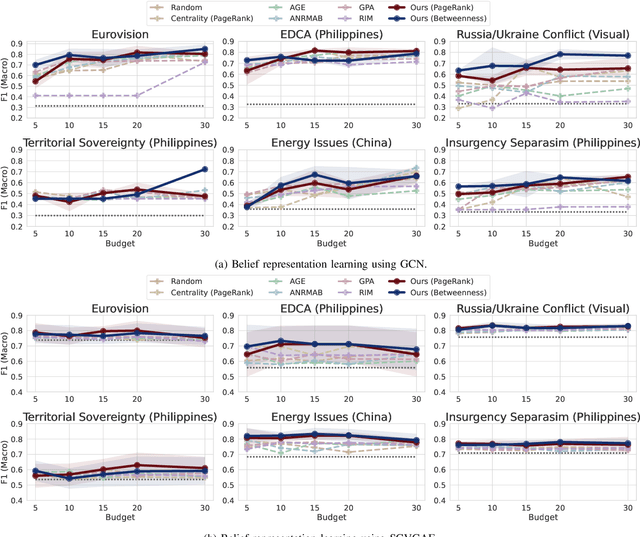
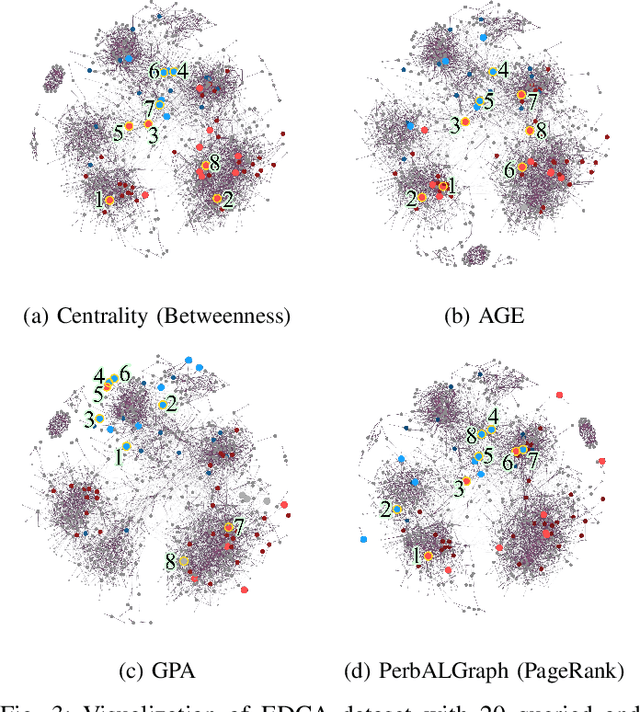
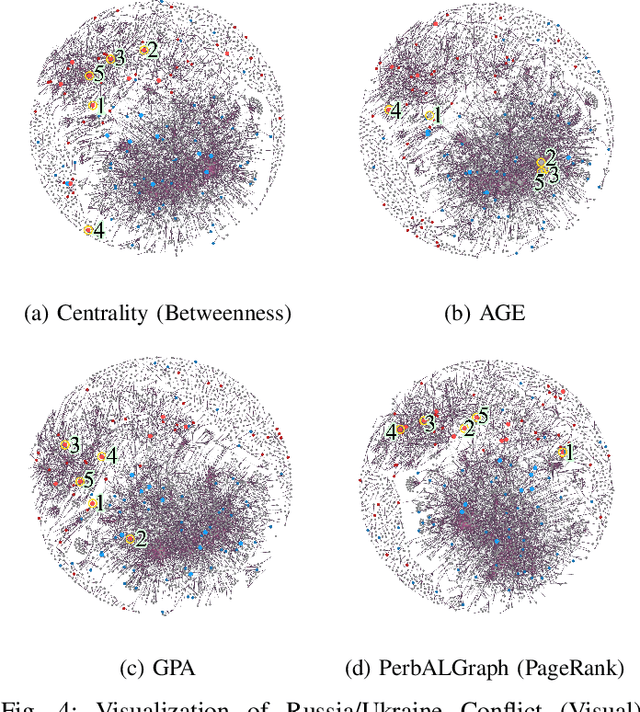
This paper addresses the problem of optimizing the allocation of labeling resources for semi-supervised belief representation learning in social networks. The objective is to strategically identify valuable messages on social media graphs that are worth labeling within a constrained budget, ultimately maximizing the task's performance. Despite the progress in unsupervised or semi-supervised methods in advancing belief and ideology representation learning on social networks and the remarkable efficacy of graph learning techniques, the availability of high-quality curated labeled social data can greatly benefit and further improve performances. Consequently, allocating labeling efforts is a critical research problem in scenarios where labeling resources are limited. This paper proposes a graph data augmentation-inspired perturbation-based active learning strategy (PerbALGraph) that progressively selects messages for labeling according to an automatic estimator, obviating human guidance. This estimator is based on the principle that messages in the network that exhibit heightened sensitivity to structural features of the observational data indicate landmark quality that significantly influences semi-supervision processes. We design the estimator to be the prediction variance under a set of designed graph perturbations, which is model-agnostic and application-independent. Extensive experiment results demonstrate the effectiveness of the proposed strategy for belief representation learning tasks.