 Add to Chrome
 Add to Firefox
 Add to Edge
Towards Explainable Quantum AI: Informing the Encoder Selection of Quantum Neural Networks via Visualization
Dec 16, 2025

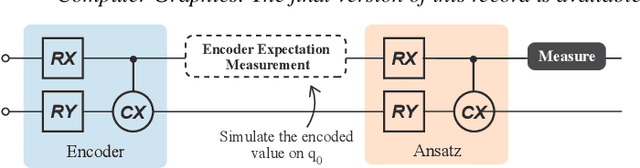
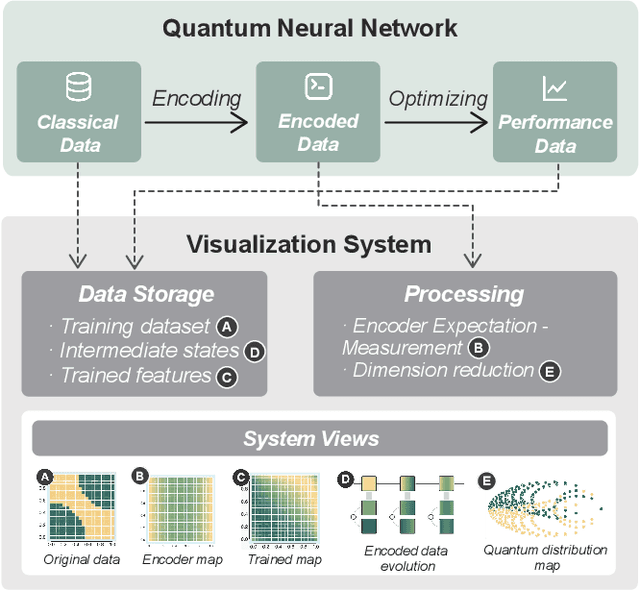
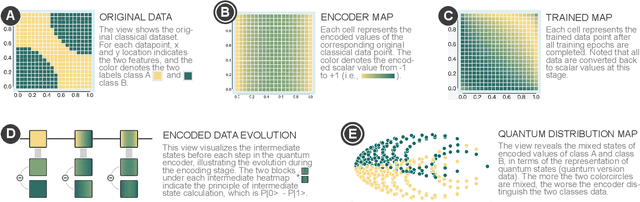
Quantum Neural Networks (QNNs) represent a promising fusion of quantum computing and neural network architectures, offering speed-ups and efficient processing of high-dimensional, entangled data. A crucial component of QNNs is the encoder, which maps classical input data into quantum states. However, choosing suitable encoders remains a significant challenge, largely due to the lack of systematic guidance and the trial-and-error nature of current approaches. This process is further impeded by two key challenges: (1) the difficulty in evaluating encoded quantum states prior to training, and (2) the lack of intuitive methods for analyzing an encoder's ability to effectively distinguish data features. To address these issues, we introduce a novel visualization tool, XQAI-Eyes, which enables QNN developers to compare classical data features with their corresponding encoded quantum states and to examine the mixed quantum states across different classes. By bridging classical and quantum perspectives, XQAI-Eyes facilitates a deeper understanding of how encoders influence QNN performance. Evaluations across diverse datasets and encoder designs demonstrate XQAI-Eyes's potential to support the exploration of the relationship between encoder design and QNN effectiveness, offering a holistic and transparent approach to optimizing quantum encoders. Moreover, domain experts used XQAI-Eyes to derive two key practices for quantum encoder selection, grounded in the principles of pattern preservation and feature mapping.

Towards Quantum Federated Learning
Jun 16, 2023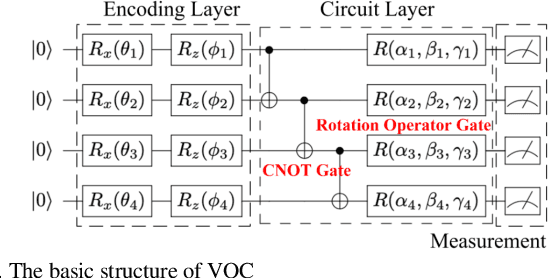
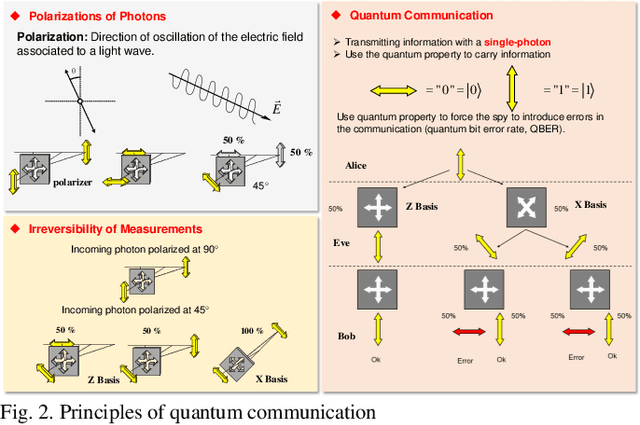
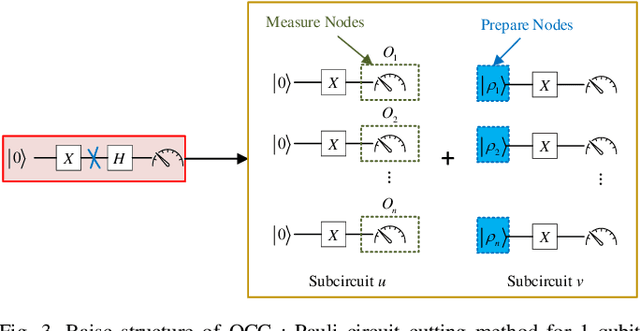
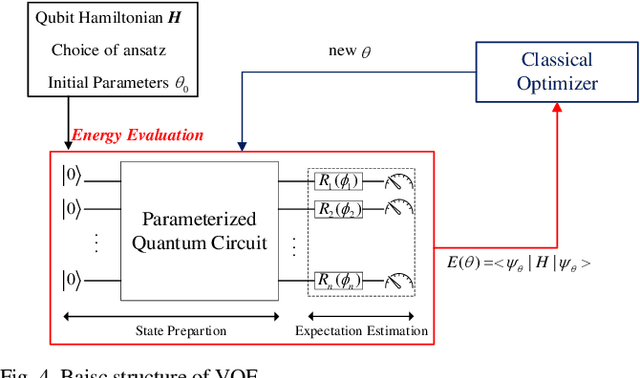
Quantum Federated Learning (QFL) is an emerging interdisciplinary field that merges the principles of Quantum Computing (QC) and Federated Learning (FL), with the goal of leveraging quantum technologies to enhance privacy, security, and efficiency in the learning process. Currently, there is no comprehensive survey for this interdisciplinary field. This review offers a thorough, holistic examination of QFL. We aim to provide a comprehensive understanding of the principles, techniques, and emerging applications of QFL. We discuss the current state of research in this rapidly evolving field, identify challenges and opportunities associated with integrating these technologies, and outline future directions and open research questions. We propose a unique taxonomy of QFL techniques, categorized according to their characteristics and the quantum techniques employed. As the field of QFL continues to progress, we can anticipate further breakthroughs and applications across various industries, driving innovation and addressing challenges related to data privacy, security, and resource optimization. This review serves as a first-of-its-kind comprehensive guide for researchers and practitioners interested in understanding and advancing the field of QFL.