 Add to Chrome
 Add to Firefox
 Add to Edge
Advancing Relevance Measurement with Vision-Language Models for Web-Scale Search
Aug 03, 2026
Relevance evaluation plays a crucial role in personalized search systems, serving as a guardrail alongside user engagement metrics to ensure that search results align with user queries and intent. While human annotation is the traditional method for relevance evaluation, its high cost and long turnaround time limit its scalability. In this work, we present a VLM-based automated relevance evaluation pipeline deployed within Pinterest Search for online A/B experiments. We rigorously validate the alignment between VLM-generated judgments and human annotations, demonstrating that VLMs can provide reliable relevance measurement for experiments while greatly improving the evaluation efficiency. Leveraging VLM-based labeling further unlocks opportunities to expand the query set, optimize sampling design, and efficiently assess a wider range of search experiences at scale. This approach leads to higher-quality relevance metrics and significantly reduces the Minimum Detectable Effects (MDEs) in online experiment measurements.

Spelling Correction as a Foreign Language
May 21, 2017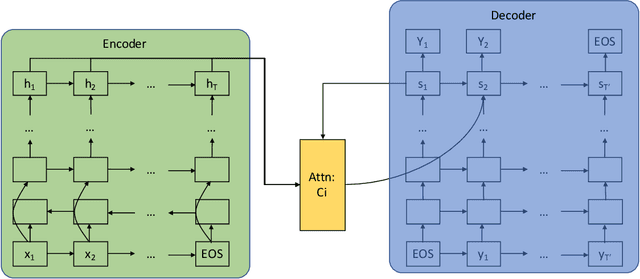
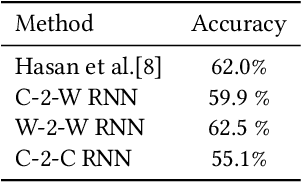
In this paper, we reformulated the spell correction problem as a machine translation task under the encoder-decoder framework. This reformulation enabled us to use a single model for solving the problem that is traditionally formulated as learning a language model and an error model. This model employs multi-layer recurrent neural networks as an encoder and a decoder. We demonstrate the effectiveness of this model using an internal dataset, where the training data is automatically obtained from user logs. The model offers competitive performance as compared to the state of the art methods but does not require any feature engineering nor hand tuning between models.