 Add to Chrome
 Add to Firefox
 Add to Edge
Advancing Relevance Measurement with Vision-Language Models for Web-Scale Search
Aug 03, 2026
Relevance evaluation plays a crucial role in personalized search systems, serving as a guardrail alongside user engagement metrics to ensure that search results align with user queries and intent. While human annotation is the traditional method for relevance evaluation, its high cost and long turnaround time limit its scalability. In this work, we present a VLM-based automated relevance evaluation pipeline deployed within Pinterest Search for online A/B experiments. We rigorously validate the alignment between VLM-generated judgments and human annotations, demonstrating that VLMs can provide reliable relevance measurement for experiments while greatly improving the evaluation efficiency. Leveraging VLM-based labeling further unlocks opportunities to expand the query set, optimize sampling design, and efficiently assess a wider range of search experiences at scale. This approach leads to higher-quality relevance metrics and significantly reduces the Minimum Detectable Effects (MDEs) in online experiment measurements.

LLM-based Relevance Assessment for Web-Scale Search Evaluation at Pinterest
Sep 03, 2025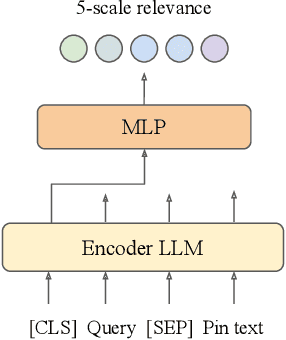
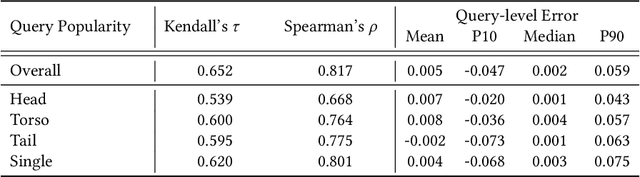
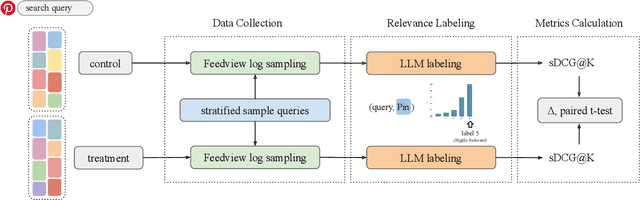
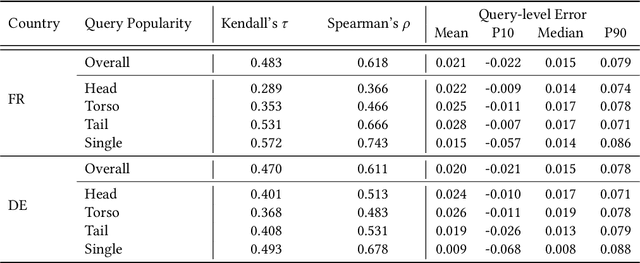
Relevance evaluation plays a crucial role in personalized search systems to ensure that search results align with a user's queries and intent. While human annotation is the traditional method for relevance evaluation, its high cost and long turnaround time limit its scalability. In this work, we present our approach at Pinterest Search to automate relevance evaluation for online experiments using fine-tuned LLMs. We rigorously validate the alignment between LLM-generated judgments and human annotations, demonstrating that LLMs can provide reliable relevance measurement for experiments while greatly improving the evaluation efficiency. Leveraging LLM-based labeling further unlocks the opportunities to expand the query set, optimize sampling design, and efficiently assess a wider range of search experiences at scale. This approach leads to higher-quality relevance metrics and significantly reduces the Minimum Detectable Effect (MDE) in online experiment measurements.