 Add to Chrome
 Add to Firefox
 Add to Edge
Multilingual Idioms in Sentences and Conversations Across High-, Medium-, and Low-Resource Languages
Jun 01, 2026
Idiomatic expressions pose a major challenge for multilingual NLP because their meanings shift between figurative and literal usage, often requiring context for accurate interpretation. Prior work has focused on high-resource languages typically evaluates isolated idiom-meaning questions, overlooking realistic discourse. We introduce MIDI, a multilingual idiom dataset spanning 3 high-, 3 medium-, and 12 low-resource languages, curated by native speakers. Unlike previous datasets, MIDI provides idioms embedded in both sentence-level and conversational contexts, capturing both literal and figurative readings. Benchmarking state-of-the-art models shows that idiom comprehension degrades in low-resource languages and that, in all resource tiers, literal interpretations are substantially harder than figurative ones. Conversational context improves performance but does not eliminate these disparities. Through controlled tests and interventions on hidden representations, we further separate memorization from reasoning, exposing core limitations of current models.

Crowdsource, Crawl, or Generate? Creating SEA-VL, a Multicultural Vision-Language Dataset for Southeast Asia
Mar 10, 2025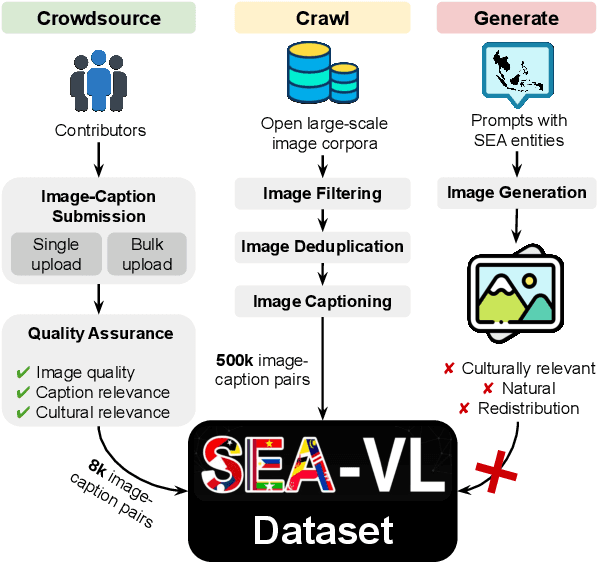
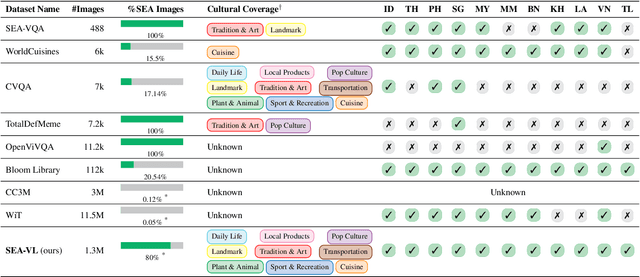
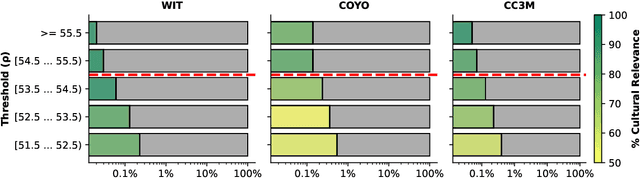
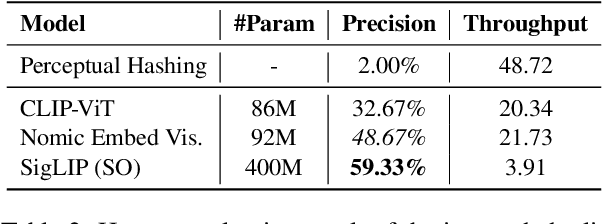
Southeast Asia (SEA) is a region of extraordinary linguistic and cultural diversity, yet it remains significantly underrepresented in vision-language (VL) research. This often results in artificial intelligence (AI) models that fail to capture SEA cultural nuances. To fill this gap, we present SEA-VL, an open-source initiative dedicated to developing high-quality, culturally relevant data for SEA languages. By involving contributors from SEA countries, SEA-VL aims to ensure better cultural relevance and diversity, fostering greater inclusivity of underrepresented languages in VL research. Beyond crowdsourcing, our initiative goes one step further in the exploration of the automatic collection of culturally relevant images through crawling and image generation. First, we find that image crawling achieves approximately ~85% cultural relevance while being more cost- and time-efficient than crowdsourcing. Second, despite the substantial progress in generative vision models, synthetic images remain unreliable in accurately reflecting SEA cultures. The generated images often fail to reflect the nuanced traditions and cultural contexts of the region. Collectively, we gather 1.28M SEA culturally-relevant images, more than 50 times larger than other existing datasets. Through SEA-VL, we aim to bridge the representation gap in SEA, fostering the development of more inclusive AI systems that authentically represent diverse cultures across SEA.
Synthetic Data Generation for Culturally Nuanced Commonsense Reasoning in Low-Resource Languages
Feb 18, 2025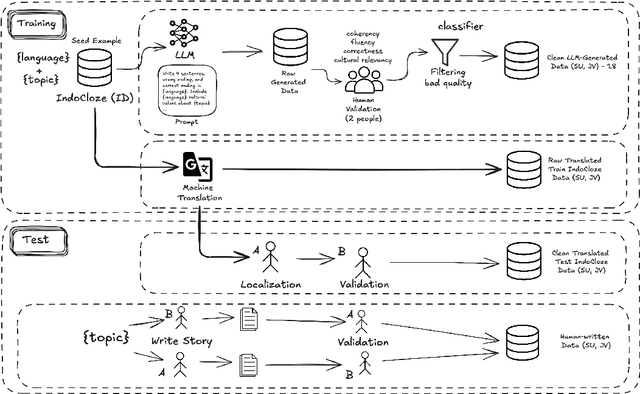
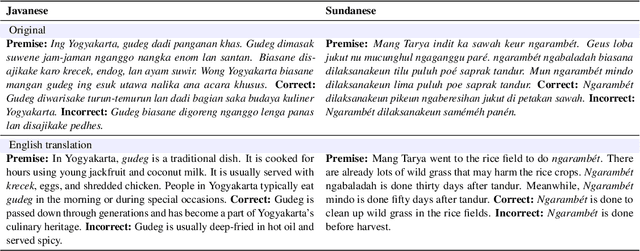
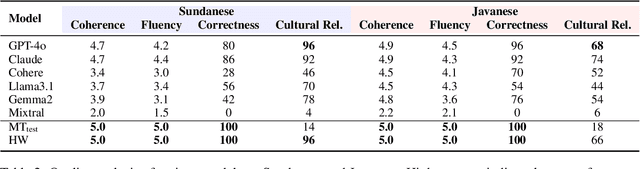

Quantifying reasoning capability in low-resource languages remains a challenge in NLP due to data scarcity and limited access to annotators. While LLM-assisted dataset construction has proven useful for medium- and high-resource languages, its effectiveness in low-resource languages, particularly for commonsense reasoning, is still unclear. In this paper, we compare three dataset creation strategies: (1) LLM-assisted dataset generation, (2) machine translation, and (3) human-written data by native speakers, to build a culturally nuanced story comprehension dataset. We focus on Javanese and Sundanese, two major local languages in Indonesia, and evaluate the effectiveness of open-weight and closed-weight LLMs in assisting dataset creation through extensive manual validation. To assess the utility of synthetic data, we fine-tune language models on classification and generation tasks using this data and evaluate performance on a human-written test set. Our findings indicate that LLM-assisted data creation outperforms machine translation.