 Add to Chrome
 Add to Firefox
 Add to Edge
Large Models for Small Devices: Recent Advances and Empirical Analysis of Edge AI Deployment
Aug 16, 2026
Running large AI models on resource-constrained edge devices requires model compression to reduce model size and computation. What compresses well, however, need not deploy well. We survey dozens of recent works that report compression results on real hardware and extract practical deployment guidelines from them. Following these guidelines, we deploy compact language and image models on GPU, CPU, and Raspberry Pi platforms across question answering and image segmentation. No single technique wins across tasks. For question answering, Qwen3.5 0.8B reaches 93.85 SQuAD F1 and 92 EM under Q5_K_M GGUF quantization, while structured pruning at the same precision costs 16 F1 at a 1% ratio. For segmentation, the ranking reverses: default quantization leaves parameters and MACs unchanged, whereas pruning cuts model size by nearly 80% at near-constant mIoU. Pruning can even inflate the deployed artifact by 21-49% by breaking k-quant super-block alignment; combined with longer, less format-compliant outputs, this raises Raspberry Pi latency up to 3.4x. Compression can also manufacture the appearance of competence rather than destroy it visibly: one LoRA-recovered variant stays fully parseable and holds 71% strict BoolQ accuracy while sending 97 of 100 predictions to a single class, at 52.6% balanced accuracy. We explain these effects through neural-flow graph analysis and prefill-decode-level latency decomposition, and condense them into task-specific deployment research directions. The right technique depends on the task, the model, and the hardware. Our experiment code and artifacts are open-sourced at https://github.com/Arnavvvkumar/deployment

When Does Latent Communication Pay? A Causal Audit of Relayed KV Caches in Multi-Agent LLMs
Aug 05, 2026Multi-agent LLM systems relay key--value caches instead of text and credit their gains to exchanged ``latent thoughts''. That credit is a claim about \emph{which} example's cache is relayed, not merely that one is. We audit it causally in released systems. The cache is replaced with deranged (mismatched-example), zeroed, and moment-matched random counterparts, under two regimes defined by whether the receiver needs the sender's private information. Where it does, the battery reads ceiling: 100% against 23--25% for answer-irrelevant relays on the primary backbone, a contrast replicated across three families, five checkpoints, and a prose document-QA surface. Where it does not, a pre-registered five-seed protocol establishes equivalence within 2.8 points, a margin anchored to the audited system's reported gain, under Holm-corrected TOST on GSM8K and ARC-Challenge across three Qwen3 scales and on MedQA at 8B (one cell shows a small detected advantage inside the margin); a second family shows no detected advantage. A large cache effect need not be a pairing effect. In one natural cell, zeroing the relay costs 14.7 points; a mismatched cache, 0.4. Nor is need sufficient: under the same test, delivered channels span ceiling (LatentMAS's native relay), partial (KVComm's layer subset), and no detected example-specific transfer (C2C's released projector). Benchmark deltas do not by themselves establish latent-thought transmission; establishing it takes a mismatched-cache audit, which we release.
KathaTrace: Diagnosing Semantic Trajectory Collapse in Generated Visual Narratives
Jul 01, 2026Visual narratives are central to storyboards, comics, children's media, and film previsualization, where viewers understand stories from images alone. Recent generators such as StoryDiffusion produce coherent sequences, but visual coherence does not guarantee that source-story transition meaning remains recoverable. Existing benchmarks assess visual quality, content faithfulness, and scene coherence, but miss a critical failure mode: storyboards where scenes appear visually coherent while the semantic link between scenes disappears. We introduce KathaTrace, a generator-agnostic protocol for diagnosing semantic trajectory collapse, defined as the loss of transition meaning needed to understand how one scene follows another. KathaTrace evaluates transitions under three evidence conditions: text-only, image-only, and text-plus-image, and filters ambiguous items. We contribute KathaBench-25K, with 5,000 narratives from classical collections including Aesop, Panchatantra, and Kathasaritasagara, 20,000 transitions, and 28,712 recoverability questions. We define Semantic Trajectory Gap, or STG, as text-only minus image-only recoverability, measuring transition meaning lost during visualization. Human validation yields Fleiss' kappa = 0.845. Experiments across state-of-the-art generators show substantial STG of 23.5 +/- 1.3. Semantic Compass, an actionability probe, uses KathaTrace signals for post-generation repair and improves storyboard selection.
TaxaAdapter: Vision Taxonomy Models are Key to Fine-grained Image Generation over the Tree of Life
Mar 27, 2026Accurately generating images across the Tree of Life is difficult: there are over 10M distinct species on Earth, many of which differ only by subtle visual traits. Despite the remarkable progress in text-to-image synthesis, existing models often fail to capture the fine-grained visual cues that define species identity, even when their outputs appear photo-realistic. To this end, we propose TaxaAdapter, a simple and lightweight approach that incorporates Vision Taxonomy Models (VTMs) such as BioCLIP to guide fine-grained species generation. Our method injects VTM embeddings into a frozen text-to-image diffusion model, improving species-level fidelity while preserving flexible text control over attributes such as pose, style, and background. Extensive experiments demonstrate that TaxaAdapter consistently improves morphology fidelity and species-identity accuracy over strong baselines, with a cleaner architecture and training recipe. To better evaluate these improvements, we also introduce a multimodal Large Language Model-based metric that summarizes trait-level descriptions from generated and real images, providing a more interpretable measure of morphological consistency. Beyond this, we observe that TaxaAdapter exhibits strong generalization capabilities, enabling species synthesis in challenging regimes such as few-shot species with only a handful of training images and even species unseen during training. Overall, our results highlight that VTMs are a key ingredient for scalable, fine-grained species generation.
DiReCT: Disentangled Regularization of Contrastive Trajectories for Physics-Refined Video Generation
Mar 26, 2026Flow-matching video generators produce temporally coherent, high-fidelity outputs yet routinely violate elementary physics because their reconstruction objectives penalize per-frame deviations without distinguishing physically consistent dynamics from impossible ones. Contrastive flow matching offers a principled remedy by pushing apart velocity-field trajectories of differing conditions, but we identify a fundamental obstacle in the text-conditioned video setting: semantic-physics entanglement. Because natural-language prompts couple scene content with physical behavior, naive negative sampling draws conditions whose velocity fields largely overlap with the positive sample's, causing the contrastive gradient to directly oppose the flow-matching objective. We formalize this gradient conflict, deriving a precise alignment condition that reveals when contrastive learning helps versus harms training. Guided by this analysis, we introduce DiReCT (Disentangled Regularization of Contrastive Trajectories), a lightweight post-training framework that decomposes the contrastive signal into two complementary scales: a macro-contrastive term that draws partition-exclusive negatives from semantically distant regions for interference-free global trajectory separation, and a micro-contrastive term that constructs hard negatives sharing full scene semantics with the positive sample but differing along a single, LLM-perturbed axis of physical behavior; spanning kinematics, forces, materials, interactions, and magnitudes. A velocity-space distributional regularizer helps to prevent catastrophic forgetting of pretrained visual quality. When applied to Wan 2.1-1.3B, our method improves the physical commonsense score on VideoPhy by 16.7% and 11.3% compared to the baseline and SFT, respectively, without increasing training time.
ECLIPSE: An Evolutionary Computation Library for Instrumentation Prototyping in Scientific Engineering
Jan 08, 2026Designing scientific instrumentation often requires exploring large, highly constrained design spaces using computationally expensive physics simulations. These simulators pose substantial challenges for integrating evolutionary computation (EC) into scientific design workflows. Evolutionary computation typically requires numerous design evaluations, making the integration of slow, low-throughput simulators particularly challenging, as they are optimized for accuracy and ease of use rather than throughput. We present ECLIPSE, an evolutionary computation framework built to interface directly with complex, domain-specific simulation tools while supporting flexible geometric and parametric representations of scientific hardware. ECLIPSE provides a modular architecture consisting of (1) Individuals, which encode hardware designs using domain-aware, physically constrained representations; (2) Evaluators, which prepare simulation inputs, invoke external simulators, and translate the simulator's outputs into fitness measures; and (3) Evolvers, which implement EC algorithms suitable for high-cost, limited-throughput environments. We demonstrate the utility of ECLIPSE across several active space-science applications, including evolved 3D antennas and spacecraft geometries optimized for drag reduction in very low Earth orbit. We further discuss the practical challenges encountered when coupling EC with scientific simulation workflows, including interoperability constraints, parallelization limits, and extreme evaluation costs, and outline ongoing efforts to combat these challenges. ECLIPSE enables interdisciplinary teams of physicists, engineers, and EC researchers to collaboratively explore unconventional designs for scientific hardware while leveraging existing domain-specific simulation software.
DSSRNN: Decomposition-Enhanced State-Space Recurrent Neural Network for Time-Series Analysis
Dec 01, 2024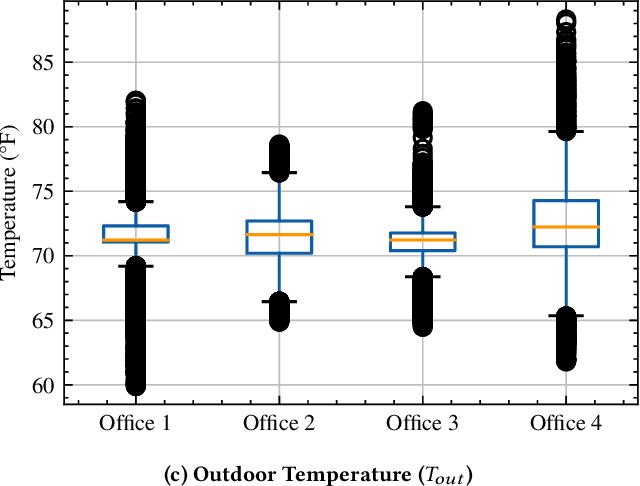
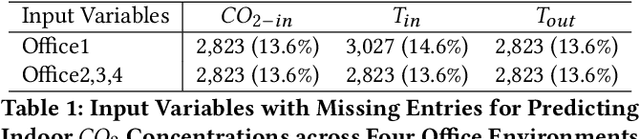
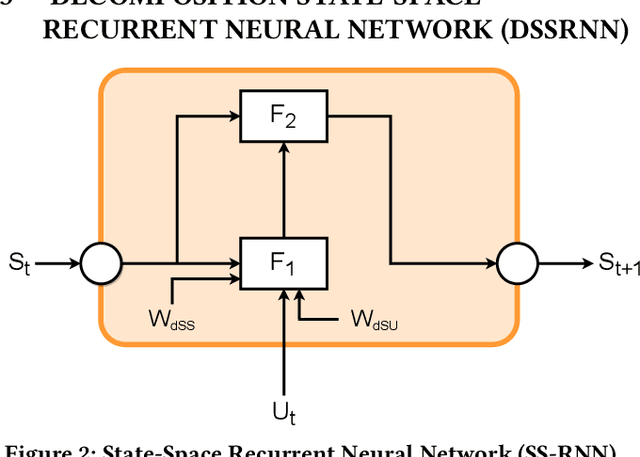

Time series forecasting is a crucial yet challenging task in machine learning, requiring domain-specific knowledge due to its wide-ranging applications. While recent Transformer models have improved forecasting capabilities, they come with high computational costs. Linear-based models have shown better accuracy than Transformers but still fall short of ideal performance. To address these challenges, we introduce the Decomposition State-Space Recurrent Neural Network (DSSRNN), a novel framework designed for both long-term and short-term time series forecasting. DSSRNN uniquely combines decomposition analysis to capture seasonal and trend components with state-space models and physics-based equations. We evaluate DSSRNN's performance on indoor air quality datasets, focusing on CO2 concentration prediction across various forecasting horizons. Results demonstrate that DSSRNN consistently outperforms state-of-the-art models, including transformer-based architectures, in terms of both Mean Squared Error (MSE) and Mean Absolute Error (MAE). For example, at the shortest horizon (T=96) in Office 1, DSSRNN achieved an MSE of 0.378 and an MAE of 0.401, significantly lower than competing models. Additionally, DSSRNN exhibits superior computational efficiency compared to more complex models. While not as lightweight as the DLinear model, DSSRNN achieves a balance between performance and efficiency, with only 0.11G MACs and 437MiB memory usage, and an inference time of 0.58ms for long-term forecasting. This work not only showcases DSSRNN's success but also establishes a new benchmark for physics-informed machine learning in environmental forecasting and potentially other domains.
DLaVA: Document Language and Vision Assistant for Answer Localization with Enhanced Interpretability and Trustworthiness
Nov 29, 2024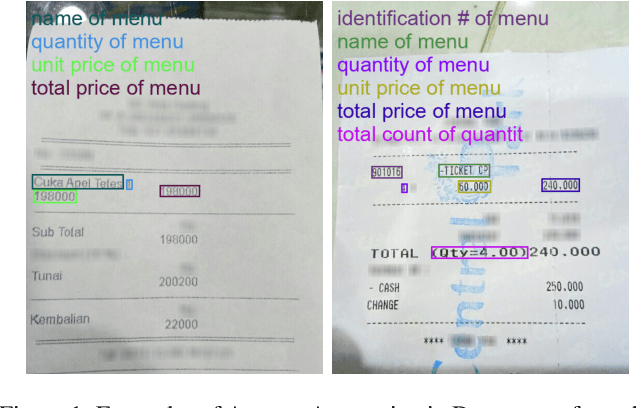

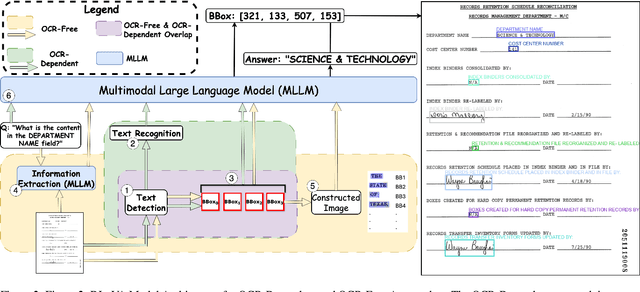
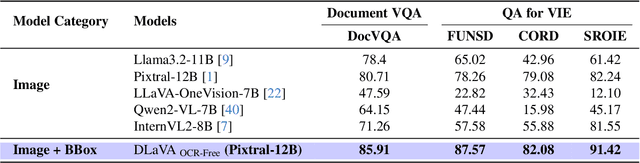
Document Visual Question Answering (VQA) requires models to interpret textual information within complex visual layouts and comprehend spatial relationships to answer questions based on document images. Existing approaches often lack interpretability and fail to precisely localize answers within the document, hindering users' ability to verify responses and understand the reasoning process. Moreover, standard metrics like Average Normalized Levenshtein Similarity (ANLS) focus on text accuracy but overlook spatial correctness. We introduce DLaVA, a novel method that enhances Multimodal Large Language Models (MLLMs) with answer localization capabilities for Document VQA. Our approach integrates image annotation directly into the MLLM pipeline, improving interpretability by enabling users to trace the model's reasoning. We present both OCR-dependent and OCR-free architectures, with the OCR-free approach eliminating the need for separate text recognition components, thus reducing complexity. To the best of our knowledge, DLaVA is the first approach to introduce answer localization within multimodal QA, marking a significant step forward in enhancing user trust and reducing the risk of AI hallucinations. Our contributions include enhancing interpretability and reliability by grounding responses in spatially annotated visual content, introducing answer localization in MLLMs, proposing a streamlined pipeline that combines an MLLM with a text detection module, and conducting comprehensive evaluations using both textual and spatial accuracy metrics, including Intersection over Union (IoU). Experimental results on standard datasets demonstrate that DLaVA achieves SOTA performance, significantly enhancing model transparency and reliability. Our approach sets a new benchmark for Document VQA, highlighting the critical importance of precise answer localization and model interpretability.
Scalable Deep Metric Learning on Attributed Graphs
Nov 20, 2024We consider the problem of constructing embeddings of large attributed graphs and supporting multiple downstream learning tasks. We develop a graph embedding method, which is based on extending deep metric and unbiased contrastive learning techniques to 1) work with attributed graphs, 2) enabling a mini-batch based approach, and 3) achieving scalability. Based on a multi-class tuplet loss function, we present two algorithms -- DMT for semi-supervised learning and DMAT-i for the unsupervised case. Analyzing our methods, we provide a generalization bound for the downstream node classification task and for the first time relate tuplet loss to contrastive learning. Through extensive experiments, we show high scalability of representation construction, and in applying the method for three downstream tasks (node clustering, node classification, and link prediction) better consistency over any single existing method.
Federated Contrastive Learning of Graph-Level Representations
Nov 18, 2024


Graph-level representations (and clustering/classification based on these representations) are required in a variety of applications. Examples include identifying malicious network traffic, prediction of protein properties, and many others. Often, data has to stay in isolated local systems (i.e., cannot be centrally shared for analysis) due to a variety of considerations like privacy concerns, lack of trust between the parties, regulations, or simply because the data is too large to be shared sufficiently quickly. This points to the need for federated learning for graph-level representations, a topic that has not been explored much, especially in an unsupervised setting. Addressing this problem, this paper presents a new framework we refer to as Federated Contrastive Learning of Graph-level Representations (FCLG). As the name suggests, our approach builds on contrastive learning. However, what is unique is that we apply contrastive learning at two levels. The first application is for local unsupervised learning of graph representations. The second level is to address the challenge associated with data distribution variation (i.e. the ``Non-IID issue") when combining local models. Through extensive experiments on the downstream task of graph-level clustering, we demonstrate FCLG outperforms baselines (which apply existing federated methods on existing graph-level clustering methods) with significant margins.