 Add to Chrome
 Add to Firefox
 Add to Edge
ConRub-Med: Reinforcement Learning with Consensus Rubrics for Open-Ended Medical Question Answering
Aug 11, 2026
Reinforcement learning with verifiable rewards has been especially effective in mathematics and coding, where answers can be checked automatically. Many open-ended medical questions lack comparably cheap outcome verifiers: responses may be partly correct, incomplete, or contain clinically consequential errors. Rubrics written or validated by physicians offer strong clinical grounding, but involving experts in every instance is costly. Model-generated rubrics make this supervision scalable. We introduce ConRub-Med to preserve useful distinctions as rubric feedback moves from construction to policy optimization. For each prompt, three heterogeneous language models propose atomic criteria independently; a separate model reviews them, retaining only criteria with semantic support from all three generators. Three-State scoring distinguishes correct coverage, missing information, and incorrect claims. Errors receive negative rather than zero credit. When every response in a complete Group Relative Policy Optimization (GRPO) group receives the same final reward, a pairwise judge provides sequence advantages only if both candidate orders agree, without changing the scalar rewards. Groups without ties use vanilla GRPO. In a blinded study matched by question, two medical experts rate panels from the full pipeline as more clinically relevant than panels produced by one generator. Across the evaluated open models, ConRub-Med ranks first on six of nine benchmarks and achieves the highest medical and generalization averages. Using the resulting rubric dataset of 5,166 prompts, it scores $38.98 \pm 1.04$ (mean $\pm$ SD) on HealthBench-Hard, compared with InfiMed-ORBIT's 33.60 with 8,000 samples and 37.30 with 28,000.

DeepFilter: An Instrumental Baseline for Accurate and Efficient Process Monitoring
Jan 02, 2025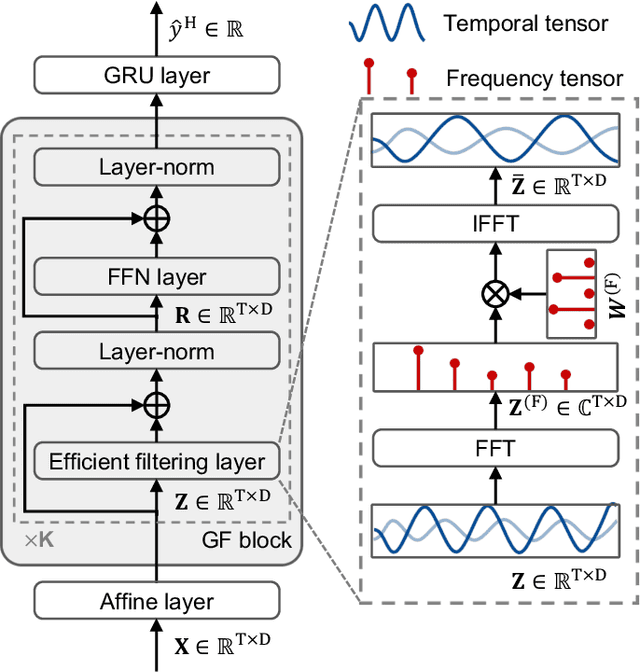


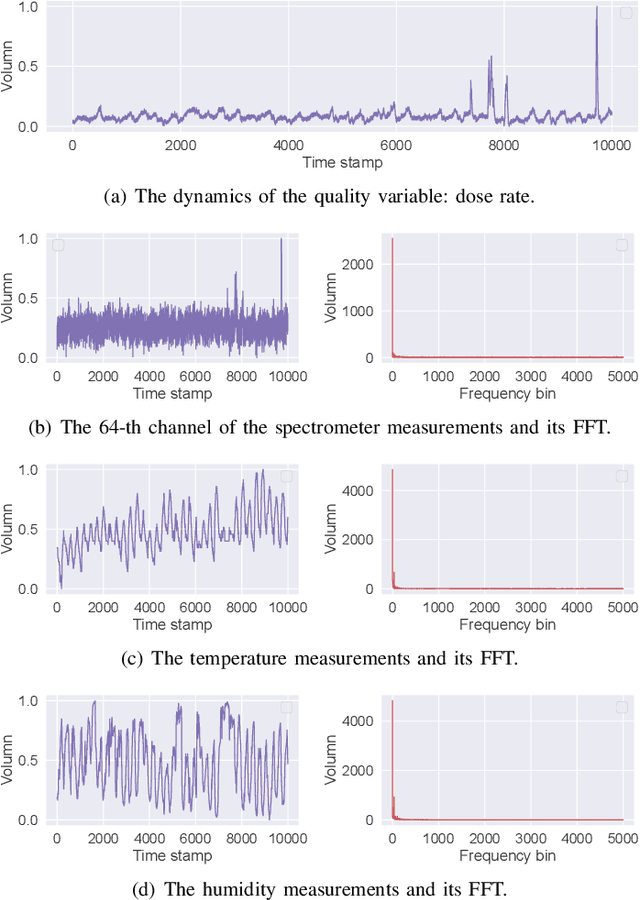
Effective process monitoring is increasingly vital in industrial automation for ensuring operational safety, necessitating both high accuracy and efficiency. Although Transformers have demonstrated success in various fields, their canonical form based on the self-attention mechanism is inadequate for process monitoring due to two primary limitations: (1) the step-wise correlations captured by self-attention mechanism are difficult to capture discriminative patterns in monitoring logs due to the lacking semantics of each step, thus compromising accuracy; (2) the quadratic computational complexity of self-attention hampers efficiency. To address these issues, we propose DeepFilter, a Transformer-style framework for process monitoring. The core innovation is an efficient filtering layer that excel capturing long-term and periodic patterns with reduced complexity. Equipping with the global filtering layer, DeepFilter enhances both accuracy and efficiency, meeting the stringent demands of process monitoring. Experimental results on real-world process monitoring datasets validate DeepFilter's superiority in terms of accuracy and efficiency compared to existing state-of-the-art models.