 Add to Chrome
 Add to Firefox
 Add to Edge
Think Thrice Before You Speak: Dual knowledge-enhanced Theory-of-Mind Reasoning for Persuasive Agents
May 21, 2026
Persuasive dialogue requires reasoning about others' latent mental states, a capability known as Theory of Mind (ToM). However, due to reliance on simple prompting strategies and insufficient ToM knowledge, existing LLMs often fail to capture the intrinsic dependencies among mental states, leading to fragmented representations and unstable reasoning. To address these challenges, we introduce the ToM-based Persuasive Dialogue (ToM-PD) task, grounded in the Belief-Desire-Intention (BDI) framework, which explicitly models the sequential dependencies among mental states in multi-turn dialogues. To facilitate research on this task, we construct a large-scale annotated dataset, ToM-based Broad Persuasive Dialogues (ToM-BPD), capturing fine-grained mental states and corresponding persuasive strategies. We further propose Think Thrice Before You Speak (TTBYS), a knowledge-enhanced stepwise reasoning framework that leverages both explicit and implicit prior experiences to improve LLMs' inference of desires, beliefs, and persuasive strategies. Experimental results demonstrate that Qwen3-8B equipped with TTBYS outperforms GPT-5 by 1.20%, 22.80%, and 16.97% in predicting desires, beliefs, and persuasive strategies, respectively. Case studies further show that our approach enhances interpretability and consistency in reasoning.

AI-Powered Text Generation for Harmonious Human-Machine Interaction: Current State and Future Directions
May 01, 2019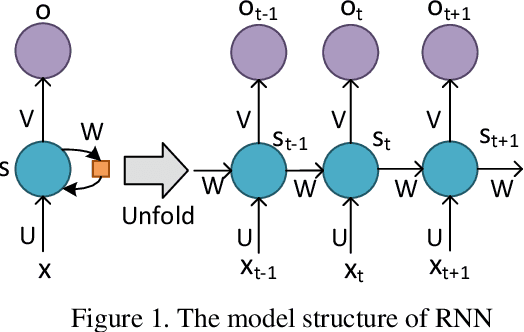
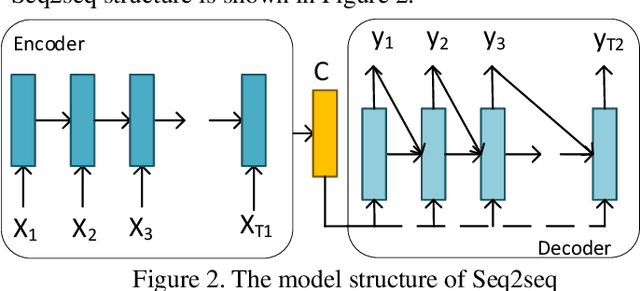
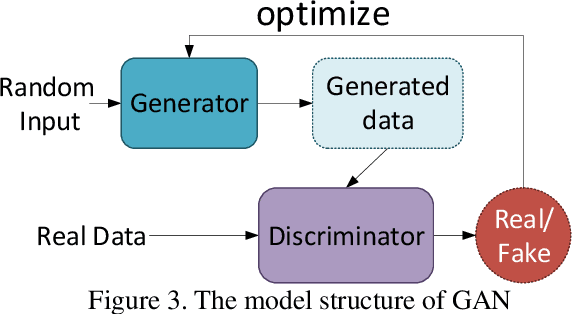
In the last two decades, the landscape of text generation has undergone tremendous changes and is being reshaped by the success of deep learning. New technologies for text generation ranging from template-based methods to neural network-based methods emerged. Meanwhile, the research objectives have also changed from generating smooth and coherent sentences to infusing personalized traits to enrich the diversification of newly generated content. With the rapid development of text generation solutions, one comprehensive survey is urgent to summarize the achievements and track the state of the arts. In this survey paper, we present the general systematical framework, illustrate the widely utilized models and summarize the classic applications of text generation.