 Add to Chrome
 Add to Firefox
 Add to Edge
Action-grounded tissue affordance enables anticipatory auto-framing that lowers surgeon cognitive workload during laparoscopic surgery
Aug 03, 2026
Computational attention models could help surgeons manage the visual demands of laparoscopy, but they require dense spatial labels that are difficult to obtain because surgical intent is highly specialized and tacit. Here, we introduce DiffeoAfford, an action-grounded tissue affordance framework that retrospectively derives visual attention supervision from completed surgical procedures. By combining diffeomorphism-constrained tissue tracking with instrument trajectory analysis, DiffeoAfford generates affordance hotspot labels without manual per-frame annotation. A real-time prediction model trained on these labels anticipates relevant surgical regions and enables AffordView, an assistive auto-framing system for laparoscopic visualization. The proposed framework aligns with expert annotations and intraoperative surgeon gaze, and reduces surgeon cognitive workload during real-world evaluations using subjective, physiological, and behavioral measures.

FedWSIDD: Federated Whole Slide Image Classification via Dataset Distillation
Jun 18, 2025
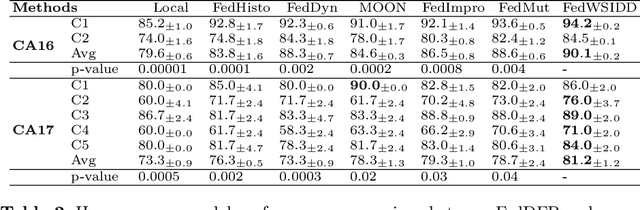
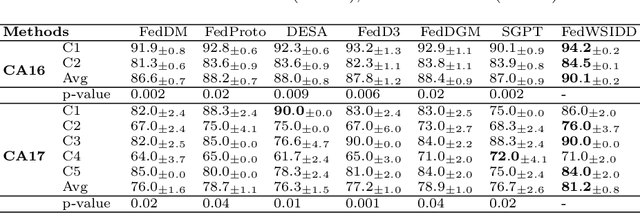
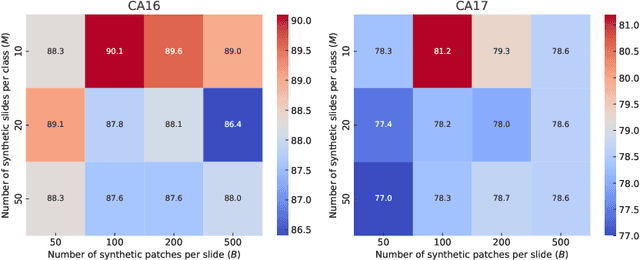
Federated learning (FL) has emerged as a promising approach for collaborative medical image analysis, enabling multiple institutions to build robust predictive models while preserving sensitive patient data. In the context of Whole Slide Image (WSI) classification, FL faces significant challenges, including heterogeneous computational resources across participating medical institutes and privacy concerns. To address these challenges, we propose FedWSIDD, a novel FL paradigm that leverages dataset distillation (DD) to learn and transmit synthetic slides. On the server side, FedWSIDD aggregates synthetic slides from participating centres and distributes them across all centres. On the client side, we introduce a novel DD algorithm tailored to histopathology datasets which incorporates stain normalisation into the distillation process to generate a compact set of highly informative synthetic slides. These synthetic slides, rather than model parameters, are transmitted to the server. After communication, the received synthetic slides are combined with original slides for local tasks. Extensive experiments on multiple WSI classification tasks, including CAMELYON16 and CAMELYON17, demonstrate that FedWSIDD offers flexibility for heterogeneous local models, enhances local WSI classification performance, and preserves patient privacy. This makes it a highly effective solution for complex WSI classification tasks. The code is available at FedWSIDD.