 Add to Chrome
 Add to Firefox
 Add to Edge
Towards Efficient and Generalizable Retrieval: Adaptive Semantic Quantization and Residual Knowledge Transfer
Feb 27, 2026
While semantic ID-based generative retrieval enables efficient end-to-end modeling in industrial applications, these methods face a persistent trade-off: head items are susceptible to ID collisions that negatively impact downstream tasks, whereas data-sparse tail items, including cold-start items, exhibit limited generalization. To address this issue, we propose the Anchored Curriculum with Sequential Adaptive Quantization (SA^2CRQ) framework. The framework introduces Sequential Adaptive Residual Quantization (SARQ) to dynamically allocate code lengths based on item path entropy, assigning longer, discriminative IDs to head items and shorter, generalizable IDs to tail items. To mitigate data sparsity, the Anchored Curriculum Residual Quantization (ACRQ) component utilizes a frozen semantic manifold learned from head items to regularize and accelerate the representation learning of tail items. Experimental results from a large-scale industrial search system and multiple public datasets indicate that SA^2CRQ yields consistent improvements over existing baselines, particularly in cold-start retrieval scenarios.

Beyond Decoder-only: Large Language Models Can be Good Encoders for Machine Translation
Mar 09, 2025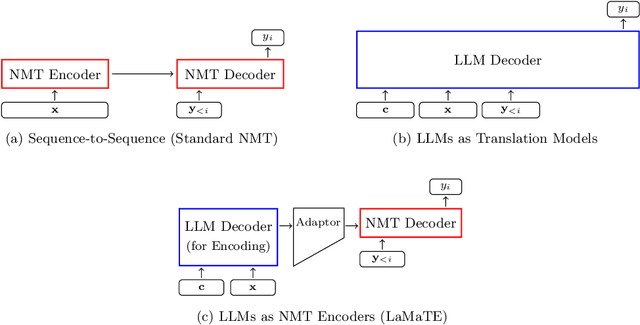
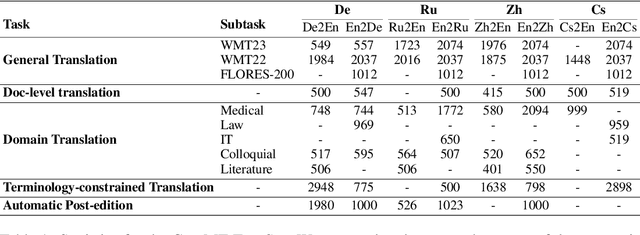
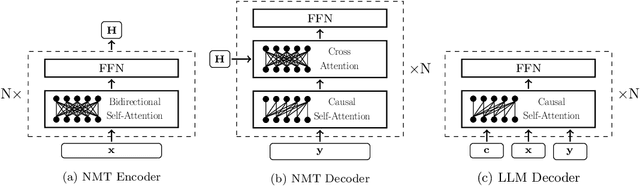
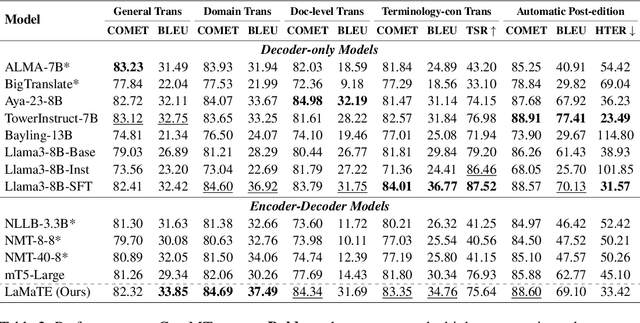
The field of neural machine translation (NMT) has changed with the advent of large language models (LLMs). Much of the recent emphasis in natural language processing (NLP) has been on modeling machine translation and many other problems using a single pre-trained Transformer decoder, while encoder-decoder architectures, which were the standard in earlier NMT models, have received relatively less attention. In this paper, we explore translation models that are universal, efficient, and easy to optimize, by marrying the world of LLMs with the world of NMT. We apply LLMs to NMT encoding and leave the NMT decoder unchanged. We also develop methods for adapting LLMs to work better with the NMT decoder. Furthermore, we construct a new dataset involving multiple tasks to assess how well the machine translation system generalizes across various tasks. Evaluations on the WMT and our datasets show that results using our method match or surpass a range of baselines in terms of translation quality, but achieve $2.4 \sim 6.5 \times$ inference speedups and a $75\%$ reduction in the memory footprint of the KV cache. It also demonstrates strong generalization across a variety of translation-related tasks.
Intelligent model for offshore China sea fog forecasting
Jul 20, 2023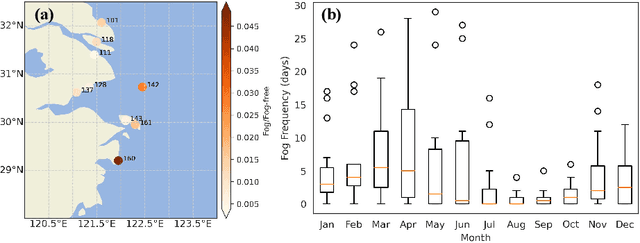
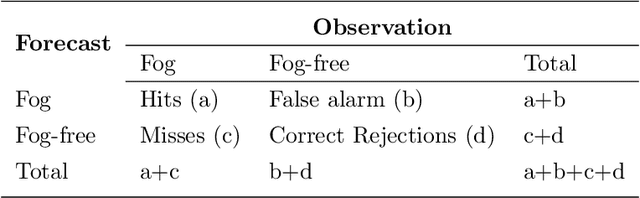
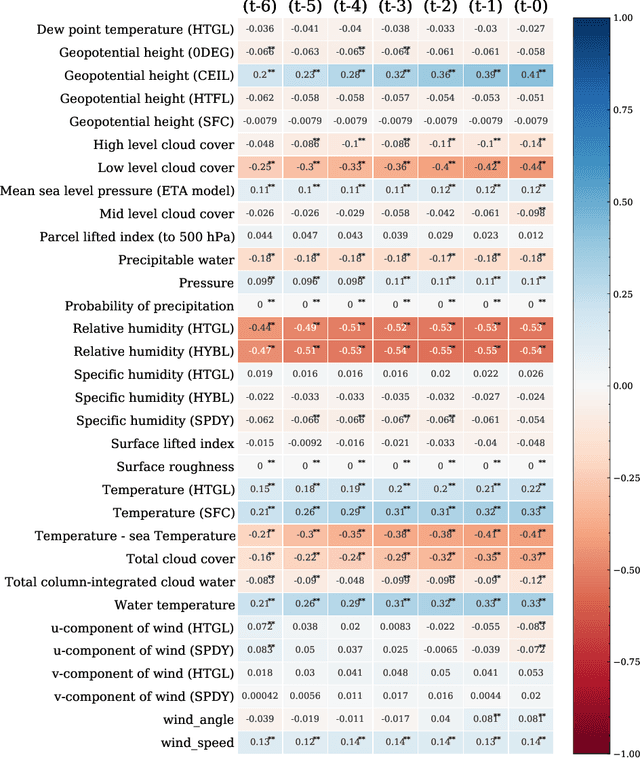
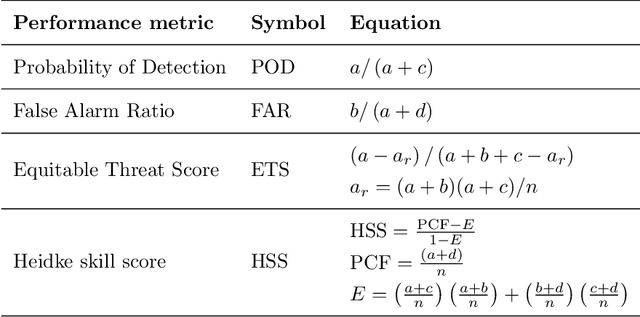
Accurate and timely prediction of sea fog is very important for effectively managing maritime and coastal economic activities. Given the intricate nature and inherent variability of sea fog, traditional numerical and statistical forecasting methods are often proven inadequate. This study aims to develop an advanced sea fog forecasting method embedded in a numerical weather prediction model using the Yangtze River Estuary (YRE) coastal area as a case study. Prior to training our machine learning model, we employ a time-lagged correlation analysis technique to identify key predictors and decipher the underlying mechanisms driving sea fog occurrence. In addition, we implement ensemble learning and a focal loss function to address the issue of imbalanced data, thereby enhancing the predictive ability of our model. To verify the accuracy of our method, we evaluate its performance using a comprehensive dataset spanning one year, which encompasses both weather station observations and historical forecasts. Remarkably, our machine learning-based approach surpasses the predictive performance of two conventional methods, the weather research and forecasting nonhydrostatic mesoscale model (WRF-NMM) and the algorithm developed by the National Oceanic and Atmospheric Administration (NOAA) Forecast Systems Laboratory (FSL). Specifically, in regard to predicting sea fog with a visibility of less than or equal to 1 km with a lead time of 60 hours, our methodology achieves superior results by increasing the probability of detection (POD) while simultaneously reducing the false alarm ratio (FAR).