 Add to Chrome
 Add to Firefox
 Add to Edge
Predicting Causal Effects from Natural Language Queries using Structured Representations
May 28, 2026
Randomized controlled trials are a cornerstone of medicine and the social sciences as they enable reliable estimates of causal effects. However, they are costly and time-consuming to conduct, motivating interest in predicting causal effects from existing experimental evidence. Recent advances in large language models (LLMs) have demonstrated strong performance on knowledge-intensive tasks, raising the question of whether these models can be used for forecasting causal effect sizes. To investigate this, we introduce Query2Effect, a new large-scale benchmark consisting of more than 72,000 natural language questions aligned with experiment descriptions, created to simulate realistic information-seeking scenarios by varying query specificity along dimensions of implicitness, abstraction, and ambiguity. We then propose a two-step framework that first generates a synthetic structured representation of a query before predicting effect size using a supervised encoder model. Experiments show that finetuning plays a crucial role in improving prediction performance, with absolute error reducing by -27% up to -71% compared to prompted out-of-the-box LLMs, and that our two-step framework is beneficial for out-of-domain generalization, highlighting the benefits of separating semantic interpretation from numerical effect estimation.

Keyword Extraction in Scientific Documents
Jul 07, 2022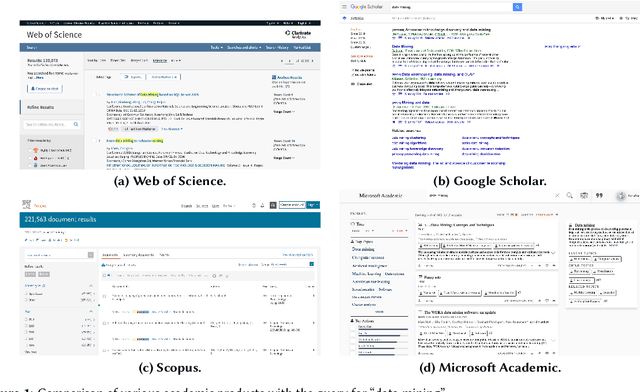

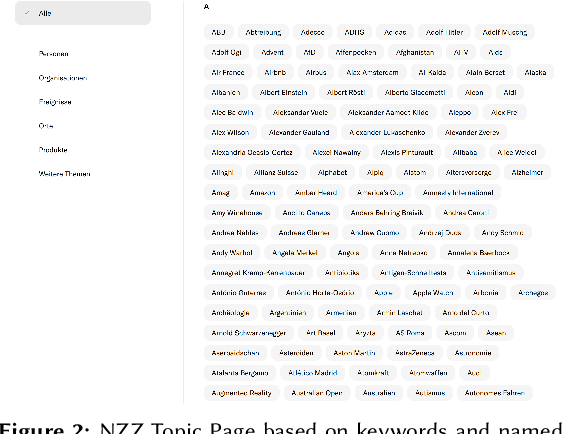
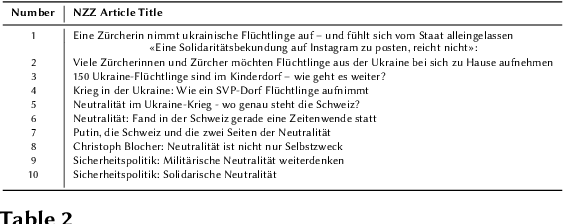
The scientific publication output grows exponentially. Therefore, it is increasingly challenging to keep track of trends and changes. Understanding scientific documents is an important step in downstream tasks such as knowledge graph building, text mining, and discipline classification. In this workshop, we provide a better understanding of keyword and keyphrase extraction from the abstract of scientific publications.