 Add to Chrome
 Add to Firefox
 Add to Edge
Variational Boosting for Physics-Informed Neural Networks
Jul 27, 2026
Physics-Informed Neural Networks (PINNs) solve differential equations by minimizing the residual of a nonlinear operator over a neural parameterization of the solution. However, monolithic PINNs often suffer from ill-conditioning, spectral bias, and optimization instability. We introduce a variational boosting framework in which solutions are constructed additively in function space. Each stage trains a weak learner whose converged correction satisfies a local orthogonality condition, equivalent to a projected functional gradient descent step onto the tangent space of the network's function manifold. Because each correction network is deliberately small, the restricted minimization admits full Newton or conjugate gradient updates, which are typically infeasible in large PINNs. The resulting method separates global nonlinear refinement into a sequence of well-conditioned subproblems while preserving the full variational structure of the operator. This framework provides a geometric interpretation of multi-stage PINNs as projected functional gradient descent and enables stable second-order optimization for nonlinear differential equations.

Physics-Informed Neural Embeddings of PDE Solution Families
Jul 07, 2026We introduce a physics-informed framework for learning finite-dimensional embeddings of solution families of partial differential equations. The method uses a multihead Physics-Informed Neural Network in which a shared body learns a latent manifold representing the solution space, while linear heads reconstruct individual solutions associated with different initial conditions. A head-orthogonalization penalty removes degeneracies in the latent representation and stabilizes the principal-component spectrum across training realizations. Because the initial condition is built into the network output by construction, these principal components measure the additional variability the network learns on top of the initial profile, not the full solution itself. We apply the method to the one-dimensional viscous Burgers equation, with the heat and wave equations as robustness checks. For a latent dimension $n_b=20$, the learned manifolds exhibit pronounced effective dimensional reduction: for Burgers dynamics, only $2$-$4$ principal components capture about $95\%$ of the latent-space variance, while $4$-$7$ capture about $99\%$, depending on the initial-condition family; the same qualitative compression holds for the heat and wave equations. We also split the wavenumber axis into bands (``Fourier shells'') and measure how much each band contributes to every principal component. The resulting frequency profile is invariant under the change-of-basis freedom that the orthogonalization penalty leaves in the latent space, and is therefore reproducible across independent training runs. More broadly, this establishes the learned spectral profiles and principal components as robust observables of solution-manifold geometry.
The Chandra-Gaia Catalog of Counterparts: Resolving ambiguous Gaia matches to X-ray sources in the Chandra Source Catalog using Machine Learning
Jun 17, 2026We present a framework to cross-match sources from the Chandra Source Catalog (CSC v2.1) with optical sources from Gaia Data Release 3. Unlike purely spatial approaches, we use source properties such as magnitudes, colors, and distances to identify true counterparts, detect chance coincidences, and resolve ambiguities when multiple plausible candidates exist. We define a training set of high-confidence matches using NWAY, a Bayesian cross-matching framework that accounts for positional errors and source densities. We train a gradient-boosted classifier (LightGBM) on a variety of features from both catalogs. Of the ~$254$k unique X-ray sources, we find counterparts for ~$113$k sources, of which plausible multiple counterparts are found for ~$7$k. We find no counterparts for ~$20$k sources for which separation-based cross-matching does find a match, and attribute half of these to chance coincidences. We validate the pipeline on the Chandra Orion Ultradeep Project (COUP), where the machine-learning matches reproduce 95% of NWAY cross-matches without using any positional information. We release a catalog of the ~$113$k Chandra-Gaia counterparts, together with ~$7$k alternative matches and ~$20$k ambiguous NWAY associations, supporting future population studies of sources detectable by both Chandra and Gaia. We discuss limitations and provide a generalization of the framework that is applicable in other cross-matching scenarios.
Gradient Scaling Effects in Adaptive Spectral PINNs for Stiff Nonlinear ODEs
May 06, 2026Physics-Informed Neural Networks (PINNs) often struggle to train reliably on stiff and oscillatory dynamical systems due to poor optimization conditioning. While prior work has emphasized representational remedies such as spectral parameterizations, the optimization implications of initial-condition (IC) embeddings in adaptive spectral PINNs have not been well characterized. In this work, we show that the choice of IC gating function induces explicit time-dependent gradient scaling, which interacts with spectral representations during training. Using a nonlinear stiff spring-pendulum ODE as a controlled benchmark, we compare exponential and linear IC gates in combination with fixed and adaptive Fourier spectral trunks. We observe stiffness-dependent changes in relative dominance for adaptive PINNs: at moderate stiffness ($k=20$), exponential gating often yields lower error but exhibits heterogeneous behavior across random seeds, whereas at higher stiffness ($k=60$), linear gating becomes preferable, with additional reversals observed at larger $k$. These trends hold for both relative $L^2$ error and maximum pointwise error and are confirmed by paired Wilcoxon signed-rank tests with Holm correction. Overall, our results demonstrate that IC embeddings are not a neutral design choice in PINNs: the induced gradient scaling materially shapes optimization conditioning in stiff regimes, with distinct sensitivity patterns in baseline and adaptive spectral models.
Learning embeddings of non-linear PDEs: the Burgers' equation
Mar 08, 2026Embeddings provide low-dimensional representations that organize complex function spaces and support generalization. They provide a geometric representation that supports efficient retrieval, comparison, and generalization. In this work we generalize the concept to Physics Informed Neural Networks. We present a method to construct solution embedding spaces of nonlinear partial differential equations using a multi-head setup, and extract non-degenerate information from them using principal component analysis (PCA). We test this method by applying it to viscous Burgers' equation, which is solved simultaneously for a family of initial conditions and values of the viscosity. A shared network body learns a latent embedding of the solution space, while linear heads map this embedding to individual realizations. By enforcing orthogonality constraints on the heads, we obtain a principal-component decomposition of the latent space that is robust to training degeneracies and admits a direct physical interpretation. The obtained components for Burgers' equation exhibit rapid saturation, indicating that a small number of latent modes captures the dominant features of the dynamics.
PTL-PINNs: Perturbation-Guided Transfer Learning with Physics- Informed Neural Networks for Nonlinear Systems
Jan 17, 2026Accurately and efficiently solving nonlinear differential equations is crucial for modeling dynamic behavior across science and engineering. Physics-Informed Neural Networks (PINNs) have emerged as a powerful solution that embeds physical laws in training by enforcing equation residuals. However, these struggle to model nonlinear dynamics, suffering from limited generalization across problems and long training times. To address these limitations, we propose a perturbation-guided transfer learning framework for PINNs (PTL-PINN), which integrates perturbation theory with transfer learning to efficiently solve nonlinear equations. Unlike gradient-based transfer learning, PTL-PINNs solve an approximate linear perturbative system using closed-form expressions, enabling rapid generalization with the time complexity of matrix-vector multiplication. We show that PTL-PINNs achieve accuracy comparable to various Runge-Kutta methods, with computational speeds up to one order of magnitude faster. To benchmark performance, we solve a broad set of problems, including nonlinear oscillators across various damping regimes, the equilibrium-centered Lotka-Volterra system, the KPP-Fisher and the Wave equation. Since perturbation theory sets the accuracy bound of PTL-PINNs, we systematically evaluate its practical applicability. This work connects long-standing perturbation methods with PINNs, demonstrating how perturbation theory can guide foundational models to solve nonlinear systems with speeds comparable to those of classical solvers.
One-Shot Transfer Learning for Nonlinear PDEs with Perturbative PINNs
Nov 14, 2025We propose a framework for solving nonlinear partial differential equations (PDEs) by combining perturbation theory with one-shot transfer learning in Physics-Informed Neural Networks (PINNs). Nonlinear PDEs with polynomial terms are decomposed into a sequence of linear subproblems, which are efficiently solved using a Multi-Head PINN. Once the latent representation of the linear operator is learned, solutions to new PDE instances with varying perturbations, forcing terms, or boundary/initial conditions can be obtained in closed form without retraining. We validate the method on KPP-Fisher and wave equations, achieving errors on the order of 1e-3 while adapting to new problem instances in under 0.2 seconds; comparable accuracy to classical solvers but with faster transfer. Sensitivity analyses show predictable error growth with epsilon and polynomial degree, clarifying the method's effective regime. Our contributions are: (i) extending one-shot transfer learning from nonlinear ODEs to PDEs, (ii) deriving a closed-form solution for adapting to new PDE instances, and (iii) demonstrating accuracy and efficiency on canonical nonlinear PDEs. We conclude by outlining extensions to derivative-dependent nonlinearities and higher-dimensional PDEs.
The Denario project: Deep knowledge AI agents for scientific discovery
Oct 30, 2025We present Denario, an AI multi-agent system designed to serve as a scientific research assistant. Denario can perform many different tasks, such as generating ideas, checking the literature, developing research plans, writing and executing code, making plots, and drafting and reviewing a scientific paper. The system has a modular architecture, allowing it to handle specific tasks, such as generating an idea, or carrying out end-to-end scientific analysis using Cmbagent as a deep-research backend. In this work, we describe in detail Denario and its modules, and illustrate its capabilities by presenting multiple AI-generated papers generated by it in many different scientific disciplines such as astrophysics, biology, biophysics, biomedical informatics, chemistry, material science, mathematical physics, medicine, neuroscience and planetary science. Denario also excels at combining ideas from different disciplines, and we illustrate this by showing a paper that applies methods from quantum physics and machine learning to astrophysical data. We report the evaluations performed on these papers by domain experts, who provided both numerical scores and review-like feedback. We then highlight the strengths, weaknesses, and limitations of the current system. Finally, we discuss the ethical implications of AI-driven research and reflect on how such technology relates to the philosophy of science. We publicly release the code at https://github.com/AstroPilot-AI/Denario. A Denario demo can also be run directly on the web at https://huggingface.co/spaces/astropilot-ai/Denario, and the full app will be deployed on the cloud.
Image-Based Multi-Survey Classification of Light Curves with a Pre-Trained Vision Transformer
Jul 15, 2025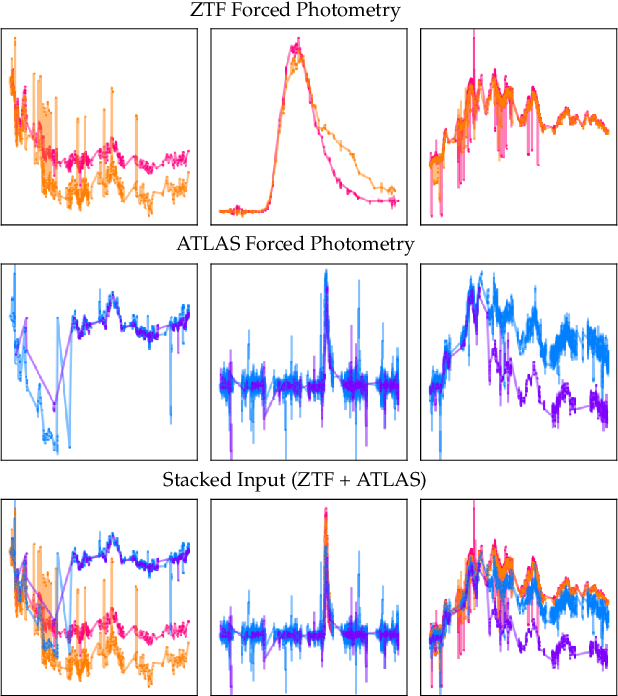
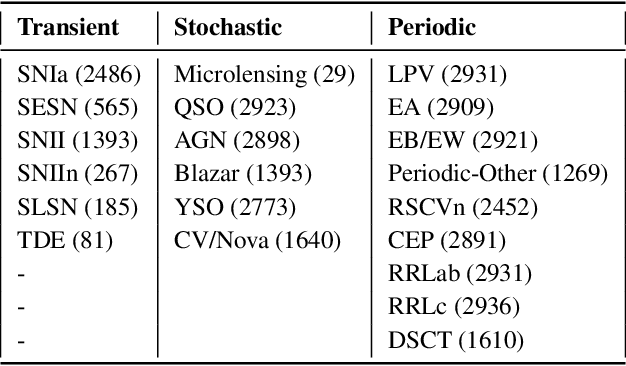
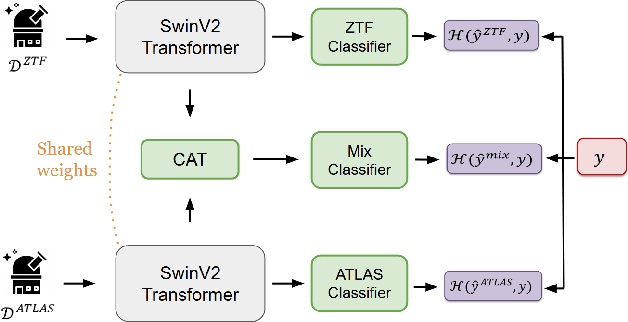
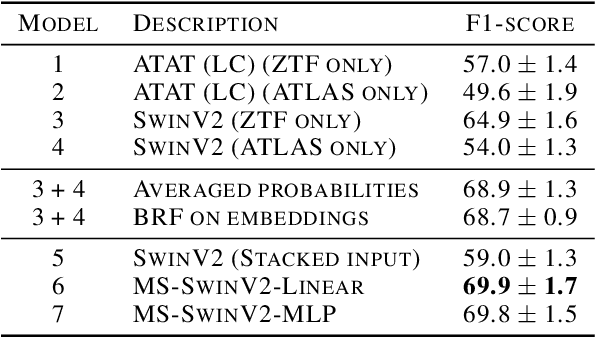
We explore the use of Swin Transformer V2, a pre-trained vision Transformer, for photometric classification in a multi-survey setting by leveraging light curves from the Zwicky Transient Facility (ZTF) and the Asteroid Terrestrial-impact Last Alert System (ATLAS). We evaluate different strategies for integrating data from these surveys and find that a multi-survey architecture which processes them jointly achieves the best performance. These results highlight the importance of modeling survey-specific characteristics and cross-survey interactions, and provide guidance for building scalable classifiers for future time-domain astronomy.
Improved Uncertainty Quantification in Physics-Informed Neural Networks Using Error Bounds and Solution Bundles
May 09, 2025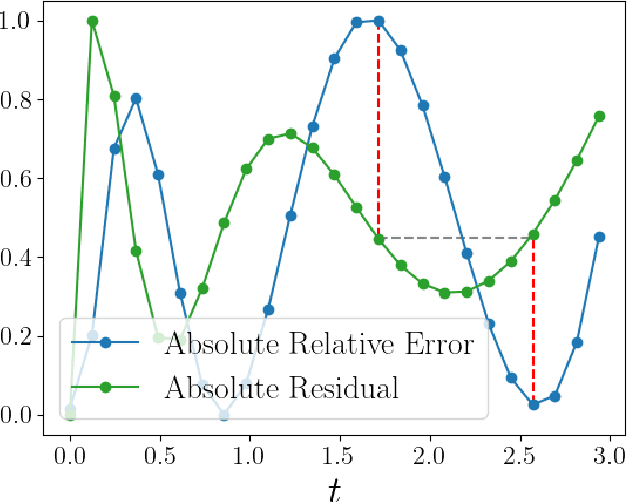
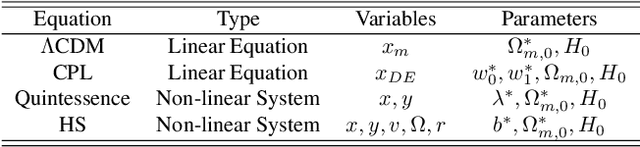
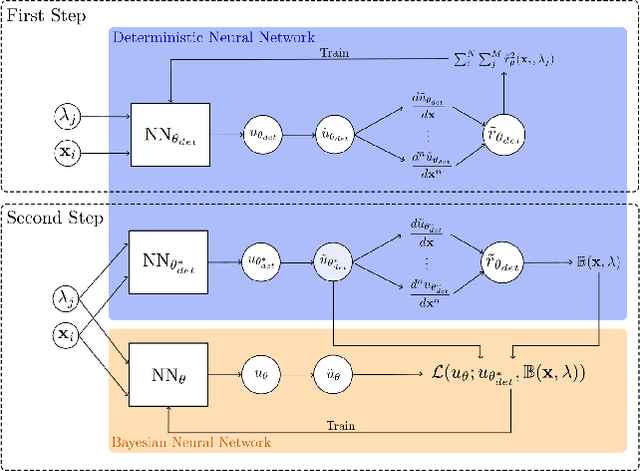
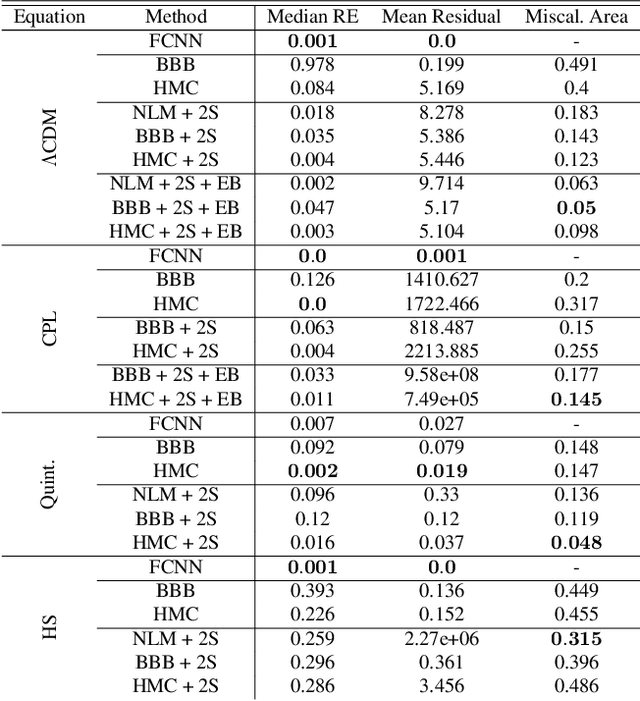
Physics-Informed Neural Networks (PINNs) have been widely used to obtain solutions to various physical phenomena modeled as Differential Equations. As PINNs are not naturally equipped with mechanisms for Uncertainty Quantification, some work has been done to quantify the different uncertainties that arise when dealing with PINNs. In this paper, we use a two-step procedure to train Bayesian Neural Networks that provide uncertainties over the solutions to differential equation systems provided by PINNs. We use available error bounds over PINNs to formulate a heteroscedastic variance that improves the uncertainty estimation. Furthermore, we solve forward problems and utilize the obtained uncertainties when doing parameter estimation in inverse problems in cosmology.