 Add to Chrome
 Add to Firefox
 Add to Edge
Fractal triangular search: a metaheuristic for image content search
May 20, 2026
This work proposes a variable neighbourhood search (FTS) that uses a fractal-based local search primarily designed for images. Searching for specific content in images is posed as an optimisation problem, where evidence elements are expected to be present. Evidence elements improve the odds of finding the desired content and are closely associated to it in terms of spatial location. The proposed local search algorithm follows the fashion of a chain of triangles that engulf each other and grow indefinitely in a fractal fashion, while their orientation varies in each iteration. The authors carried out an extensive set of experiments, which confirmed that FTS outperforms state-of-the-art metaheuristics. On average, FTS was able to locate content faster, visiting less incorrect image locations. In the first group of experiments, FTS was faster in seven out of nine cases, being >8% faster on average, when compared to the second best search method. In the second group, FTS was faster in six out of seven cases, and it was >22% faster on average when compared to the approach ranked second best. FTS tends to outperform other metaheuristics substantially as the size of the image increases.

Local-sensitive connectivity filter (ls-cf): A post-processing unsupervised improvement of the frangi, hessian and vesselness filters for multimodal vessel segmentation
May 20, 2026A retinal vessel analysis is a procedure that can be used as an assessment of risks to the eye. This work proposes an unsupervised multimodal approach that improves the response of the Frangi filter, enabling automatic vessel segmentation. We propose a filter that computes pixel-level vessel continuity while introducing a local tolerance heuristic to fill in vessel discontinuities produced by the Frangi response. This proposal, called the local-sensitive connectivity filter (LS-CF), is compared against a naive connectivity filter to the baseline thresholded Frangi filter response and to the naive connectivity filter response in combination with the morphological closing and to the current approaches in the literature. The proposal was able to achieve competitive results in a variety of multimodal datasets. It was robust enough to outperform all the state-of-the-art approaches in the literature for the OSIRIX angiographic dataset in terms of accuracy and 4 out of 5 works in the case of the IOSTAR dataset while also outperforming several works in the case of the DRIVE and STARE datasets and 6 out of 10 in the CHASE-DB dataset. For the CHASE-DB, it also outperformed all the state-of-the-art unsupervised methods.
ELEMENT: Multi-Modal Retinal Vessel Segmentation Based on a Coupled Region Growing and Machine Learning Approach
May 19, 2026Vascular structures in the retina contain important information for the detection and analysis of ocular diseases, including age-related macular degeneration, diabetic retinopathy and glaucoma. Commonly used modalities in diagnosis of these diseases are fundus photography, scanning laser ophthalmoscope (SLO) and fluorescein angiography (FA). Typically, retinal vessel segmentation is carried out either manually or interactively, which makes it time consuming and prone to human errors. In this research, we propose a new multi-modal framework for vessel segmentation called ELEMENT (vEsseL sEgmentation using Machine lEarning and coNnecTivity). This framework consists of feature extraction and pixel-based classification using region growing and machine learning. The proposed features capture complementary evidence based on grey level and vessel connectivity properties. The latter information is seamlessly propagated through the pixels at the classification phase. ELEMENT reduces inconsistencies and speeds up the segmentation throughput. We analyze and compare the performance of the proposed approach against state-of-the-art vessel segmentation algorithms in three major groups of experiments, for each of the ocular modalities. Our method produced higher overall performance, with an overall accuracy of 97.40%, compared to 25 of the 26 state-of-the-art approaches, including six works based on deep learning, evaluated on the widely known DRIVE fundus image dataset. In the case of the STARE, CHASE-DB, VAMPIRE FA, IOSTAR SLO and RC-SLO datasets, the proposed framework outperformed all of the state-of-the-art methods with accuracies of 98.27%, 97.78%, 98.34%, 98.04% and 98.35%, respectively.
Proposal and study of statistical features for string similarity computation and classification
May 14, 2026Adaptations of features commonly applied in the field of visual computing, co-occurrence matrix (COM) and run-length matrix (RLM), are proposed for the similarity computation of strings in general (words, phrases, codes and texts). The proposed features are not sensitive to language related information. These are purely statistical and can be used in any context with any language or grammatical structure. Other statistical measures that are commonly employed in the field such as longest common subsequence, maximal consecutive longest common subsequence, mutual information and edit distances are evaluated and compared. In the first synthetic set of experiments, the COM and RLM features outperform the remaining state-of-the-art statistical features. In 3 out of 4 cases, the RLM and COM features were statistically more significant than the second best group based on distances (P-value < 0.001). When it comes to a real text plagiarism dataset, the RLM features obtained the best results.
A Conditional Diffusion Model for Electrical Impedance Tomography Image Reconstruction
Dec 22, 2024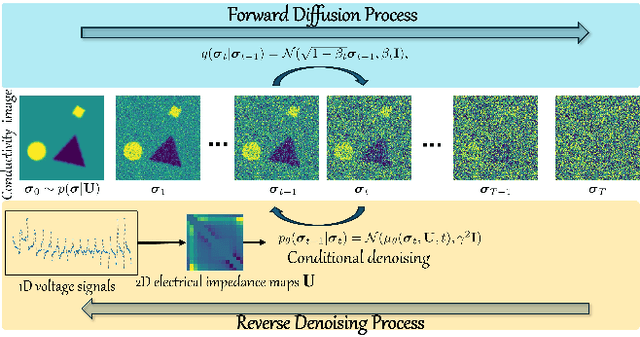
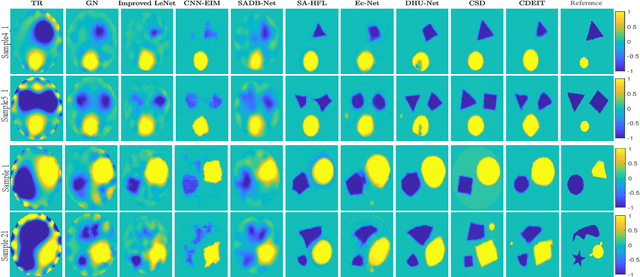
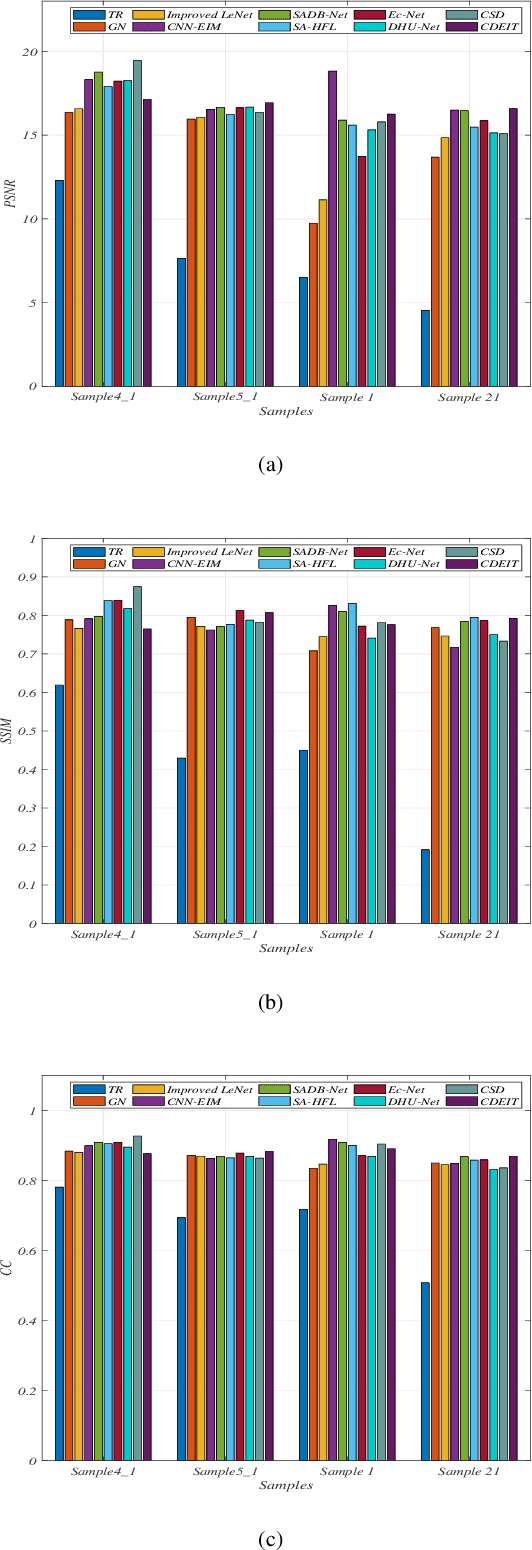
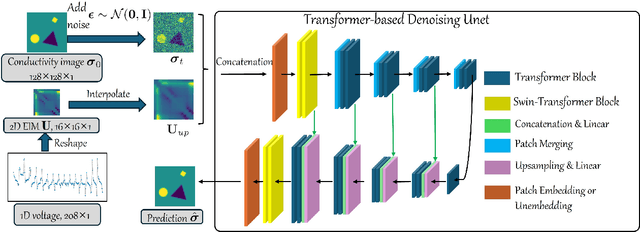
Electrical impedance tomography (EIT) is a non-invasive imaging technique, capable of reconstructing images of the electrical conductivity of tissues and materials. It is popular in diverse application areas, from medical imaging to industrial process monitoring and tactile sensing, due to its low cost, real-time capabilities and non-ionizing nature. EIT visualizes the conductivity distribution within a body by measuring the boundary voltages, given a current injection. However, EIT image reconstruction is ill-posed due to the mismatch between the under-sampled voltage data and the high-resolution conductivity image. A variety of approaches, both conventional and deep learning-based, have been proposed, capitalizing on the use of spatial regularizers, and the paradigm of image regression. In this research, a novel method based on the conditional diffusion model for EIT reconstruction is proposed, termed CDEIT. Specifically, CDEIT consists of the forward diffusion process, which first gradually adds Gaussian noise to the clean conductivity images, and a reverse denoising process, which learns to predict the original conductivity image from its noisy version, conditioned on the boundary voltages. Following model training, CDEIT applies the conditional reverse process on test voltage data to generate the desired conductivities. Moreover, we provide the details of a normalization procedure, which demonstrates how EIT image reconstruction models trained on simulated datasets can be applied on real datasets with varying sizes, excitation currents and background conductivities. Experiments conducted on a synthetic dataset and two real datasets demonstrate that the proposed model outperforms state-of-the-art methods. The CDEIT software is available as open-source (https://github.com/shuaikaishi/CDEIT) for reproducibility purposes.
Physics-Driven AI Correction in Laser Absorption Sensing Quantification
Aug 20, 2024Laser absorption spectroscopy (LAS) quantification is a popular tool used in measuring temperature and concentration of gases. It has low error tolerance, whereas current ML-based solutions cannot guarantee their measure reliability. In this work, we propose a new framework, SPEC, to address this issue. In addition to the conventional ML estimator-based estimation mode, SPEC also includes a Physics-driven Anomaly Detection module (PAD) to assess the error of the estimation. And a Correction mode is designed to correct the unreliable estimation. The correction mode is a network-based optimization algorithm, which uses the guidance of error to iteratively correct the estimation. A hybrid surrogate error model is proposed to estimate the error distribution, which contains an ensemble of networks to simulate reconstruction error, and true feasible error computation. A greedy ensemble search is proposed to find the optimal correction robustly and efficiently from the gradient guidance of surrogate model. The proposed SPEC is validated on the test scenarios which are outside the training distribution. The results show that SPEC can significantly improve the estimation quality, and the correction mode outperforms current network-based optimization algorithms. In addition, SPEC has the reconfigurability, which can be easily adapted to different quantification tasks via changing PAD without retraining the ML estimator.
Physics-Driven ML-Based Modelling for Correcting Inverse Estimation
Sep 25, 2023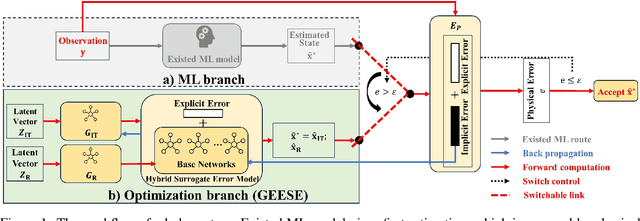
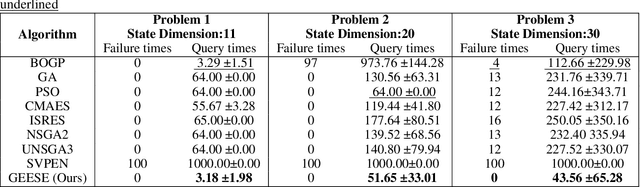
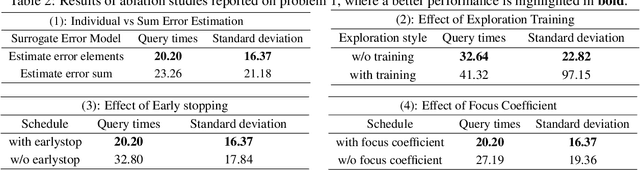
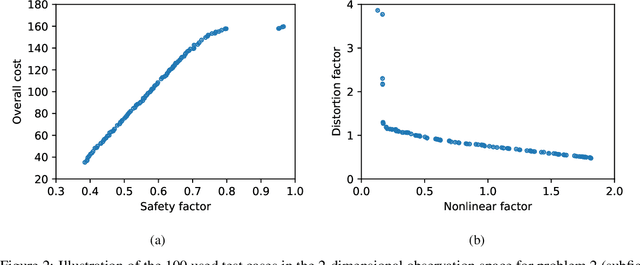
When deploying machine learning estimators in science and engineering (SAE) domains, it is critical to avoid failed estimations that can have disastrous consequences, e.g., in aero engine design. This work focuses on detecting and correcting failed state estimations before adopting them in SAE inverse problems, by utilizing simulations and performance metrics guided by physical laws. We suggest to flag a machine learning estimation when its physical model error exceeds a feasible threshold, and propose a novel approach, GEESE, to correct it through optimization, aiming at delivering both low error and high efficiency. The key designs of GEESE include (1) a hybrid surrogate error model to provide fast error estimations to reduce simulation cost and to enable gradient based backpropagation of error feedback, and (2) two generative models to approximate the probability distributions of the candidate states for simulating the exploitation and exploration behaviours. All three models are constructed as neural networks. GEESE is tested on three real-world SAE inverse problems and compared to a number of state-of-the-art optimization/search approaches. Results show that it fails the least number of times in terms of finding a feasible state correction, and requires physical evaluations less frequently in general.
EEE, Remediating the failure of machine learning models via a network-based optimization patch
Apr 22, 2023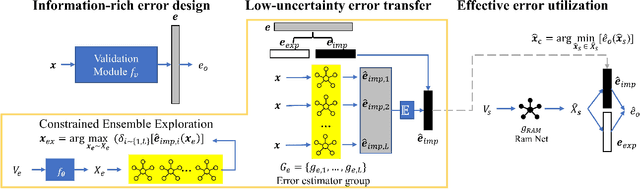

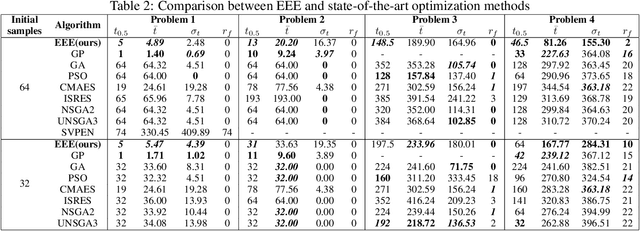
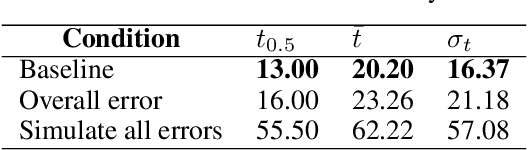
A network-based optimization approach, EEE, is proposed for the purpose of providing validation-viable state estimations to remediate the failure of pretrained models. To improve optimization efficiency and convergence, the most important metrics in the context of this research, we follow a three-faceted approach based on the error from the validation process. Firstly, we improve the information content of the error by designing a validation module to acquire high-dimensional error information. Next, we reduce the uncertainty of error transfer by employing an ensemble of error estimators, which only learn implicit errors, and use Constrained Ensemble Exploration to collect high-value data. Finally, the effectiveness of error utilization is improved by using ensemble search to determine the most prosperous state. The benefits of the proposed framework are demonstrated on four real-world engineering problems with diverse state dimensions. It is shown that EEE is either as competitive or outperforms popular optimization methods, in terms of efficiency and convergence.
Spatially-resolved Thermometry from Line-of-Sight Emission Spectroscopy via Machine Learning
Dec 15, 2022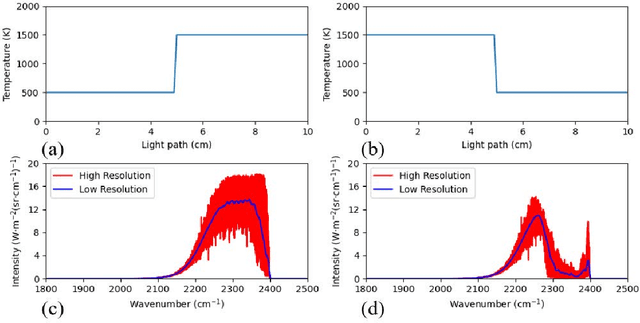
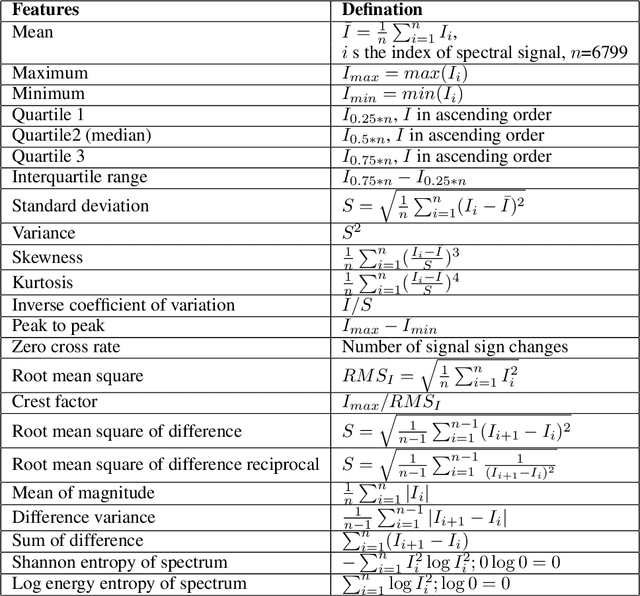
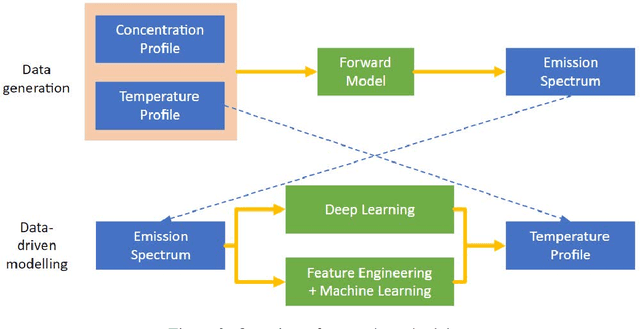
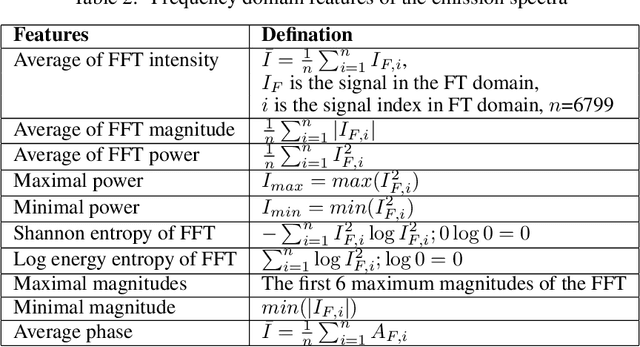
A methodology is proposed, which addresses the caveat that line-of-sight emission spectroscopy presents in that it cannot provide spatially resolved temperature measurements in nonhomogeneous temperature fields. The aim of this research is to explore the use of data-driven models in measuring temperature distributions in a spatially resolved manner using emission spectroscopy data. Two categories of data-driven methods are analyzed: (i) Feature engineering and classical machine learning algorithms, and (ii) end-to-end convolutional neural networks (CNN). In total, combinations of fifteen feature groups and fifteen classical machine learning models, and eleven CNN models are considered and their performances explored. The results indicate that the combination of feature engineering and machine learning provides better performance than the direct use of CNN. Notably, feature engineering which is comprised of physics-guided transformation, signal representation-based feature extraction and Principal Component Analysis is found to be the most effective. Moreover, it is shown that when using the extracted features, the ensemble-based, light blender learning model offers the best performance with RMSE, RE, RRMSE and R values of 64.3, 0.017, 0.025 and 0.994, respectively. The proposed method, based on feature engineering and the light blender model, is capable of measuring nonuniform temperature distributions from low-resolution spectra, even when the species concentration distribution in the gas mixtures is unknown.
Self-Validated Physics-Embedding Network: A General Framework for Inverse Modelling
Oct 17, 2022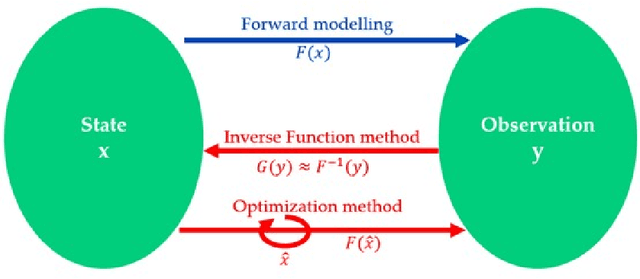
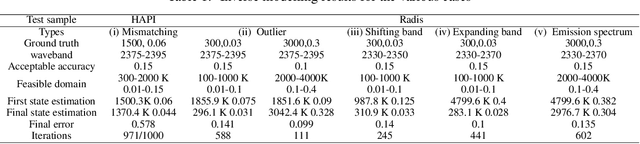
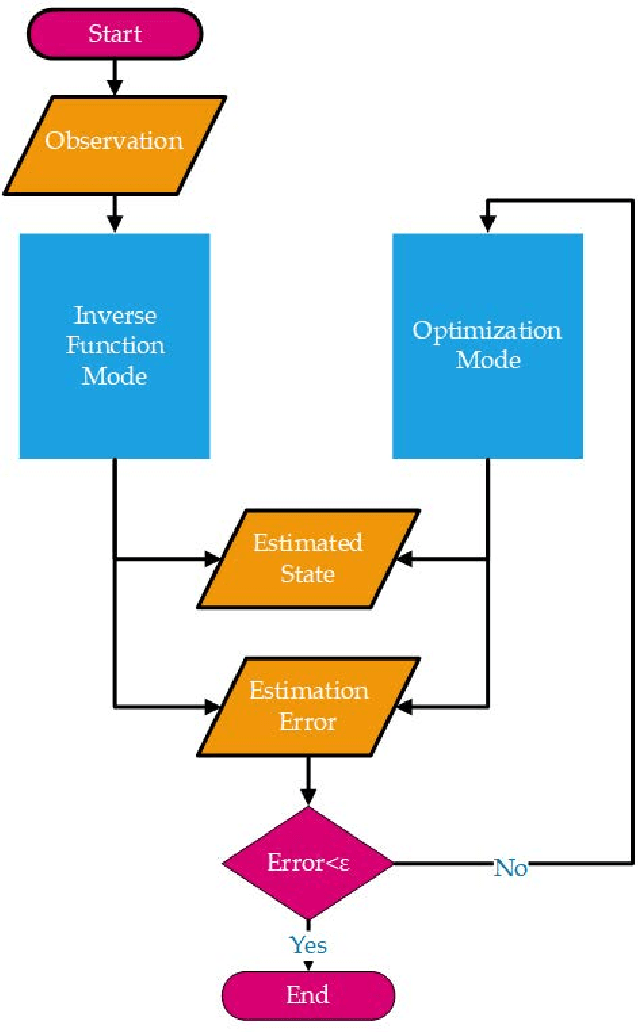
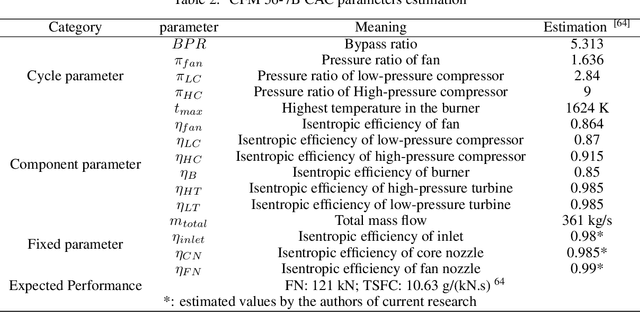
Physics-based inverse modeling techniques are typically restricted to particular research fields, whereas popular machine-learning-based ones are too data-dependent to guarantee the physical compatibility of the solution. In this paper, Self-Validated Physics-Embedding Network (SVPEN), a general neural network framework for inverse modeling is proposed. As its name suggests, the embedded physical forward model ensures that any solution that successfully passes its validation is physically reasonable. SVPEN operates in two modes: (a) the inverse function mode offers rapid state estimation as conventional supervised learning, and (b) the optimization mode offers a way to iteratively correct estimations that fail the validation process. Furthermore, the optimization mode provides SVPEN with reconfigurability i.e., replacing components like neural networks, physical models, and error calculations at will to solve a series of distinct inverse problems without pretraining. More than ten case studies in two highly nonlinear and entirely distinct applications: molecular absorption spectroscopy and Turbofan cycle analysis, demonstrate the generality, physical reliability, and reconfigurability of SVPEN. More importantly, SVPEN offers a solid foundation to use existing physical models within the context of AI, so as to striking a balance between data-driven and physics-driven models.