 Add to Chrome
 Add to Firefox
 Add to Edge
NTIRE 2026 Challenge on Bitstream-Corrupted Video Restoration: Methods and Results
Apr 09, 2026
This paper reports on the NTIRE 2026 Challenge on Bitstream-Corrupted Video Restoration (BSCVR). The challenge aims to advance research on recovering visually coherent videos from corrupted bitstreams, whose decoding often produces severe spatial-temporal artifacts and content distortion. Built upon recent progress in bitstream-corrupted video recovery, the challenge provides a common benchmark for evaluating restoration methods under realistic corruption settings. We describe the dataset, evaluation protocol, and participating methods, and summarize the final results and main technical trends. The challenge highlights the difficulty of this emerging task and provides useful insights for future research on robust video restoration under practical bitstream corruption.

MAPUNetR: A Hybrid Vision Transformer and U-Net Architecture for Efficient and Interpretable Medical Image Segmentation
Oct 29, 2024
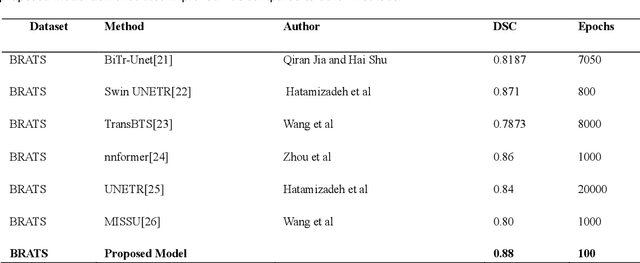
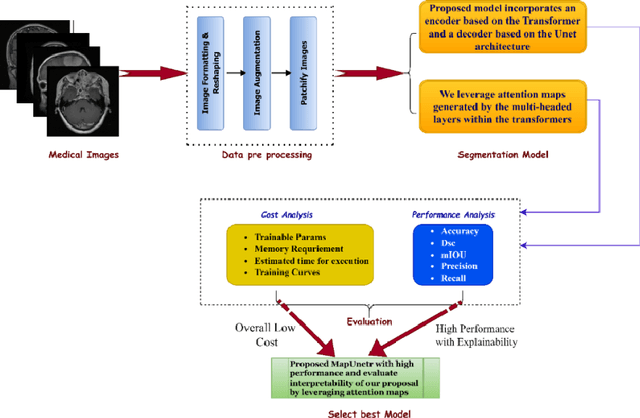
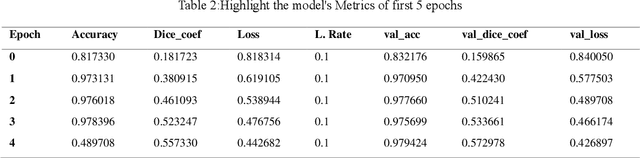
Medical image segmentation is pivotal in healthcare, enhancing diagnostic accuracy, informing treatment strategies, and tracking disease progression. This process allows clinicians to extract critical information from visual data, enabling personalized patient care. However, developing neural networks for segmentation remains challenging, especially when preserving image resolution, which is essential in detecting subtle details that influence diagnoses. Moreover, the lack of transparency in these deep learning models has slowed their adoption in clinical practice. Efforts in model interpretability are increasingly focused on making these models' decision-making processes more transparent. In this paper, we introduce MAPUNetR, a novel architecture that synergizes the strengths of transformer models with the proven U-Net framework for medical image segmentation. Our model addresses the resolution preservation challenge and incorporates attention maps highlighting segmented regions, increasing accuracy and interpretability. Evaluated on the BraTS 2020 dataset, MAPUNetR achieved a dice score of 0.88 and a dice coefficient of 0.92 on the ISIC 2018 dataset. Our experiments show that the model maintains stable performance and potential as a powerful tool for medical image segmentation in clinical practice.