 Add to Chrome
 Add to Firefox
 Add to Edge
CryptoAnalystBench: Failures in Multi-Tool Long-Form LLM Analysis
Feb 11, 2026
Modern analyst agents must reason over complex, high token inputs, including dozens of retrieved documents, tool outputs, and time sensitive data. While prior work has produced tool calling benchmarks and examined factuality in knowledge augmented systems, relatively little work studies their intersection: settings where LLMs must integrate large volumes of dynamic, structured and unstructured multi tool outputs. We investigate LLM failure modes in this regime using crypto as a representative high data density domain. We introduce (1) CryptoAnalystBench, an analyst aligned benchmark of 198 production crypto and DeFi queries spanning 11 categories; (2) an agentic harness equipped with relevant crypto and DeFi tools to generate responses across multiple frontier LLMs; and (3) an evaluation pipeline with citation verification and an LLM as a judge rubric spanning four user defined success dimensions: relevance, temporal relevance, depth, and data consistency. Using human annotation, we develop a taxonomy of seven higher order error types that are not reliably captured by factuality checks or LLM based quality scoring. We find that these failures persist even in state of the art systems and can compromise high stakes decisions. Based on this taxonomy, we refine the judge rubric to better capture these errors. While the judge does not align with human annotators on precise scoring across rubric iterations, it reliably identifies critical failure modes, enabling scalable feedback for developers and researchers studying analyst style agents. We release CryptoAnalystBench with annotated queries, the evaluation pipeline, judge rubrics, and the error taxonomy, and outline mitigation strategies and open challenges in evaluating long form, multi tool augmented systems.

OML: Open, Monetizable, and Loyal AI
Nov 01, 2024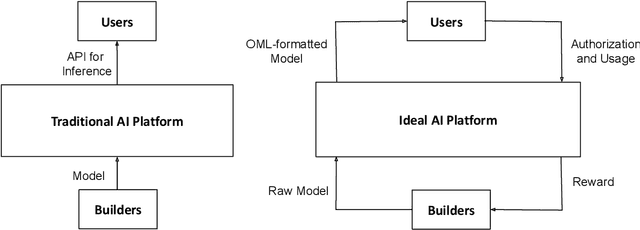
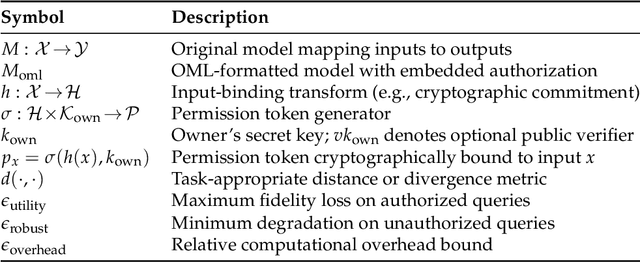
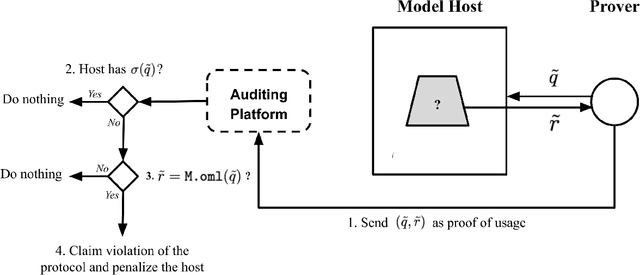

Artificial Intelligence (AI) has steadily improved across a wide range of tasks. However, the development and deployment of AI are almost entirely controlled by a few powerful organizations that are racing to create Artificial General Intelligence (AGI). The centralized entities make decisions with little public oversight, shaping the future of humanity, often with unforeseen consequences. In this paper, we propose OML, which stands for Open, Monetizable, and Loyal AI, an approach designed to democratize AI development. OML is realized through an interdisciplinary framework spanning AI, blockchain, and cryptography. We present several ideas for constructing OML using technologies such as Trusted Execution Environments (TEE), traditional cryptographic primitives like fully homomorphic encryption and functional encryption, obfuscation, and AI-native solutions rooted in the sample complexity and intrinsic hardness of AI tasks. A key innovation of our work is introducing a new scientific field: AI-native cryptography. Unlike conventional cryptography, which focuses on discrete data and binary security guarantees, AI-native cryptography exploits the continuous nature of AI data representations and their low-dimensional manifolds, focusing on improving approximate performance. One core idea is to transform AI attack methods, such as data poisoning, into security tools. This novel approach serves as a foundation for OML 1.0 which uses model fingerprinting to protect the integrity and ownership of AI models. The spirit of OML is to establish a decentralized, open, and transparent platform for AI development, enabling the community to contribute, monetize, and take ownership of AI models. By decentralizing control and ensuring transparency through blockchain technology, OML prevents the concentration of power and provides accountability in AI development that has not been possible before.