 Add to Chrome
 Add to Firefox
 Add to Edge
Rethinking Passive RIS: Finite Blocklength Reliability Analysis Under Thermal Noise
May 20, 2026
Short-packet communication alters the fundamental performance limits of reconfigurable intelligent surface (RIS)-assisted systems, making conventional analyses based on the infinite blocklength regime insufficient. This work investigates RIS-assisted transmission in the finite blocklength (FBL) regime while explicitly incorporating thermal noise generated by passive RIS elements, an effect commonly neglected in existing models. A unified analytical framework is developed to characterize the block-error rate (BLER), its asymptotic behavior, and the resulting goodput under both uniform and non-uniform RIS reflection coefficients. Our results show that ignoring RIS thermal noise leads to a pronounced overestimation of reliability with the mismatch increasing as the number of reflecting elements grows. Furthermore, increasing the RIS size does not always improve performance, particularly in the low transmit power regime where accumulated noise becomes dominant. Overall, the results highlight fundamental limitations of idealized RIS models and demonstrate the need for incorporating thermal noise for accurate system evaluation.

RSMA-Aided Full-Duplex Networks Under Imperfect CSI and SIC: Performance Evaluation
Apr 20, 2026This work investigates a full-duplex (FD)-enhanced Rate-Splitting Multiple Access (RSMA) system under practical constraints, including imperfect channel state information (CSI) and successive interference cancellation (SIC). We derive closed-form expressions for key performance metrics, such as outage probability and throughput, for both uplink and downlink users. The analysis considers co-channel interference (CCI) from uplink to downlink users and models the self-interference (SI) channel as a random variable. Monte Carlo simulations validate the analytical results and highlight the impact of system imperfections on RSMA-FD performance. At low transmit power, imperfect CSI significantly affects the system, though this effect weakens as power increases. In contrast, imperfect SIC becomes more detrimental at high transmit power, causing severe degradation. Additionally, neglecting CCI and assuming perfect SI cancellation leads to substantial overestimation of performance. Lastly, we demonstrate that the SI cancellation factor must be carefully selected to suppress interference effectively. Otherwise, a poor choice limits the full potential of FD technology.
Impact of CSIR, SIC, and Hardware Impairments on the Ergodic Rate of Downlink RSMA
Apr 20, 2026This work investigates the ergodic rate performance analysis of rate-splitting multiple access (RSMA) in a downlink communication system under practical impairments. Closed-form expressions are derived for key performance metrics such as ergodic rate, energy efficiency, sum-rate, and Jains fairness index, capturing the joint effects of imperfect channel state information at the receiver (CSIR), imperfect successive interference cancellation (SIC), and hardware impairments. Numerical simulations validate the accuracy of the analytical expressions and reveal several insightful trends. At low transmit powers, imperfect CSIR is the dominant performance-limiting factor, followed by hardware impairments and imperfect SIC. However, as the transmit power increases, hardware impairments become the primary bottleneck, with the impact of imperfect CSIR gradually diminishing, and imperfect SIC becoming a more prominent bottleneck. Moreover, RSMA consistently outperforms non-orthogonal multiple access (NOMA) in terms of ergodic rate, fairness, and sum-rate, even under severe non-idealities. These findings underscore the importance of incorporating fairness as a core design objective alongside rate and energy efficiency, positioning RSMA as a robust and strong multiple access candidate for next-generation wireless networks.
Passive RIS Is Not Silent: Revisiting Performance Limits Under Thermal Noise
Apr 20, 2026Reconfigurable intelligent surfaces (RISs) have emerged as a promising solution for enabling energy-efficient and flexible spectrum usage in wireless communication, particularly in the context of sixth-generation (6G) networks. While passive RIS architectures are widely regarded as virtually noiseless due to the lack of active components, this idealized assumption can lead to misleading performance evaluations. In this paper, we revisit this assumption and demonstrate that the thermal noise generated by passive RIS elements, though often neglected, can significantly affect system performance. We propose a tractable approximated analytical framework that incorporates RIS-induced thermal noise into the system and derive closed-form expressions for key performance metrics, such as outage probability and throughput. Simulation results validate our approximated analysis and highlight the substantial performance discrepancies that arise when RIS thermal noise is ignored. Our results offer valuable insights into the trade-offs between receiver and RIS noise, guiding the development of robust and efficient 6G communication systems.
Integrating Meteorological and Operational Data: A Novel Approach to Understanding Railway Delays in Finland
Jan 23, 2026Train delays result from complex interactions between operational, technical, and environmental factors. While weather impacts railway reliability, particularly in Nordic regions, existing datasets rarely integrate meteorological information with operational train data. This study presents the first publicly available dataset combining Finnish railway operations with synchronized meteorological observations from 2018-2024. The dataset integrates operational metrics from Finland Digitraffic Railway Traffic Service with weather measurements from 209 environmental monitoring stations, using spatial-temporal alignment via Haversine distance. It encompasses 28 engineered features across operational variables and meteorological measurements, covering approximately 38.5 million observations from Finland's 5,915-kilometer rail network. Preprocessing includes strategic missing data handling through spatial fallback algorithms, cyclical encoding of temporal features, and robust scaling of weather data to address sensor outliers. Analysis reveals distinct seasonal patterns, with winter months exhibiting delay rates exceeding 25\% and geographic clustering of high-delay corridors in central and northern Finland. Furthermore, the work demonstrates applications of the data set in analysing the reliability of railway traffic in Finland. A baseline experiment using XGBoost regression achieved a Mean Absolute Error of 2.73 minutes for predicting station-specific delays, demonstrating the dataset's utility for machine learning applications. The dataset enables diverse applications, including train delay prediction, weather impact assessment, and infrastructure vulnerability mapping, providing researchers with a flexible resource for machine learning applications in railway operations research.
Improved GPR-Based CSI Acquisition via Spatial-Correlation Kernel
Jan 21, 2026Accurate channel estimation with low pilot overhead and computational complexity is key to efficiently utilizing multi-antenna wireless systems. Motivated by the evolution from purely statistical descriptions toward physics- and geometry-aware propagation models, this work focuses on incorporating channel information into a Gaussian process regression (GPR) framework for improving the channel estimation accuracy. In this work, we propose a GPR-based channel estimation framework along with a novel Spatial-correlation (SC) kernel that explicitly captures the channel's second-order statistics. We derive a closed-form expression of the proposed SC-based GPR estimator and prove that its posterior mean is optimal in terms of minimum mean-square error (MMSE) under the same second-order statistics, without requiring the underlying channel distribution to be Gaussian. Our analysis reveals that, with up to 50% pilot overhead reduction, the proposed method achieves the lowest normalized mean-square error, the highest empirical 95% credible-interval coverage, and superior preservation of spectral efficiency compared to benchmark estimators, while maintaining lower computational complexity than the conventional MMSE estimator.
A Novel Geometry-Aware GPR-Based Energy-Efficient and Low-Overhead Channel Estimation Scheme
Dec 27, 2025In this work, we model the wireless channel as a complex-valued Gaussian process (GP) over the transmit and receive antenna arrays. The channel covariance is characterized using an antenna-geometry-based spectral mixture covariance function (GB-SMCF), which captures the spatial structure of the antenna arrays. To address the problem of accurate channel state information (CSI) estimation from very few noisy observations, we develop a Gaussian process regression (GPR)-based channel estimation framework that employs the GB-SMCF as a prior covariance model with online hyperparameter optimization. In the proposed scheme, the full channel is learned by transmitting pilots from only a small subset of transmit antennas while receiving them at all receive antennas, resulting in noisy partial CSI at the receiver. These limited observations are then processed by the GPR framework, which updates the GB-SMCF hyperparameters online from incoming measurements and reconstructs the full CSI in real time. Simulation results demonstrate that the proposed GB-SMCF-based estimator outperforms baseline methods while reducing pilot overhead and training energy by up to 50$\%$ compared to conventional schemes.
Energy-Efficient and Reliable Data Collection in Receiver-Initiated Wake-up Radio Enabled IoT Networks
May 15, 2025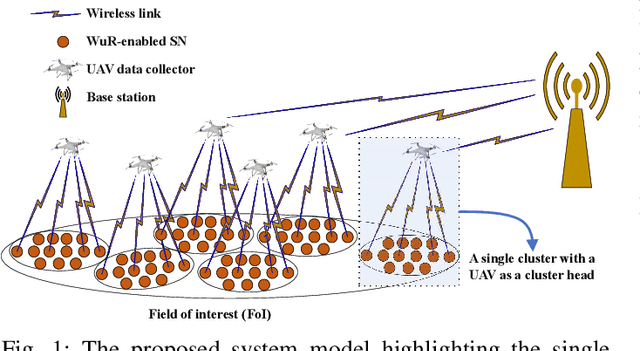
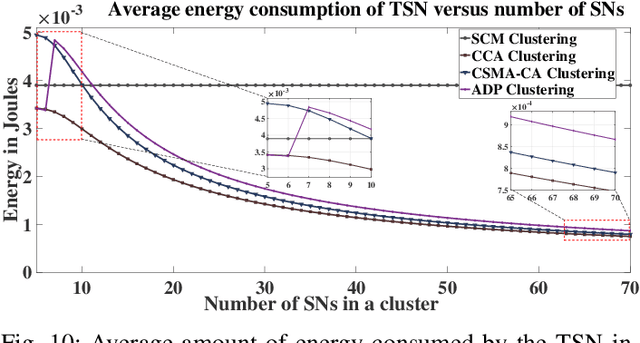
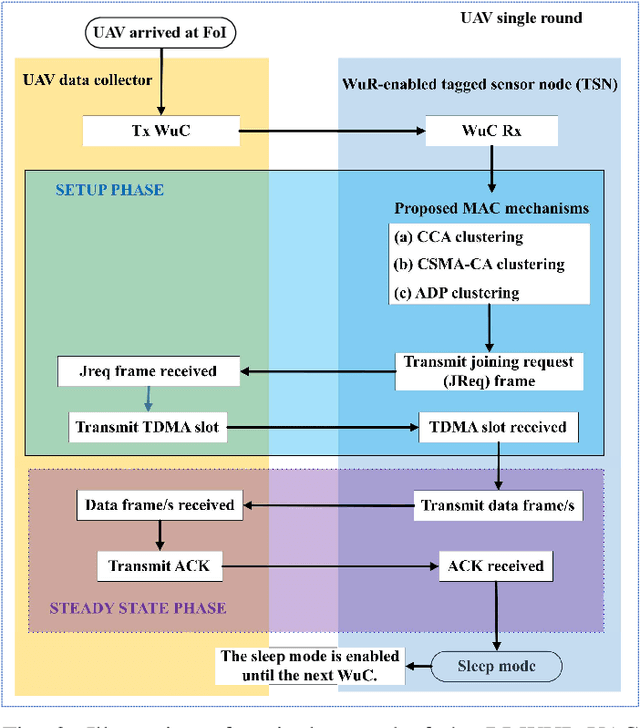
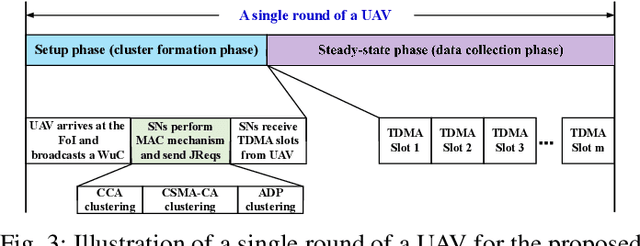
In unmanned aerial vehicle (UAV)-assisted wake-up radio (WuR)-enabled internet of things (IoT) networks, UAVs can instantly activate the main radios (MRs) of the sensor nodes (SNs) with a wake-up call (WuC) for efficient data collection in mission-driven data collection scenarios. However, the spontaneous response of numerous SNs to the UAV's WuC can lead to significant packet loss and collisions, as WuR does not exhibit its superiority for high-traffic loads. To address this challenge, we propose an innovative receiver-initiated WuR UAV-assisted clustering (RI-WuR-UAC) medium access control (MAC) protocol to achieve low latency and high reliability in ultra-low power consumption applications. We model the proposed protocol using the $M/G/1/2$ queuing framework and derive expressions for key performance metrics, i.e., channel busyness probability, probability of successful clustering, average SN energy consumption, and average transmission delay. The RI-WuR-UAC protocol employs three distinct data flow models, tailored to different network traffic conditions, which perform three MAC mechanisms: channel assessment (CCA) clustering for light traffic loads, backoff plus CCA clustering for dense and heavy traffic, and adaptive clustering for variable traffic loads. Simulation results demonstrate that the RI-WuR-UAC protocol significantly outperforms the benchmark sub-carrier modulation clustering protocol. By varying the network load, we capture the trade-offs among the performance metrics, showcasing the superior efficiency and reliability of the RI-WuR-UAC protocol.
Max-Min Fairness for Stacked Intelligent Metasurface-Assisted Multi-User MISO Systems
Apr 20, 2025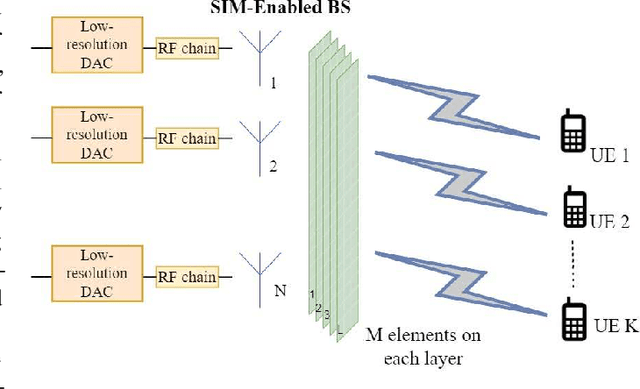
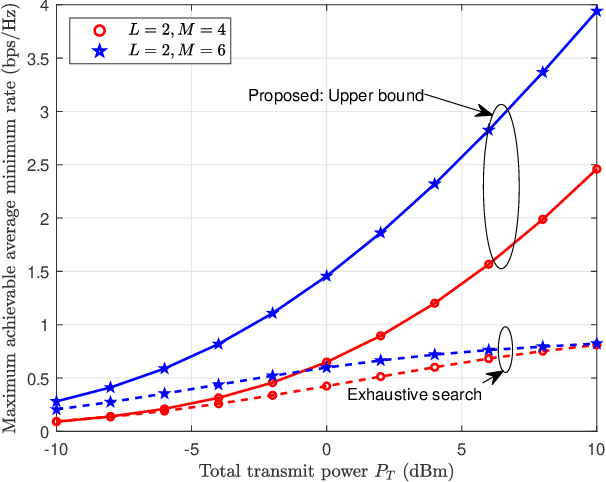

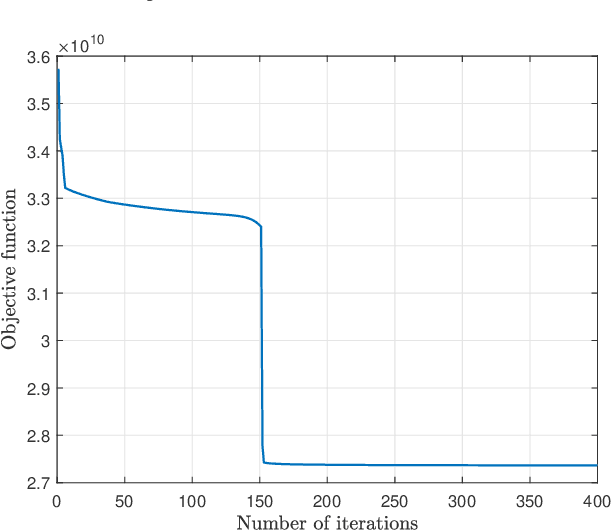
Stacked intelligent metasurface (SIM) is an emerging technology that uses multiple reconfigurable surface layers to enable flexible wave-based beamforming. In this paper, we focus on an \ac{SIM}-assisted multi-user multiple-input single-output system, where it is essential to ensure that all users receive a fair and reliable service level. To this end, we develop two max-min fairness algorithms based on instantaneous channel state information (CSI) and statistical CSI. For the instantaneous CSI case, we propose an alternating optimization algorithm that jointly optimizes power allocation using geometric programming and wave-based beamforming coefficients using the gradient descent-ascent method. For the statistical CSI case, since deriving an exact expression for the average minimum achievable rate is analytically intractable, we derive a tight upper bound and thereby formulate a stochastic optimization problem. This problem is then solved, capitalizing on an alternating approach combining geometric programming and gradient descent algorithms, to obtain the optimal policies. Our numerical results show significant improvements in the minimum achievable rate compared to the benchmark schemes. In particular, for the instantaneous CSI scenario, the individual impact of the optimal wave-based beamforming is significantly higher than that of the power allocation strategy. Moreover, the proposed upper bound is shown to be tight in the low signal-to-noise ratio regime under the statistical CSI.
Uplink Rate Splitting Multiple Access with Imperfect Channel State Information and Interference Cancellation
Jan 31, 2025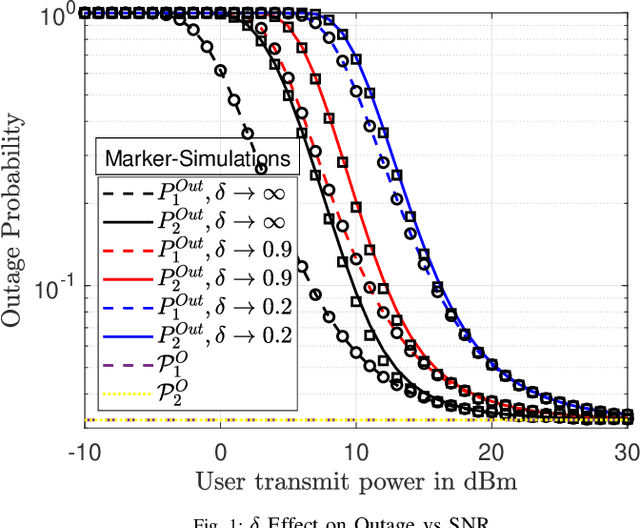
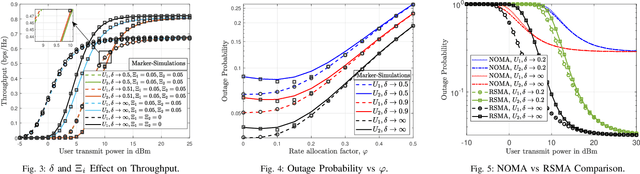

This article investigates the performance of uplink rate splitting multiple access (RSMA) in a two-user scenario, addressing an under-explored domain compared to its downlink counterpart. With the increasing demand for uplink communication in applications like the Internet-of-Things, it is essential to account for practical imperfections, such as inaccuracies in channel state information at the receiver (CSIR) and limitations in successive interference cancellation (SIC), to provide realistic assessments of system performance. Specifically, we derive closed-form expressions for the outage probability, throughput, and asymptotic outage behavior of uplink users, considering imperfect CSIR and SIC. We validate the accuracy of these derived expressions using Monte Carlo simulations. Our findings reveal that at low transmit power levels, imperfect CSIR significantly affects system performance more severely than SIC imperfections. However, as the transmit power increases, the impact of imperfect CSIR diminishes, while the influence of SIC imperfections becomes more pronounced. Moreover, we highlight the impact of the rate allocation factor on user performance. Finally, our comparison with non-orthogonal multiple access (NOMA) highlights the outage performance trade-offs between RSMA and NOMA. RSMA proves to be more effective in managing imperfect CSIR and enhances performance through strategic message splitting, resulting in more robust communication.