 Add to Chrome
 Add to Firefox
 Add to Edge
Impact of CSIR, SIC, and Hardware Impairments on the Ergodic Rate of Downlink RSMA
Apr 20, 2026
This work investigates the ergodic rate performance analysis of rate-splitting multiple access (RSMA) in a downlink communication system under practical impairments. Closed-form expressions are derived for key performance metrics such as ergodic rate, energy efficiency, sum-rate, and Jains fairness index, capturing the joint effects of imperfect channel state information at the receiver (CSIR), imperfect successive interference cancellation (SIC), and hardware impairments. Numerical simulations validate the accuracy of the analytical expressions and reveal several insightful trends. At low transmit powers, imperfect CSIR is the dominant performance-limiting factor, followed by hardware impairments and imperfect SIC. However, as the transmit power increases, hardware impairments become the primary bottleneck, with the impact of imperfect CSIR gradually diminishing, and imperfect SIC becoming a more prominent bottleneck. Moreover, RSMA consistently outperforms non-orthogonal multiple access (NOMA) in terms of ergodic rate, fairness, and sum-rate, even under severe non-idealities. These findings underscore the importance of incorporating fairness as a core design objective alongside rate and energy efficiency, positioning RSMA as a robust and strong multiple access candidate for next-generation wireless networks.

RSMA-Aided Full-Duplex Networks Under Imperfect CSI and SIC: Performance Evaluation
Apr 20, 2026This work investigates a full-duplex (FD)-enhanced Rate-Splitting Multiple Access (RSMA) system under practical constraints, including imperfect channel state information (CSI) and successive interference cancellation (SIC). We derive closed-form expressions for key performance metrics, such as outage probability and throughput, for both uplink and downlink users. The analysis considers co-channel interference (CCI) from uplink to downlink users and models the self-interference (SI) channel as a random variable. Monte Carlo simulations validate the analytical results and highlight the impact of system imperfections on RSMA-FD performance. At low transmit power, imperfect CSI significantly affects the system, though this effect weakens as power increases. In contrast, imperfect SIC becomes more detrimental at high transmit power, causing severe degradation. Additionally, neglecting CCI and assuming perfect SI cancellation leads to substantial overestimation of performance. Lastly, we demonstrate that the SI cancellation factor must be carefully selected to suppress interference effectively. Otherwise, a poor choice limits the full potential of FD technology.
Passive RIS Is Not Silent: Revisiting Performance Limits Under Thermal Noise
Apr 20, 2026Reconfigurable intelligent surfaces (RISs) have emerged as a promising solution for enabling energy-efficient and flexible spectrum usage in wireless communication, particularly in the context of sixth-generation (6G) networks. While passive RIS architectures are widely regarded as virtually noiseless due to the lack of active components, this idealized assumption can lead to misleading performance evaluations. In this paper, we revisit this assumption and demonstrate that the thermal noise generated by passive RIS elements, though often neglected, can significantly affect system performance. We propose a tractable approximated analytical framework that incorporates RIS-induced thermal noise into the system and derive closed-form expressions for key performance metrics, such as outage probability and throughput. Simulation results validate our approximated analysis and highlight the substantial performance discrepancies that arise when RIS thermal noise is ignored. Our results offer valuable insights into the trade-offs between receiver and RIS noise, guiding the development of robust and efficient 6G communication systems.
6G Resilience -- White Paper
Sep 10, 2025
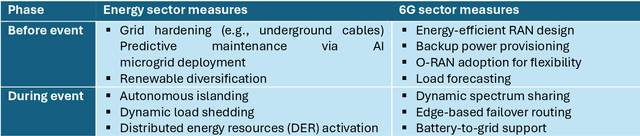


6G must be designed to withstand, adapt to, and evolve amid prolonged, complex disruptions. Mobile networks' shift from efficiency-first to sustainability-aware has motivated this white paper to assert that resilience is a primary design goal, alongside sustainability and efficiency, encompassing technology, architecture, and economics. We promote resilience by analysing dependencies between mobile networks and other critical systems, such as energy, transport, and emergency services, and illustrate how cascading failures spread through infrastructures. We formalise resilience using the 3R framework: reliability, robustness, resilience. Subsequently, we translate this into measurable capabilities: graceful degradation, situational awareness, rapid reconfiguration, and learning-driven improvement and recovery. Architecturally, we promote edge-native and locality-aware designs, open interfaces, and programmability to enable islanded operations, fallback modes, and multi-layer diversity (radio, compute, energy, timing). Key enablers include AI-native control loops with verifiable behaviour, zero-trust security rooted in hardware and supply-chain integrity, and networking techniques that prioritise critical traffic, time-sensitive flows, and inter-domain coordination. Resilience also has a techno-economic aspect: open platforms and high-quality complementors generate ecosystem externalities that enhance resilience while opening new markets. We identify nine business-model groups and several patterns aligned with the 3R objectives, and we outline governance and standardisation. This white paper serves as an initial step and catalyst for 6G resilience. It aims to inspire researchers, professionals, government officials, and the public, providing them with the essential components to understand and shape the development of 6G resilience.
Max-Min Fairness for Stacked Intelligent Metasurface-Assisted Multi-User MISO Systems
Apr 20, 2025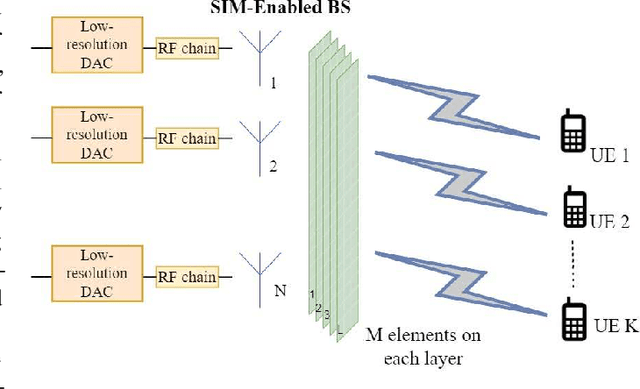
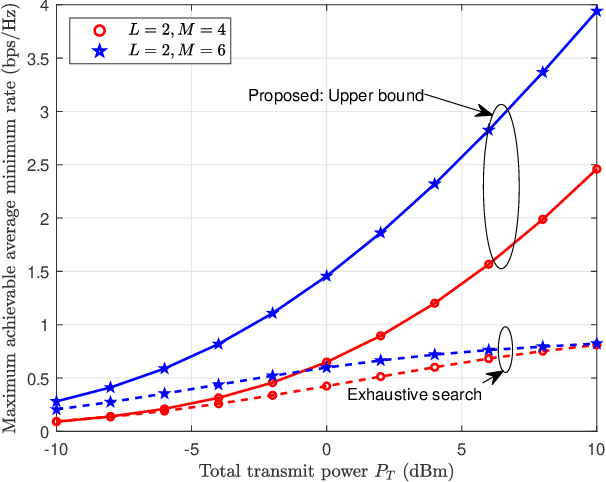

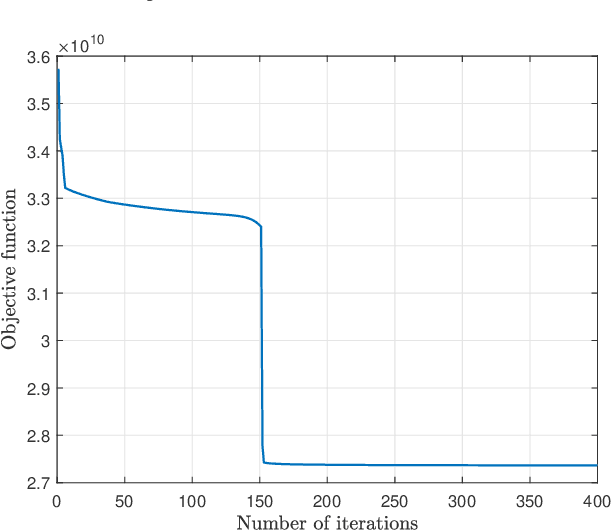
Stacked intelligent metasurface (SIM) is an emerging technology that uses multiple reconfigurable surface layers to enable flexible wave-based beamforming. In this paper, we focus on an \ac{SIM}-assisted multi-user multiple-input single-output system, where it is essential to ensure that all users receive a fair and reliable service level. To this end, we develop two max-min fairness algorithms based on instantaneous channel state information (CSI) and statistical CSI. For the instantaneous CSI case, we propose an alternating optimization algorithm that jointly optimizes power allocation using geometric programming and wave-based beamforming coefficients using the gradient descent-ascent method. For the statistical CSI case, since deriving an exact expression for the average minimum achievable rate is analytically intractable, we derive a tight upper bound and thereby formulate a stochastic optimization problem. This problem is then solved, capitalizing on an alternating approach combining geometric programming and gradient descent algorithms, to obtain the optimal policies. Our numerical results show significant improvements in the minimum achievable rate compared to the benchmark schemes. In particular, for the instantaneous CSI scenario, the individual impact of the optimal wave-based beamforming is significantly higher than that of the power allocation strategy. Moreover, the proposed upper bound is shown to be tight in the low signal-to-noise ratio regime under the statistical CSI.
Efficient Channel Prediction for Beyond Diagonal RIS-Assisted MIMO Systems with Channel Aging
Nov 21, 2024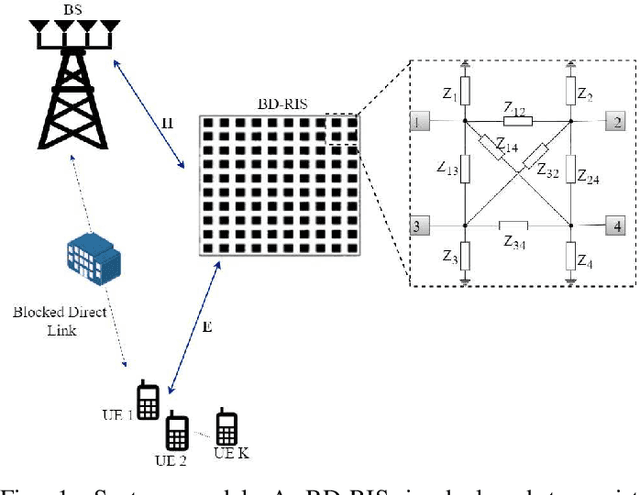
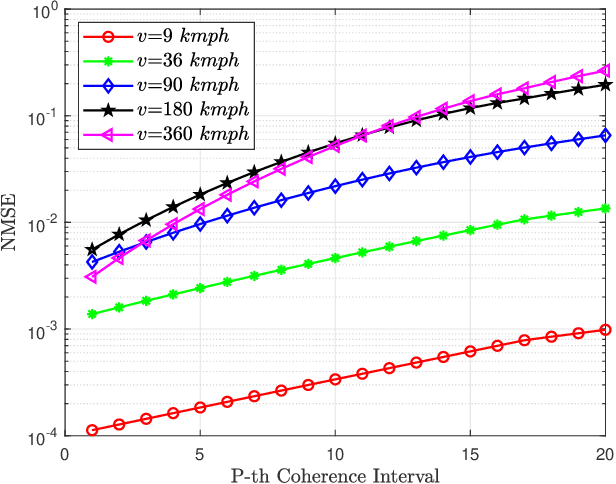
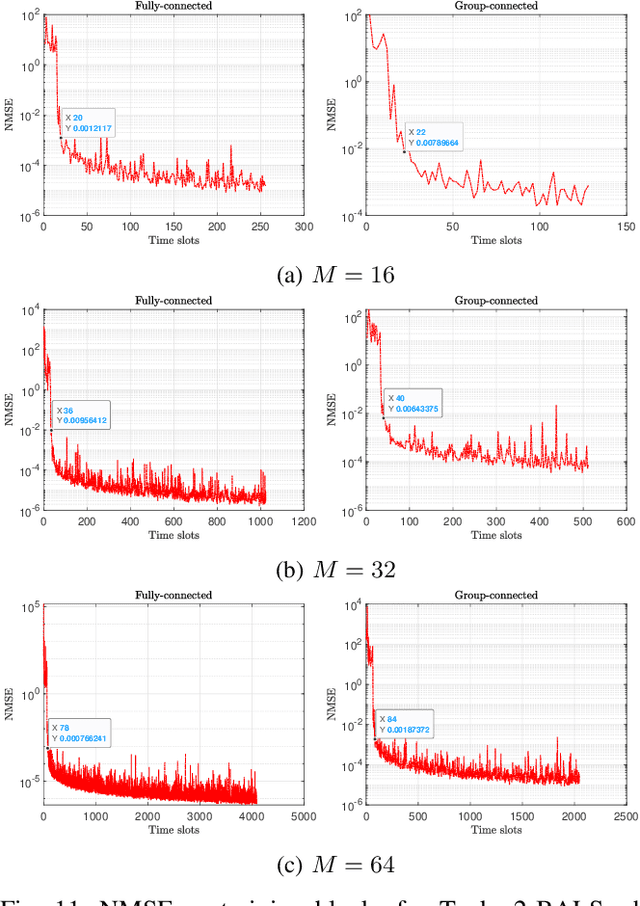
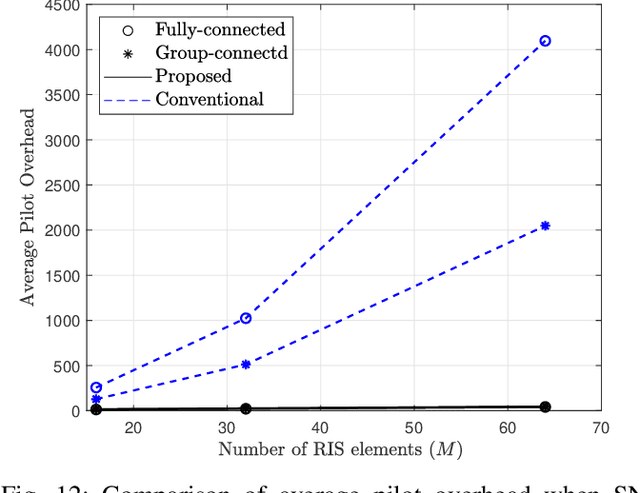
Novel reconfigurable intelligent surface (RIS) architectures, known as beyond diagonal RISs (BD-RISs), have been proposed to enhance reflection efficiency and expand RIS capabilities. However, their passive nature, non-diagonal reflection matrix, and the large number of coupled reflecting elements complicate the channel state information (CSI) estimation process. The challenge further escalates in scenarios with fast-varying channels. In this paper, we address this challenge by proposing novel joint channel estimation and prediction strategies with low overhead and high accuracy for two different RIS architectures in a BD-RIS-assisted multiple-input multiple-output system under correlated fast-fading environments with channel aging. The channel estimation procedure utilizes the Tucker2 decomposition with bilinear alternative least squares, which is exploited to decompose the cascade channels of the BD-RIS-assisted system into effective channels of reduced dimension. The channel prediction framework is based on a convolutional neural network combined with an autoregressive predictor. The estimated/predicted CSI is then utilized to optimize the RIS phase shifts aiming at the maximization of the downlink sum rate. Insightful simulation results demonstrate that our proposed approach is robust to channel aging, and exhibits a high estimation accuracy. Moreover, our scheme can deliver a high average downlink sum rate, outperforming other state-of-the-art channel estimation methods. The results also reveal a remarkable reduction in pilot overhead of up to 98\% compared to baseline schemes, all imposing low computational complexity.
Malicious RIS versus Massive MIMO: Securing Multiple Access against RIS-based Jamming Attacks
Jan 13, 2024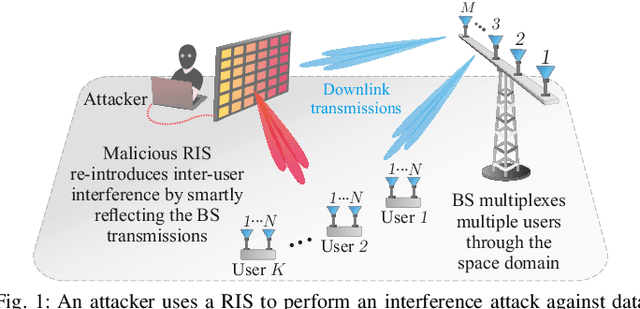
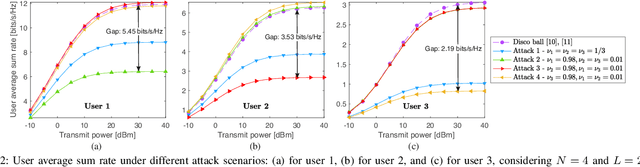
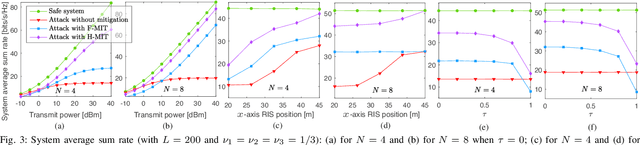
In this letter, we study an attack that leverages a reconfigurable intelligent surface (RIS) to induce harmful interference toward multiple users in massive multiple-input multiple-output (mMIMO) systems during the data transmission phase. We propose an efficient and flexible weighted-sum projected gradient-based algorithm for the attacker to optimize the RIS reflection coefficients without knowing legitimate user channels. To counter such a threat, we propose two reception strategies. Simulation results demonstrate that our malicious algorithm outperforms baseline strategies while offering adaptability for targeting specific users. At the same time, our results show that our mitigation strategies are effective even if only an imperfect estimate of the cascade RIS channel is available.
Dual-Polarized Massive MIMO-RSMA Networks: Tackling Imperfect SIC
Nov 02, 2022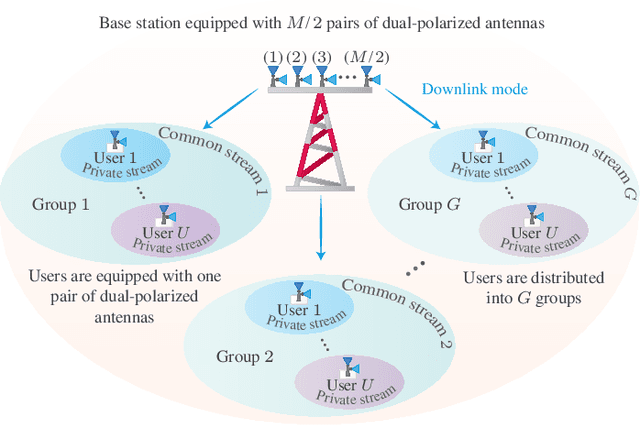
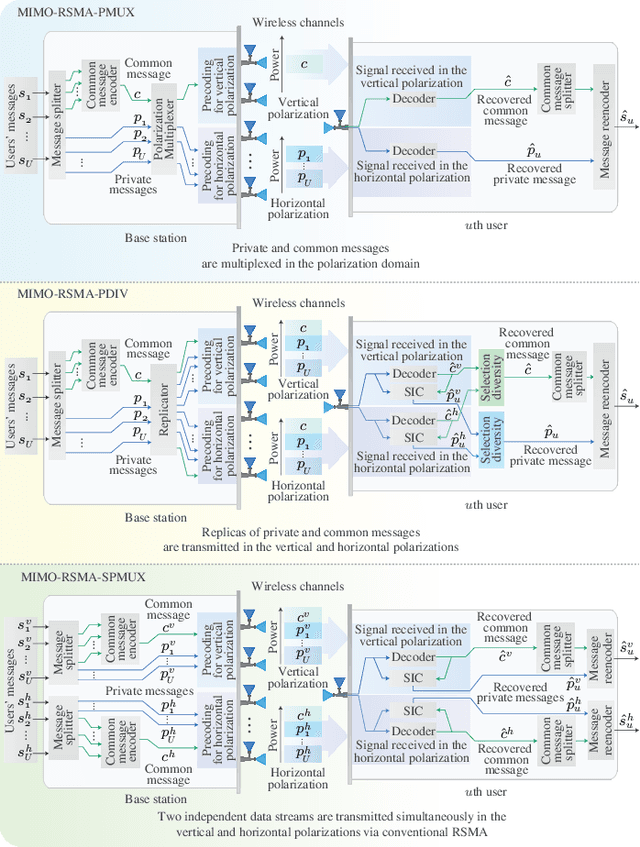


The polarization domain provides an extra degree of freedom (DoF) for improving the performance of multiple-input multiple-output (MIMO) systems. This paper takes advantage of this additional DoF to alleviate practical issues of successive interference cancellation (SIC) in rate-splitting multiple access (RSMA) schemes. Specifically, we propose three dual-polarized downlink transmission approaches for a massive MIMO-RSMA network under the effects of polarization interference and residual errors of imperfect SIC. The first approach implements polarization multiplexing for transmitting the users' data messages, which removes the need to execute SIC in the reception. The second approach transmits replicas of users' messages in the two polarizations, which enables users to exploit diversity through the polarization domain. The third approach, in its turn, employs the original SIC-based RSMA technique per polarization, and this allows the BS to transmit two independent superimposed data streams simultaneously. An in-depth theoretical analysis is carried out, in which we derive tight closed-form approximations for the outage probabilities of the three proposed approaches. Accurate approximations for the ergodic sum-rates of the two first schemes are also derived. Simulation results validate the theoretical analysis and confirm the effectiveness of the proposed schemes. For instance, under low to moderate cross-polar interference, the results show that, even under high levels of residual SIC error, our dual-polarized MIMO-RSMA strategies outperform the conventional single-polarized MIMO-RSMA counterpart. It is also shown that the performance of all RSMA schemes is impressively higher than that of single and dual-polarized massive MIMO systems employing non-orthogonal multiple access (NOMA) and orthogonal multiple access (OMA) techniques.