 Add to Chrome
 Add to Firefox
 Add to Edge
Position: Align AI to Our Aspirations, Not Our Flaws
Jun 11, 2026
We argue that aligning AI to aggregated human preferences is the wrong target. With current technology, one can train AIs to share the values of a Silicon Valley techno-optimist, a degrowth environmentalist, a national-conservative culture warrior, a single-party state cadre, or a devout religious traditionalist. We should not. Human values produce societies that thrive or fail on the merits of those values - from failed states and extreme inequality to declining happiness, political polarization, and government dysfunction in the world's wealthiest democracies. The pluralistic-alignment program correctly diagnoses that there is no single "humanity" to align with, but is dangerous if taken as the main directive. We argue that AI should be trained to a non-negotiable floor of objective alignment goals - competence, bounded by the constraints of factual accuracy, honesty, and lawfulness and that pluralism belongs at the surface (language, register, conventions, missing-context defaults) and across the wide band of legitimate value tradeoffs that respect the floor, but not at the level of values that violate it. We highlight the empirical reality of unfiltered pluralistic values, propose four commitments as a constructive alternative, and engage six credible objections: commercial pressure and practical feasibility, democratic legitimacy, regulatory compliance, over-reliance on institutionalist explanations, the charge that the floor itself is culturally laden, and the limits of Coherent Extrapolated Volition.

Crys-JEPA: Accelerating Crystal Discovery via Embedding Screening and Generative Refinement
May 14, 2026De novo crystal generation seeks to discover materials that are not merely realistic, but also stable and novel. However, most existing generative models are trained to maximize the likelihood of observed crystals, which encourages samples to stay close to known materials yet not necessarily align with the criteria that matter in discovery. Through an empirical investigation, we show that current crystal generative models are caught in a pronounced stability--novelty trade-off: moving toward the observed distribution preserves stability but limits novelty, whereas moving away from it quickly destroys stability. This suggests that the useful region for discovering crystals that are both stable and novel is extremely narrow. To escape the trade-off, we introduce Crys-JEPA, a joint embedding predictive architecture for crystals that learns an energy-aware latent space preserving formation-energy differences. In this space, stability assessment can be reformulated as an embedding-based comparison against accessible training crystals, reducing the reliance on expensive energy evaluation and task-specific external references. Building on Crys-JEPA, we further develop a screening-and-refinement pipeline that identifies promising generated crystals and reintroduces them to refine the generative model. On MP-20 and Alex-MP-20 datasets, we achieve improvements over baselines up to 81.4% and 82.6% on V.S.U.N metric, respectively.
Composable Crystals: Controllable Materials Discovery via Concept Learning
May 14, 2026De novo crystal generation, a central task in materials discovery, aims to generate crystals that are simultaneously valid, stable, unique, and novel. Existing methods mainly rely on black-box stochastic sampling, providing limited control over how generated structures move beyond the observed distribution. In this paper, we introduce a concept-based compositional framework for crystal generation. We train a vector-quantized variational autoencoder to automatically discover a shared set of reusable crystal concepts, which serve as building blocks for guided generation. These learned concepts naturally exhibit interpretability from both local atomic environments and global symmetry patterns, and generalize to crystals from different distributions. By recombining such concepts, our framework enables controllable exploration of novel crystals beyond the training distribution, rather than relying solely on unconstrained random sampling. To further improve composition efficiency, we introduce a composition generator and iteratively refine it using high-quality samples generated by the model itself. The resulting concept compositions are then used to condition downstream crystal generation. Numerical experiments on MP-20 and Alex-MP-20 show that compositing concepts separately increase base model up to 53.2% and 51.7% on V.S.U.N metric, with particular gains in novelty.
MiAD: Mirage Atom Diffusion for De Novo Crystal Generation
Nov 18, 2025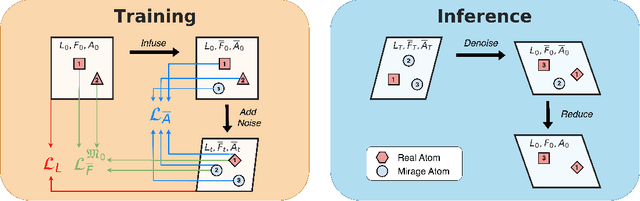

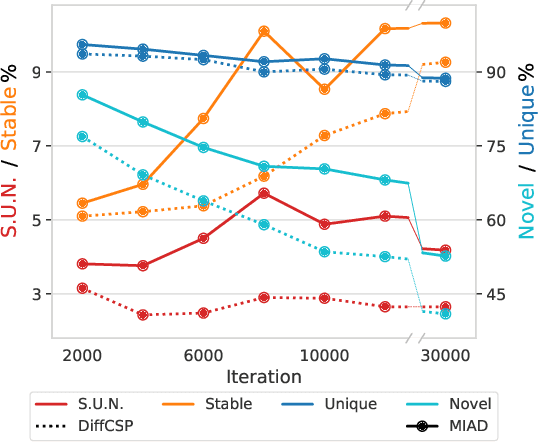
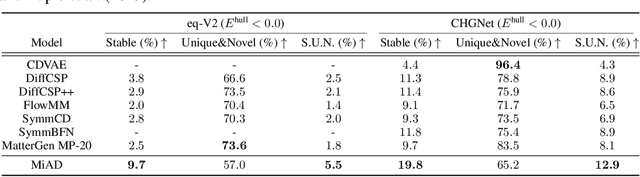
In recent years, diffusion-based models have demonstrated exceptional performance in searching for simultaneously stable, unique, and novel (S.U.N.) crystalline materials. However, most of these models don't have the ability to change the number of atoms in the crystal during the generation process, which limits the variability of model sampling trajectories. In this paper, we demonstrate the severity of this restriction and introduce a simple yet powerful technique, mirage infusion, which enables diffusion models to change the state of the atoms that make up the crystal from existent to non-existent (mirage) and vice versa. We show that this technique improves model quality by up to $\times2.5$ compared to the same model without this modification. The resulting model, Mirage Atom Diffusion (MiAD), is an equivariant joint diffusion model for de novo crystal generation that is capable of altering the number of atoms during the generation process. MiAD achieves an $8.2\%$ S.U.N. rate on the MP-20 dataset, which substantially exceeds existing state-of-the-art approaches. The source code can be found at \href{https://github.com/andrey-okhotin/miad.git}{\texttt{github.com/andrey-okhotin/miad}}.
Wyckoff Transformer: Generation of Symmetric Crystals
Mar 04, 2025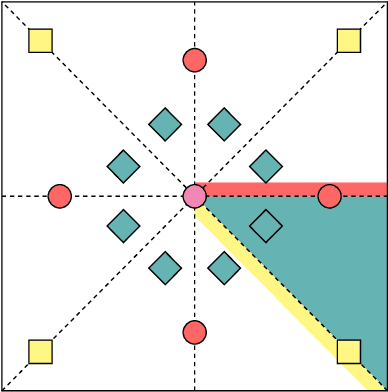
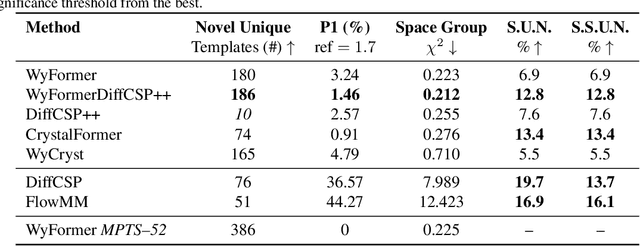
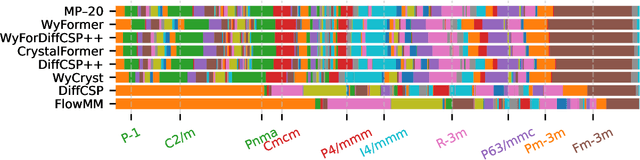
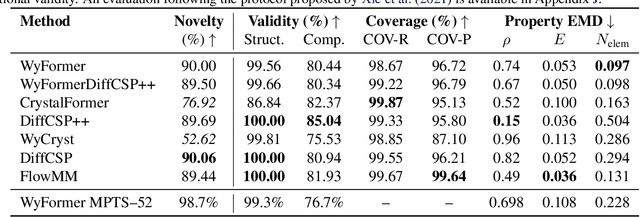
Symmetry rules that atoms obey when they bond together to form an ordered crystal play a fundamental role in determining their physical, chemical, and electronic properties such as electrical and thermal conductivity, optical and polarization behavior, and mechanical strength. Almost all known crystalline materials have internal symmetry. Consistently generating stable crystal structures is still an open challenge, specifically because such symmetry rules are not accounted for. To address this issue, we propose WyFormer, a generative model for materials conditioned on space group symmetry. We use Wyckoff positions as the basis for an elegant, compressed, and discrete structure representation. To model the distribution, we develop a permutation-invariant autoregressive model based on the Transformer and an absence of positional encoding. WyFormer has a unique and powerful synergy of attributes, proven by extensive experimentation: best-in-class symmetry-conditioned generation, physics-motivated inductive bias, competitive stability of the generated structures, competitive material property prediction quality, and unparalleled inference speed.
The LHCb ultra-fast simulation option, Lamarr: design and validation
Sep 22, 2023Detailed detector simulation is the major consumer of CPU resources at LHCb, having used more than 90% of the total computing budget during Run 2 of the Large Hadron Collider at CERN. As data is collected by the upgraded LHCb detector during Run 3 of the LHC, larger requests for simulated data samples are necessary, and will far exceed the pledged resources of the experiment, even with existing fast simulation options. An evolution of technologies and techniques to produce simulated samples is mandatory to meet the upcoming needs of analysis to interpret signal versus background and measure efficiencies. In this context, we propose Lamarr, a Gaudi-based framework designed to offer the fastest solution for the simulation of the LHCb detector. Lamarr consists of a pipeline of modules parameterizing both the detector response and the reconstruction algorithms of the LHCb experiment. Most of the parameterizations are made of Deep Generative Models and Gradient Boosted Decision Trees trained on simulated samples or alternatively, where possible, on real data. Embedding Lamarr in the general LHCb Gauss Simulation framework allows combining its execution with any of the available generators in a seamless way. Lamarr has been validated by comparing key reconstructed quantities with Detailed Simulation. Good agreement of the simulated distributions is obtained with two-order-of-magnitude speed-up of the simulation phase.
Generative models uncertainty estimation
Oct 18, 2022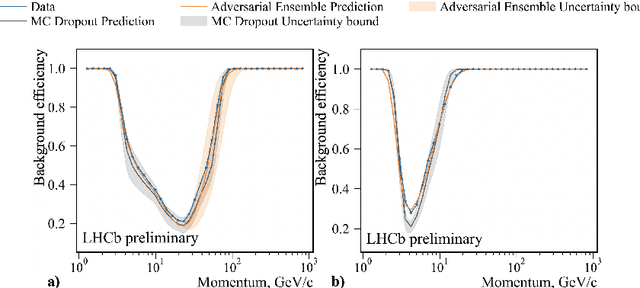
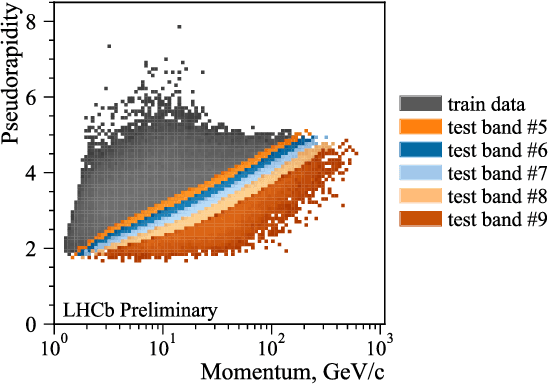
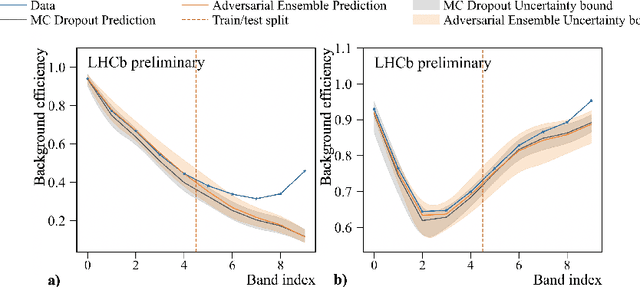
In recent years fully-parametric fast simulation methods based on generative models have been proposed for a variety of high-energy physics detectors. By their nature, the quality of data-driven models degrades in the regions of the phase space where the data are sparse. Since machine-learning models are hard to analyse from the physical principles, the commonly used testing procedures are performed in a data-driven way and can't be reliably used in such regions. In our work we propose three methods to estimate the uncertainty of generative models inside and outside of the training phase space region, along with data-driven calibration techniques. A test of the proposed methods on the LHCb RICH fast simulation is also presented.
Towards Reliable Neural Generative Modeling of Detectors
Apr 21, 2022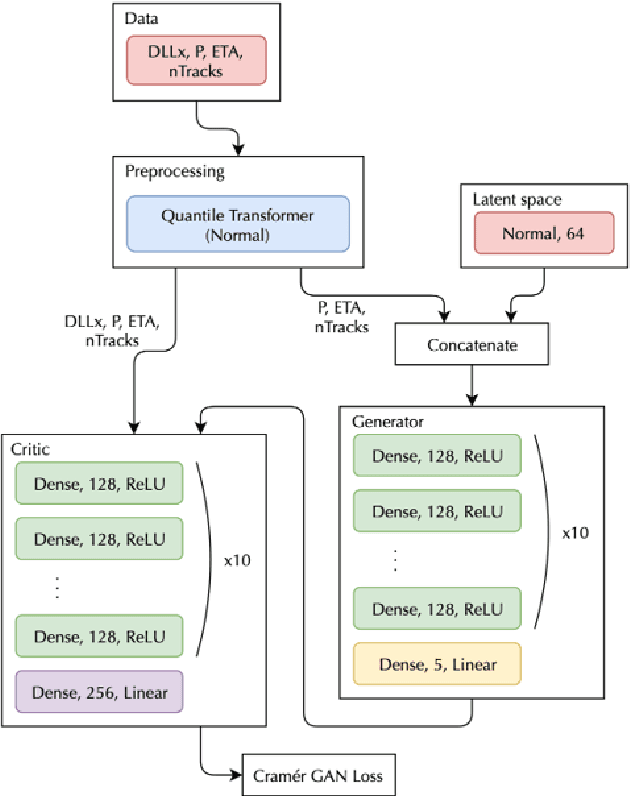
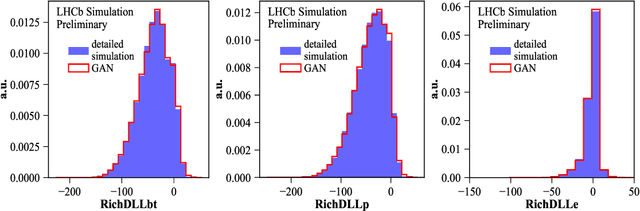
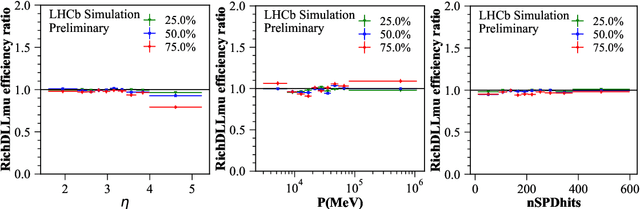
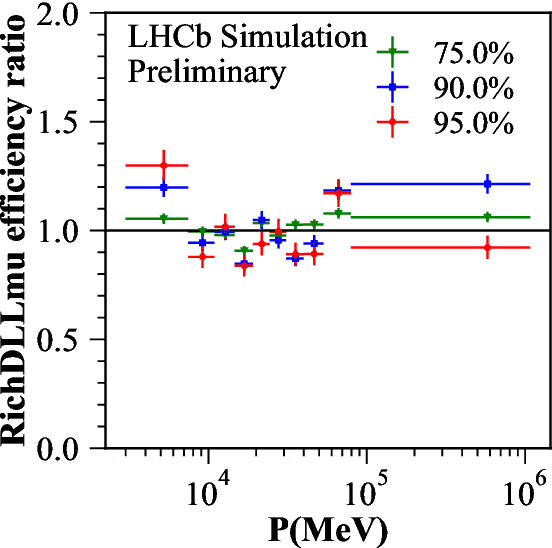
The increasing luminosities of future data taking at Large Hadron Collider and next generation collider experiments require an unprecedented amount of simulated events to be produced. Such large scale productions demand a significant amount of valuable computing resources. This brings a demand to use new approaches to event generation and simulation of detector responses. In this paper, we discuss the application of generative adversarial networks (GANs) to the simulation of the LHCb experiment events. We emphasize main pitfalls in the application of GANs and study the systematic effects in detail. The presented results are based on the Geant4 simulation of the LHCb Cherenkov detector.
Machine Learning on data with sPlot background subtraction
Jun 14, 2019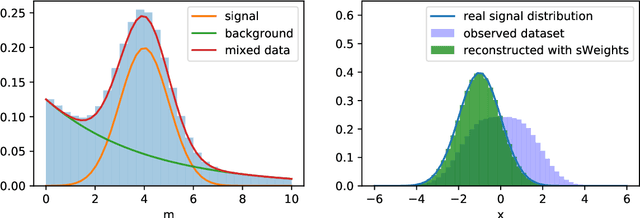
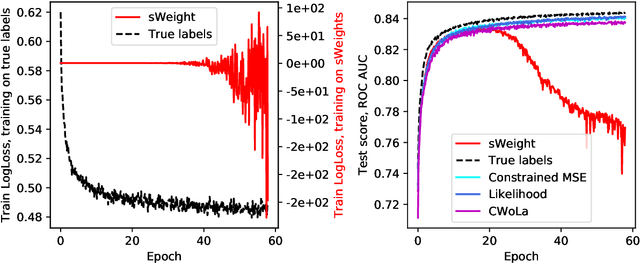
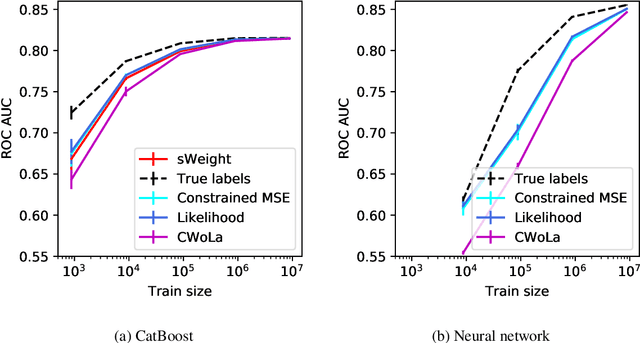
Data analysis in high energy physics often deals with data samples consisting of a mixture of signal and background events. The sPlot technique is a common method to subtract the contribution of the background by assigning weights to events. Part of the weights are by design negative. Negative weights lead to the divergence of some machine learning algorithms training due to absence of the lower bound in the loss function. In this paper we propose a mathematically rigorous way to train machine learning algorithms on data samples with background described by sPlot to obtain signal probabilities conditioned on observables, without encountering negative event weight at all. This allows usage of any out-of-the-box machine learning methods on such data.
Fast Data-Driven Simulation of Cherenkov Detectors Using Generative Adversarial Networks
May 28, 2019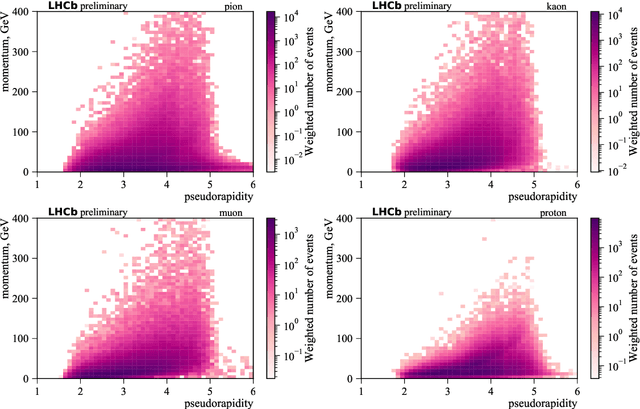
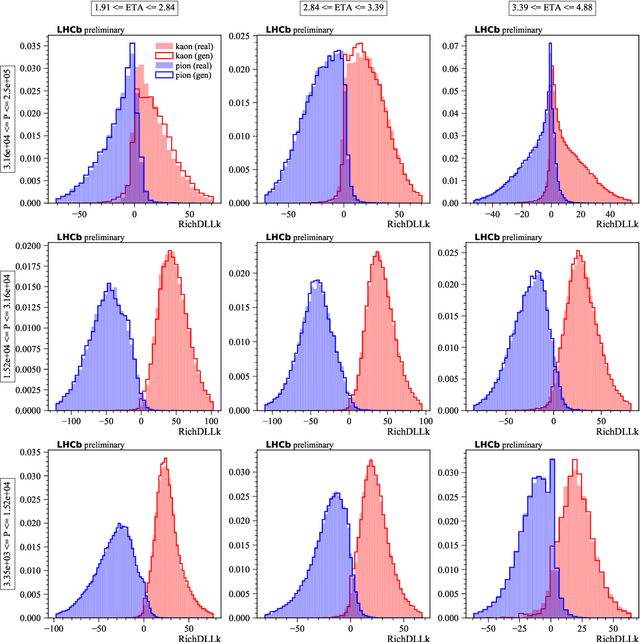
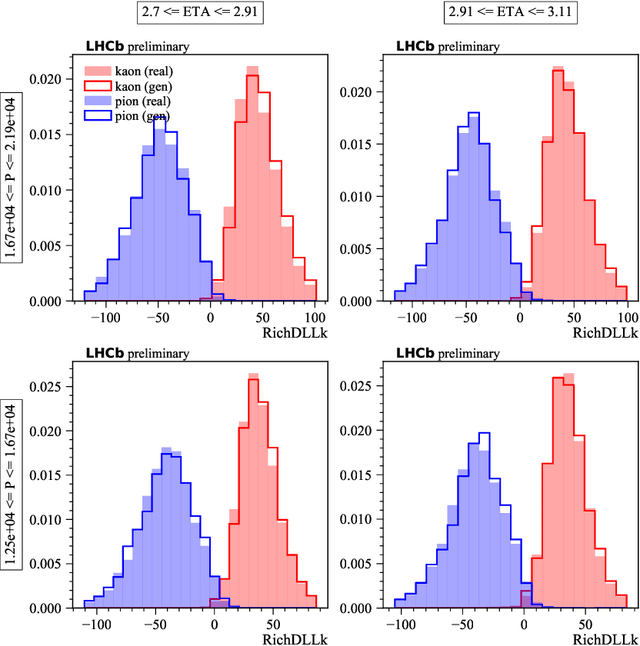
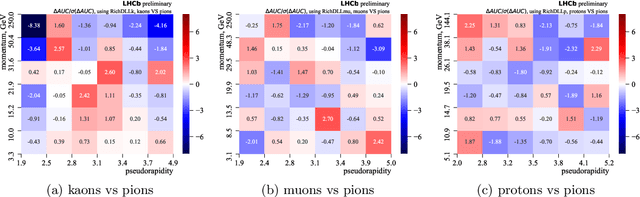
The increasing luminosities of future Large Hadron Collider runs and next generation of collider experiments will require an unprecedented amount of simulated events to be produced. Such large scale productions are extremely demanding in terms of computing resources. Thus new approaches to event generation and simulation of detector responses are needed. In LHCb, the accurate simulation of Cherenkov detectors takes a sizeable fraction of CPU time. An alternative approach is described here, when one generates high-level reconstructed observables using a generative neural network to bypass low level details. This network is trained to reproduce the particle species likelihood function values based on the track kinematic parameters and detector occupancy. The fast simulation is trained using real data samples collected by LHCb during run 2. We demonstrate that this approach provides high-fidelity results.