 Add to Chrome
 Add to Firefox
 Add to Edge
Hierarchical Space Partition for Surface Reconstruction
Jun 03, 2026
Generating compact polygonal models from point clouds is a key problem in 3D vision and computer graphics. However, due to inherent limitations of LiDAR scanning (e.g. range constraints and occlusions), critical scene information is often missing, leading to degraded reconstruction accuracy. To address this, we propose a plane assembling strategy that effectively recovers missing details while maintaining model compactness. We classify all the planes extracted from the scene into three categories: highly visible, barely visible, and invisible. The invisible planes, which are recovered by scene structure analysis, indicate the missing details. The three types of planes correspond to the three growth priorities. Each plane grows according to the priority level, and the space is partitioned progressively, namely, the hierarchical partition. Subsequently, we generate a watertight polygonal mesh from the partition via a min-cut-based optimization. Finally, comparisons on public datasets show the effectiveness and superiority of our method against mainstream approaches. The project page is available at https://hsr-3dv.github.io/.
* Published in 2026 International Conference on 3D Vision (3DV)

Pilot-Free Optimal Control over Wireless Networks: A Control-Aided Channel Prediction Approach
Feb 25, 2026A recurring theme in optimal controller design for wireless networked control systems (WNCS) is the reliance on real-time channel state information (CSI). However, acquiring accurate CSI a priori is notoriously challenging due to the time-varying nature of wireless channels. In this work, we propose a pilot-free framework for optimal control over wireless channels in which control commands are generated from plant states together with control-aided channel prediction. For linear plants operating over an orthogonal frequency-division multiplexing (OFDM) architecture, channel prediction is performed via a Kalman filter (KF), and the optimal control policy is derived from the Bellman principle. To alleviate the curse of dimensionality in computing the optimal control policy, we approximate the solution using a coupled algebraic Riccati equation (CARE), which can be computed efficiently via a stochastic approximation (SA) algorithm. Rigorous performance guarantees are established by proving the stability of both the channel predictor and the closed-loop system under the resulting control policy, providing sufficient conditions for the existence and uniqueness of a stabilizing approximate CARE solution, and establishing convergence of the SA-based control algorithm. The framework is further extended to nonlinear plants under general wireless architectures by combining a KalmanNet-based predictor with a Markov-modulated deep deterministic policy gradient (MM-DDPG) controller. Numerical results show that the proposed pilot-free approach outperforms benchmark schemes in both control performance and channel prediction accuracy for linear and nonlinear scenarios.
Multi-Sensor Scheduling for Remote State Estimation over Wireless MIMO Fading Channels with Semantic Over-the-Air Aggregation
Feb 04, 2026In this work, we study multi-sensor scheduling for remote state estimation over wireless multiple-input multiple-output (MIMO) fading channels using a novel semantic over-the-air (SemOTA) aggregation approach. We first revisit Kalman filtering with conventional over-the-air (OTA) aggregation and highlight its transmit power limitations. To balance power efficiency and estimation performance, we formulate the scheduling task as a finite-horizon dynamic programming (DP) problem. By analyzing the structure of the optimal Q-function, we show that the resulting scheduling policy exhibits a semantic structure that adapts online to the estimation error covariance and channel variations. To obtain a practical solution, we derive a tractable upper bound on the Q-function via a positive semidefinite (PSD) cone decomposition, which enables an efficient approximate scheduling policy and a low-complexity remote estimation algorithm. Numerical results confirm that the proposed scheme outperforms existing methods in both estimation accuracy and power efficiency.
DMRS-Based Uplink Channel Estimation for MU-MIMO Systems with Location-Specific SCSI Acquisition
Jun 13, 2025With the growing number of users in multi-user multiple-input multiple-output (MU-MIMO) systems, demodulation reference signals (DMRSs) are efficiently multiplexed in the code domain via orthogonal cover codes (OCC) to ensure orthogonality and minimize pilot interference. In this paper, we investigate uplink DMRS-based channel estimation for MU-MIMO systems with Type II OCC pattern standardized in 3GPP Release 18, leveraging location-specific statistical channel state information (SCSI) to enhance performance. Specifically, we propose a SCSI-assisted Bayesian channel estimator (SA-BCE) based on the minimum mean square error criterion to suppress the pilot interference and noise, albeit at the cost of cubic computational complexity due to matrix inversions. To reduce this complexity while maintaining performance, we extend the scheme to a windowed version (SA-WBCE), which incorporates antenna-frequency domain windowing and beam-delay domain processing to exploit asymptotic sparsity and mitigate energy leakage in practical systems. To avoid the frequent real-time SCSI acquisition, we construct a grid-based location-specific SCSI database based on the principle of spatial consistency, and subsequently leverage the uplink received signals within each grid to extract the SCSI. Facilitated by the multilinear structure of wireless channels, we formulate the SCSI acquisition problem within each grid as a tensor decomposition problem, where the factor matrices are parameterized by the multi-path powers, delays, and angles. The computational complexity of SCSI acquisition can be significantly reduced by exploiting the Vandermonde structure of the factor matrices. Simulation results demonstrate that the proposed location-specific SCSI database construction method achieves high accuracy, while the SA-BCE and SA-WBCE significantly outperform state-of-the-art benchmarks in MU-MIMO systems.
CSI-Free Low-Complexity Remote State Estimation over Wireless MIMO Fading Channels using Semantic Analog Aggregation
Jan 24, 2025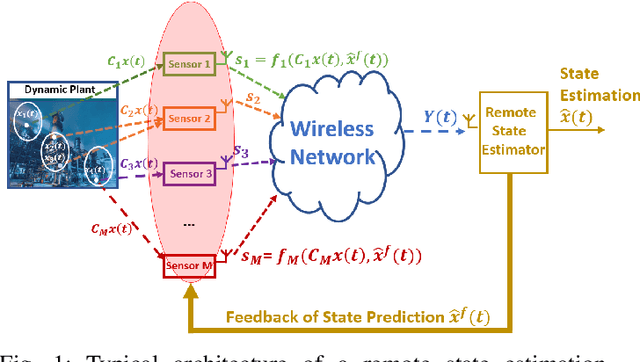
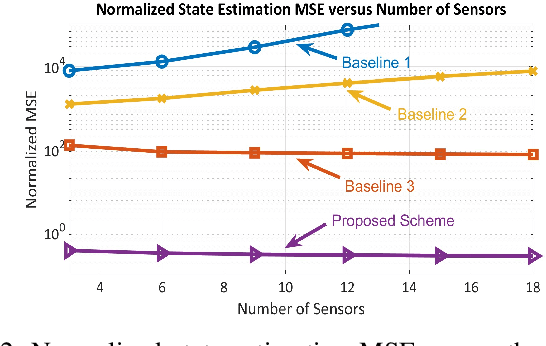
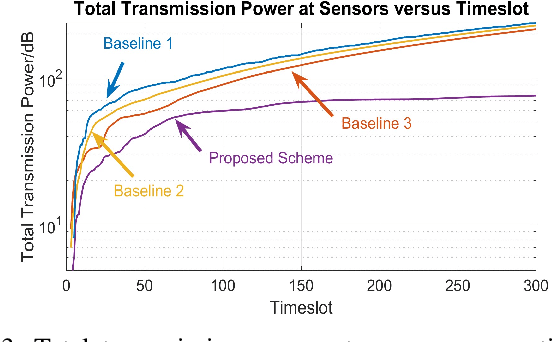
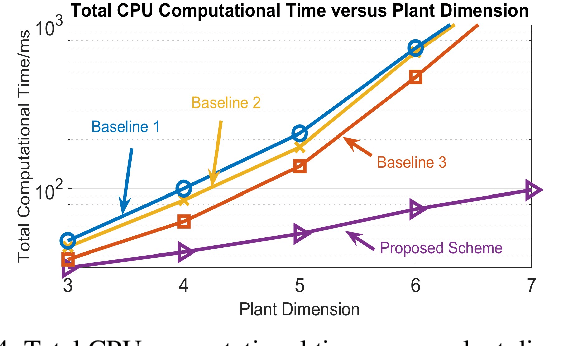
In this work, we investigate low-complexity remote system state estimation over wireless multiple-input-multiple-output (MIMO) channels without requiring prior knowledge of channel state information (CSI). We start by reviewing the conventional Kalman filtering-based state estimation algorithm, which typically relies on perfect CSI and incurs considerable computational complexity. To overcome the need for CSI, we introduce a novel semantic aggregation method, in which sensors transmit semantic measurement discrepancies to the remote state estimator through analog aggregation. To further reduce computational complexity, we introduce a constant-gain-based filtering algorithm that can be optimized offline using the constrained stochastic successive convex approximation (CSSCA) method. We derive a closed-form sufficient condition for the estimation stability of our proposed scheme via Lyapunov drift analysis. Numerical results showcase significant performance gains using the proposed scheme compared to several widely used methods.
Decentralized Semantic Communication and Cooperative Tracking Control for a UAV Swarm over Wireless MIMO Fading Channels
Nov 09, 2024This paper investigates the semantic communication and cooperative tracking control for an UAV swarm comprising a leader UAV and a group of follower UAVs, all interconnected via unreliable wireless multiple-input-multiple-output (MIMO) channels. Initially, we develop a dynamic model for the UAV swarm that accounts for both the internal interactions among the cooperative follower UAVs and the imperfections inherent in the MIMO channels that interlink the leader and follower UAVs. Building on this model, we incorporate the power costs of the UAVs and formulate the communication and cooperative tracking control challenge as a drift-plus-penalty optimization problem. We then derive a closed-form optimal solution that maintains a decentralized semantic architecture, dynamically adjusting to the tracking error costs and local channel conditions within the swarm. Employing Lyapunov drift analysis, we establish closed-form sufficient conditions for the stabilization of the UAV swarm's tracking performance. Numerical results demonstrate the significant enhancements in our proposed scheme over various state-of-the-art methods.