 Add to Chrome
 Add to Firefox
 Add to Edge
HCPG-Flow:Hierarchical Contact-Progress Guidance for Flow-Policy Robot Manipulation
Jul 20, 2026
Flow policies can represent multimodal action distributions for robot manipulation, yet a robot must execute one action at each control step. When several proposals are sampled, critic-based ranking makes data collection depend on value estimates over candidate actions that may be weakly represented in replay. We introduce HCPG-Flow, an analytic rollout-time selector that augments SAC-Flow with hierarchical, object-centric contact-progress guidance while preserving its actor and critic objectives. HCPG switches from end-effector approach to task progress after contact, scores each proposal by the first-order reduction of a task-relevant distance, standardizes scores within the candidate set, and executes a temperature-controlled action embedding. Across ten simulated tasks, HCPG improves mean success over SAC-Flow on both benchmarks, including a 9.5 percentage-point gain on Maniskill. Four physical tasks further show high success with a 17.4% reduction in successful completion steps.Project page: https://hitxraz.github.io/HCPG-Flow/

HDCNet: A Hybrid Depth Completion Network for Grasping Transparent and Reflective Objects
Nov 10, 2025Depth perception of transparent and reflective objects has long been a critical challenge in robotic manipulation.Conventional depth sensors often fail to provide reliable measurements on such surfaces, limiting the performance of robots in perception and grasping tasks. To address this issue, we propose a novel depth completion network,HDCNet,which integrates the complementary strengths of Transformer,CNN and Mamba architectures.Specifically,the encoder is designed as a dual-branch Transformer-CNN framework to extract modality-specific features. At the shallow layers of the encoder, we introduce a lightweight multimodal fusion module to effectively integrate low-level features. At the network bottleneck,a Transformer-Mamba hybrid fusion module is developed to achieve deep integration of high-level semantic and global contextual information, significantly enhancing depth completion accuracy and robustness. Extensive evaluations on multiple public datasets demonstrate that HDCNet achieves state-of-the-art(SOTA) performance in depth completion tasks.Furthermore,robotic grasping experiments show that HDCNet substantially improves grasp success rates for transparent and reflective objects,achieving up to a 60% increase.
Measuring Fairness in Financial Transaction Machine Learning Models
Jan 18, 2025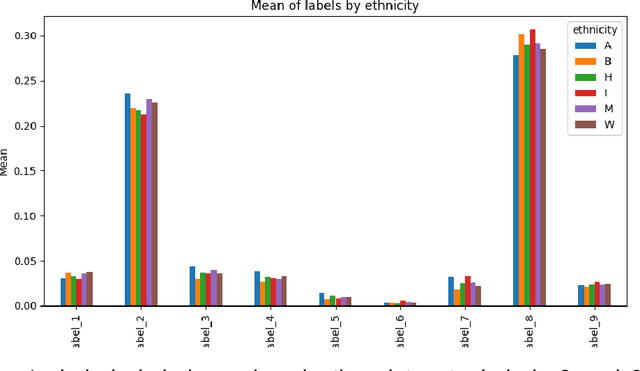
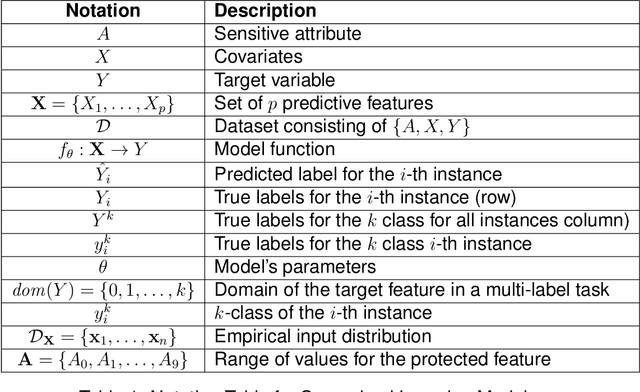
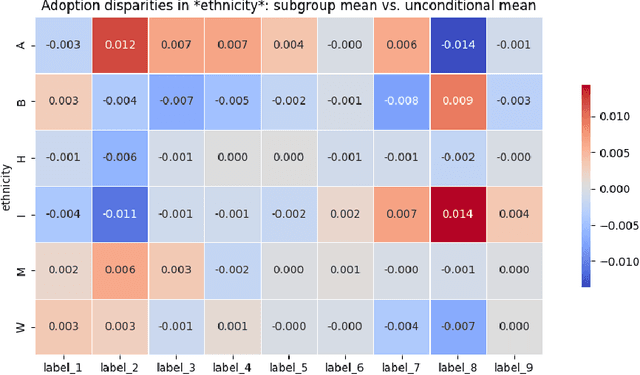
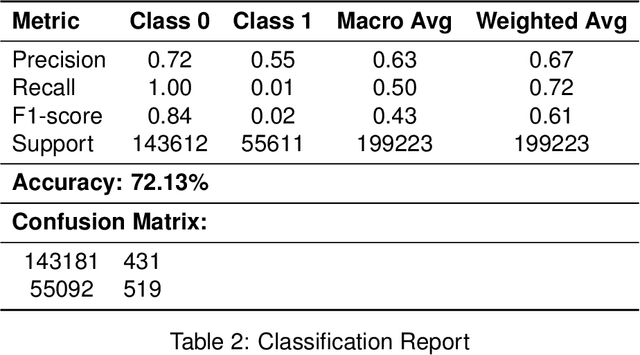
Mastercard, a global leader in financial services, develops and deploys machine learning models aimed at optimizing card usage and preventing attrition through advanced predictive models. These models use aggregated and anonymized card usage patterns, including cross-border transactions and industry-specific spending, to tailor bank offerings and maximize revenue opportunities. Mastercard has established an AI Governance program, based on its Data and Tech Responsibility Principles, to evaluate any built and bought AI for efficacy, fairness, and transparency. As part of this effort, Mastercard has sought expertise from the Turing Institute through a Data Study Group to better assess fairness in more complex AI/ML models. The Data Study Group challenge lies in defining, measuring, and mitigating fairness in these predictions, which can be complex due to the various interpretations of fairness, gaps in the research literature, and ML-operations challenges.