 Add to Chrome
 Add to Firefox
 Add to Edge
SAMA: Semantic Anchor-aligned Augmentation for Unified Low-Resource Multimodal Information Extraction
Jun 17, 2026
Multimodal Information Extraction (MIE)-covering tasks such as Multimodal Named Entity Recognition (MNER), Relation Extraction (MRE), and Event Extraction (MEE)-is essential for understanding multimedia content but remains constrained by severe data scarcity. Although data augmentation is a promising remedy, existing approaches are impeded by coarse cross-modal alignment and fragmented, task-specific designs that fail to exploit shared semantic knowledge. To overcome these limitations, we introduce Semantic Anchor-aligned Multimodal Augmentation (SAMA), a unified framework for generating high-fidelity, task-aware synthetic data. SAMA constructs structured semantic anchors from ground-truth labels to guide a Collaborative Multi-Experts Multimodal Large Language Model (CME-MLLM), which integrates a Universal Adapter for shared semantics with Task-Specific Adapters to produce diverse yet constraint-compliant textual samples. For image synthesis, SAMA employs an Anchor-Preserving Diffusion mechanism that uses anchor-weighted prompts and latent conditioning to maintain critical semantic anchors while diversifying visual contexts. To eliminate the need for manual verification, SAMA further introduces a Dual-Constraint Filtering module that selects synthetic samples based on both cross-modal consistency and anchor fidelity. Extensive experiments across benchmark datasets for MNER, MRE, and MEE demonstrate that SAMA consistently outperforms state-of-the-art augmentation baselines under both fully supervised and low-resource settings, underscoring its versatility, robustness, and effectiveness.

Efficient and Effective Single-Document Summarizations and A Word-Embedding Measurement of Quality
Oct 01, 2017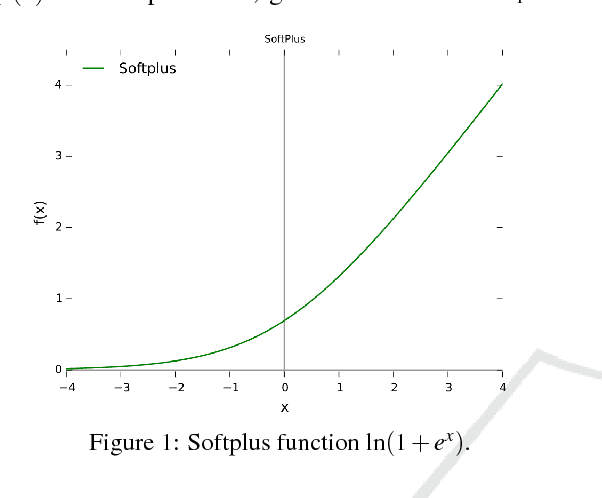
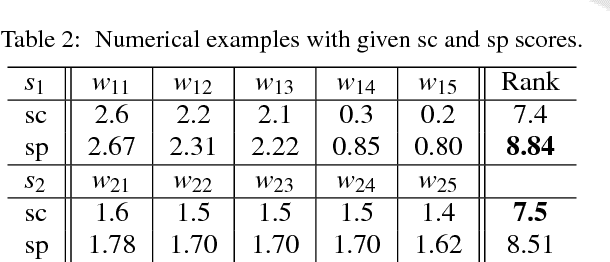
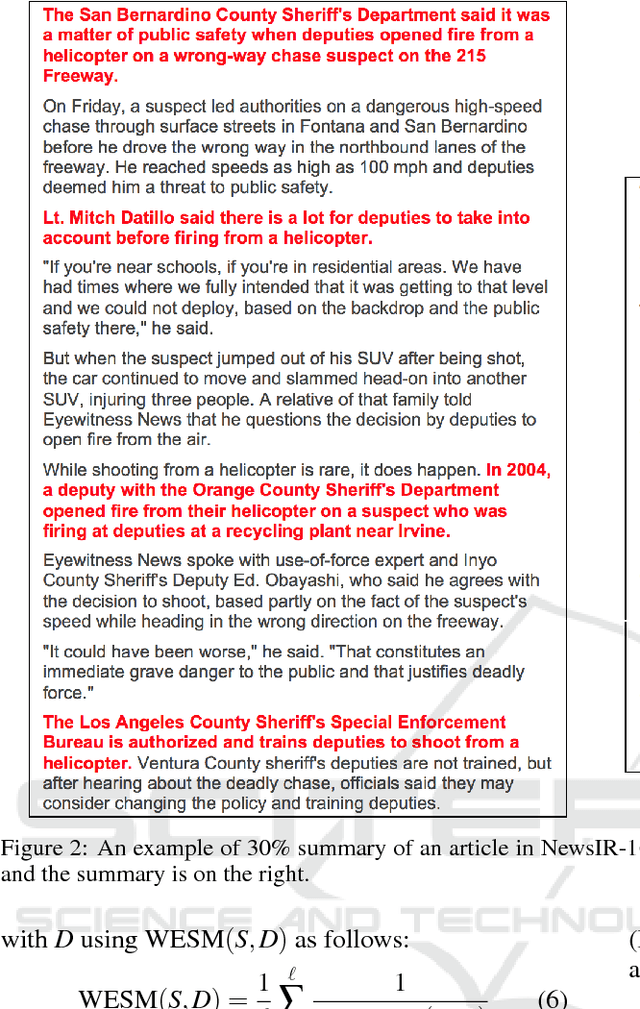
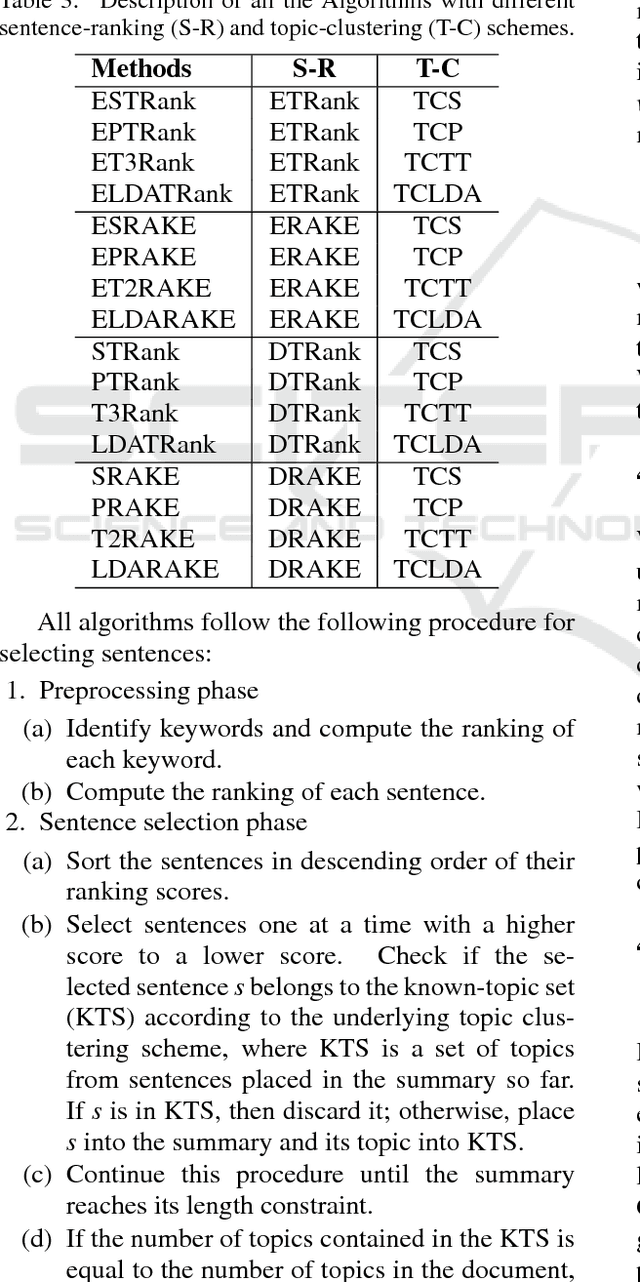
Our task is to generate an effective summary for a given document with specific realtime requirements. We use the softplus function to enhance keyword rankings to favor important sentences, based on which we present a number of summarization algorithms using various keyword extraction and topic clustering methods. We show that our algorithms meet the realtime requirements and yield the best ROUGE recall scores on DUC-02 over all previously-known algorithms. We show that our algorithms meet the realtime requirements and yield the best ROUGE recall scores on DUC-02 over all previously-known algorithms. To evaluate the quality of summaries without human-generated benchmarks, we define a measure called WESM based on word-embedding using Word Mover's Distance. We show that the orderings of the ROUGE and WESM scores of our algorithms are highly comparable, suggesting that WESM may serve as a viable alternative for measuring the quality of a summary.