 Add to Chrome
 Add to Firefox
 Add to Edge
IMITATE: Clinical Prior Guided Hierarchical Vision-Language Pre-training
Oct 11, 2023
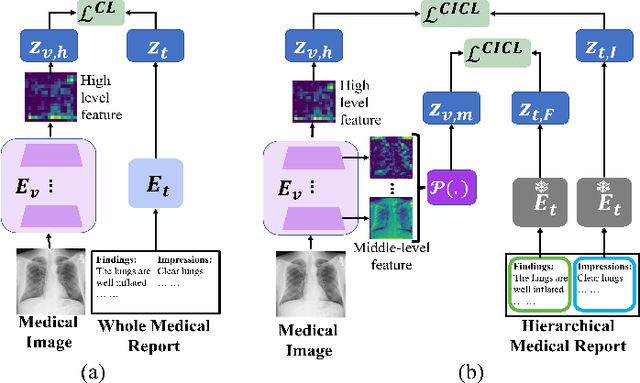
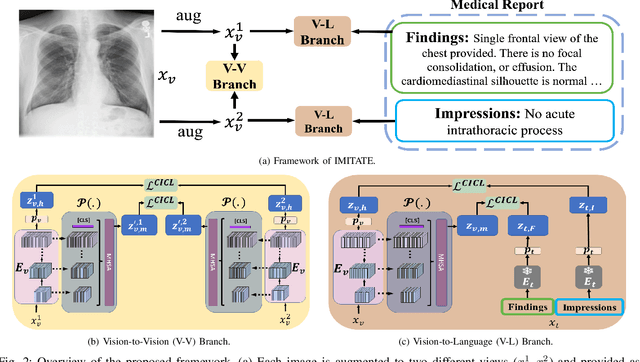
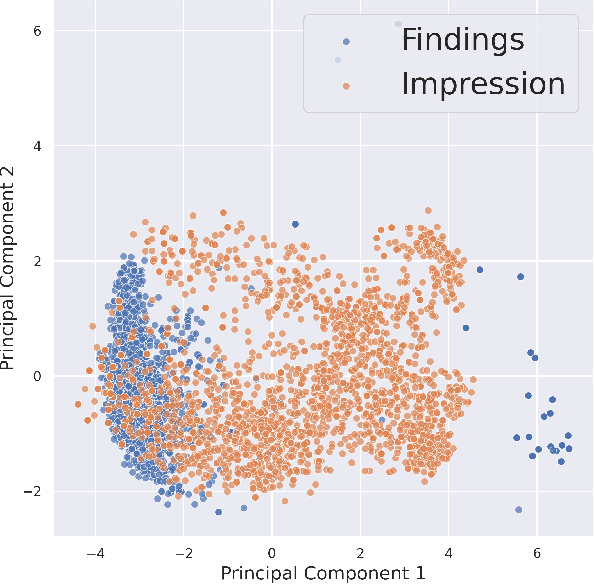
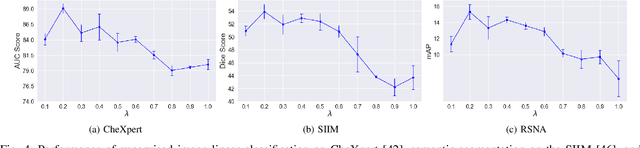
In the field of medical Vision-Language Pre-training (VLP), significant efforts have been devoted to deriving text and image features from both clinical reports and associated medical images. However, most existing methods may have overlooked the opportunity in leveraging the inherent hierarchical structure of clinical reports, which are generally split into `findings' for descriptive content and `impressions' for conclusive observation. Instead of utilizing this rich, structured format, current medical VLP approaches often simplify the report into either a unified entity or fragmented tokens. In this work, we propose a novel clinical prior guided VLP framework named IMITATE to learn the structure information from medical reports with hierarchical vision-language alignment. The framework derives multi-level visual features from the chest X-ray (CXR) images and separately aligns these features with the descriptive and the conclusive text encoded in the hierarchical medical report. Furthermore, a new clinical-informed contrastive loss is introduced for cross-modal learning, which accounts for clinical prior knowledge in formulating sample correlations in contrastive learning. The proposed model, IMITATE, outperforms baseline VLP methods across six different datasets, spanning five medical imaging downstream tasks. Comprehensive experimental results highlight the advantages of integrating the hierarchical structure of medical reports for vision-language alignment.

An investigation into the impact of deep learning model choice on sex and race bias in cardiac MR segmentation
Aug 25, 2023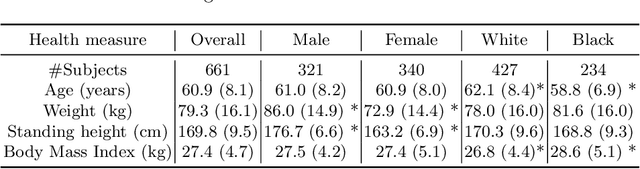
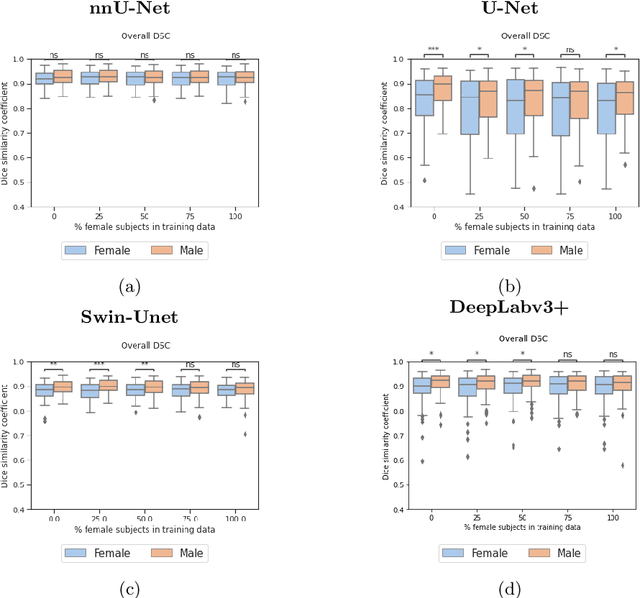
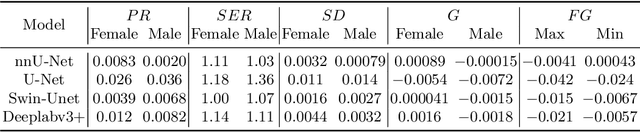
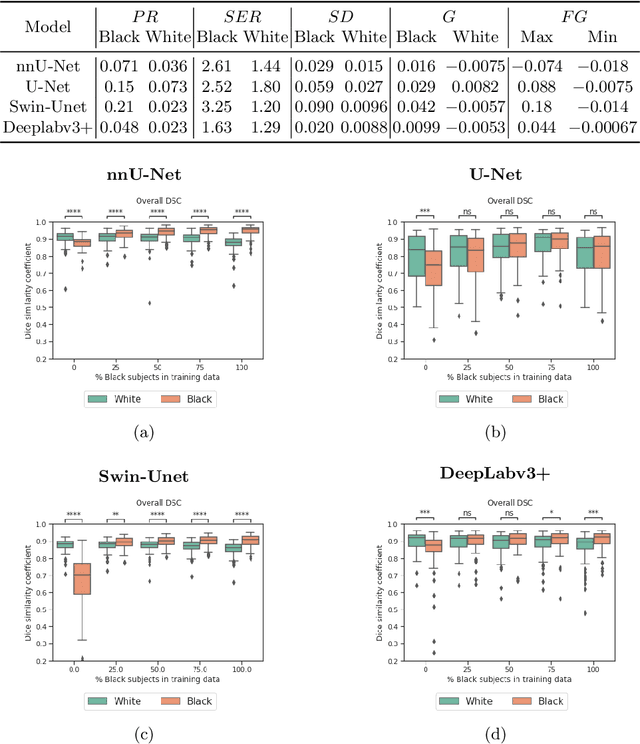
In medical imaging, artificial intelligence (AI) is increasingly being used to automate routine tasks. However, these algorithms can exhibit and exacerbate biases which lead to disparate performances between protected groups. We investigate the impact of model choice on how imbalances in subject sex and race in training datasets affect AI-based cine cardiac magnetic resonance image segmentation. We evaluate three convolutional neural network-based models and one vision transformer model. We find significant sex bias in three of the four models and racial bias in all of the models. However, the severity and nature of the bias varies between the models, highlighting the importance of model choice when attempting to train fair AI-based segmentation models for medical imaging tasks.
SegMatch: A semi-supervised learning method for surgical instrument segmentation
Aug 09, 2023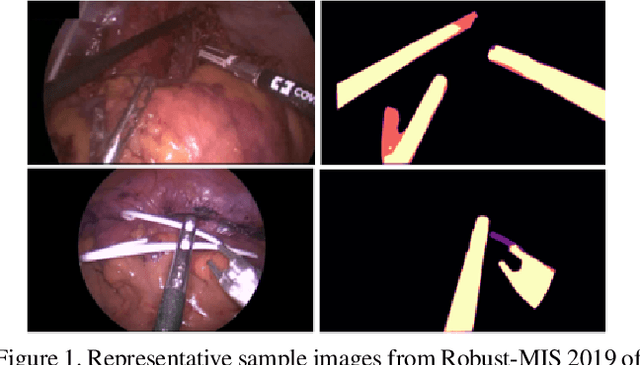
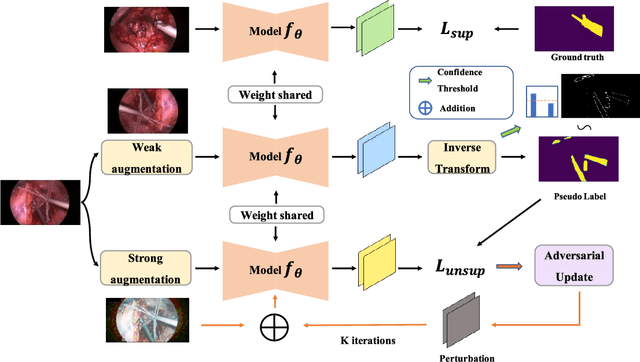

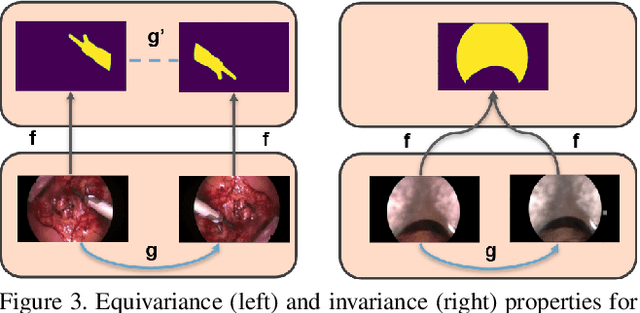
Surgical instrument segmentation is recognised as a key enabler to provide advanced surgical assistance and improve computer assisted interventions. In this work, we propose SegMatch, a semi supervised learning method to reduce the need for expensive annotation for laparoscopic and robotic surgical images. SegMatch builds on FixMatch, a widespread semi supervised classification pipeline combining consistency regularization and pseudo labelling, and adapts it for the purpose of segmentation. In our proposed SegMatch, the unlabelled images are weakly augmented and fed into the segmentation model to generate a pseudo-label to enforce the unsupervised loss against the output of the model for the adversarial augmented image on the pixels with a high confidence score. Our adaptation for segmentation tasks includes carefully considering the equivariance and invariance properties of the augmentation functions we rely on. To increase the relevance of our augmentations, we depart from using only handcrafted augmentations and introduce a trainable adversarial augmentation strategy. Our algorithm was evaluated on the MICCAI Instrument Segmentation Challenge datasets Robust-MIS 2019 and EndoVis 2017. Our results demonstrate that adding unlabelled data for training purposes allows us to surpass the performance of fully supervised approaches which are limited by the availability of training data in these challenges. SegMatch also outperforms a range of state-of-the-art semi-supervised learning semantic segmentation models in different labelled to unlabelled data ratios.
When Multi-Task Learning Meets Partial Supervision: A Computer Vision Review
Jul 25, 2023


Multi-Task Learning (MTL) aims to learn multiple tasks simultaneously while exploiting their mutual relationships. By using shared resources to simultaneously calculate multiple outputs, this learning paradigm has the potential to have lower memory requirements and inference times compared to the traditional approach of using separate methods for each task. Previous work in MTL has mainly focused on fully-supervised methods, as task relationships can not only be leveraged to lower the level of data-dependency of those methods but they can also improve performance. However, MTL introduces a set of challenges due to a complex optimisation scheme and a higher labeling requirement. This review focuses on how MTL could be utilised under different partial supervision settings to address these challenges. First, this review analyses how MTL traditionally uses different parameter sharing techniques to transfer knowledge in between tasks. Second, it presents the different challenges arising from such a multi-objective optimisation scheme. Third, it introduces how task groupings can be achieved by analysing task relationships. Fourth, it focuses on how partially supervised methods applied to MTL can tackle the aforementioned challenges. Lastly, this review presents the available datasets, tools and benchmarking results of such methods.
TreeFormer: a Semi-Supervised Transformer-based Framework for Tree Counting from a Single High Resolution Image
Jul 12, 2023Automatic tree density estimation and counting using single aerial and satellite images is a challenging task in photogrammetry and remote sensing, yet has an important role in forest management. In this paper, we propose the first semisupervised transformer-based framework for tree counting which reduces the expensive tree annotations for remote sensing images. Our method, termed as TreeFormer, first develops a pyramid tree representation module based on transformer blocks to extract multi-scale features during the encoding stage. Contextual attention-based feature fusion and tree density regressor modules are further designed to utilize the robust features from the encoder to estimate tree density maps in the decoder. Moreover, we propose a pyramid learning strategy that includes local tree density consistency and local tree count ranking losses to utilize unlabeled images into the training process. Finally, the tree counter token is introduced to regulate the network by computing the global tree counts for both labeled and unlabeled images. Our model was evaluated on two benchmark tree counting datasets, Jiangsu, and Yosemite, as well as a new dataset, KCL-London, created by ourselves. Our TreeFormer outperforms the state of the art semi-supervised methods under the same setting and exceeds the fully-supervised methods using the same number of labeled images. The codes and datasets are available at https://github.com/HAAClassic/TreeFormer.
Text Promptable Surgical Instrument Segmentation with Vision-Language Models
Jun 15, 2023In this paper, we propose a novel text promptable surgical instrument segmentation approach to overcome challenges associated with diversity and differentiation of surgical instruments in minimally invasive surgeries. We redefine the task as text promptable, thereby enabling a more nuanced comprehension of surgical instruments and adaptability to new instrument types. Inspired by recent advancements in vision-language models, we leverage pretrained image and text encoders as our model backbone and design a text promptable mask decoder consisting of attention- and convolution-based prompting schemes for surgical instrument segmentation prediction. Our model leverages multiple text prompts for each surgical instrument through a new mixture of prompts mechanism, resulting in enhanced segmentation performance. Additionally, we introduce a hard instrument area reinforcement module to improve image feature comprehension and segmentation precision. Extensive experiments on EndoVis2017 and EndoVis2018 datasets demonstrate our model's superior performance and promising generalization capability. To our knowledge, this is the first implementation of a promptable approach to surgical instrument segmentation, offering significant potential for practical application in the field of robotic-assisted surgery.
LoSh: Long-Short Text Joint Prediction Network for Referring Video Object Segmentation
Jun 14, 2023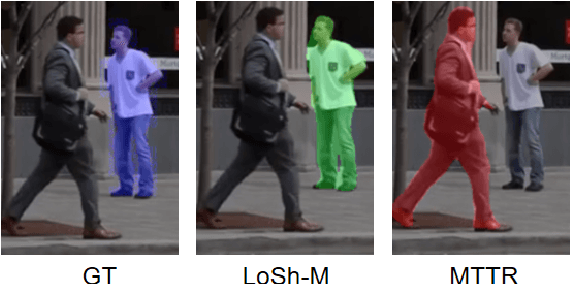
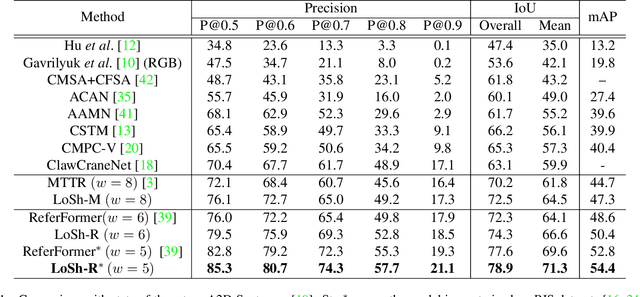
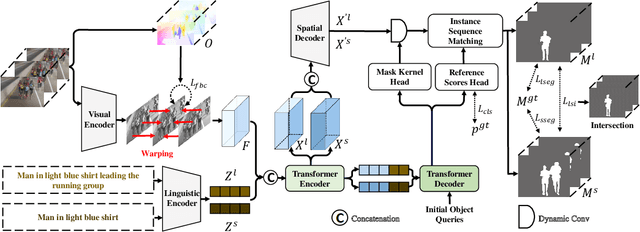
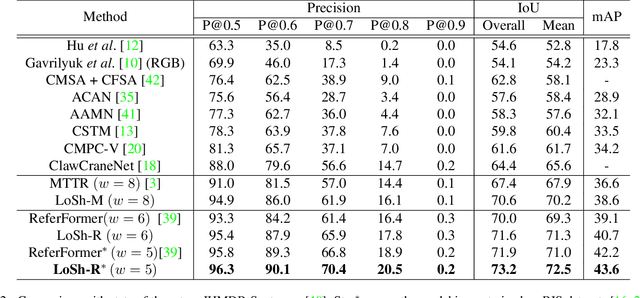
Referring video object segmentation (RVOS) aims to segment the target instance referred by a given text expression in a video clip. The text expression normally contains sophisticated descriptions of the instance's appearance, actions, and relations with others. It is therefore rather difficult for an RVOS model to capture all these attributes correspondingly in the video; in fact, the model often favours more on the action- and relation-related visual attribute of the instance. This can end up with incomplete or even incorrect mask prediction of the target instance. In this paper, we tackle this problem by taking a subject-centric short text expression from the original long text expression. The short one retains only the appearance-related information of the target instance so that we can use it to focus the model's attention on the instance's appearance. We let the model make joint predictions using both long and short text expressions and introduce a long-short predictions intersection loss to align the joint predictions. Besides the improvement on the linguistic part, we also introduce a forward-backward visual consistency loss, which utilizes optical flows to warp visual features between the annotated frames and their temporal neighbors for consistency. We build our method on top of two state of the art transformer-based pipelines for end-to-end training. Extensive experiments on A2D-Sentences and JHMDB-Sentences datasets show impressive improvements of our method.
HiLo: Exploiting High Low Frequency Relations for Unbiased Panoptic Scene Graph Generation
Mar 28, 2023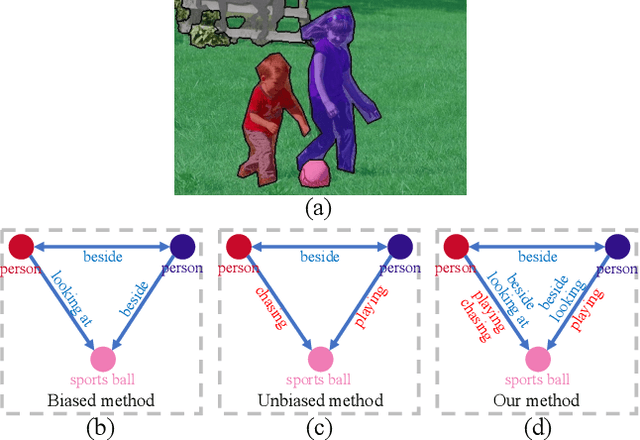
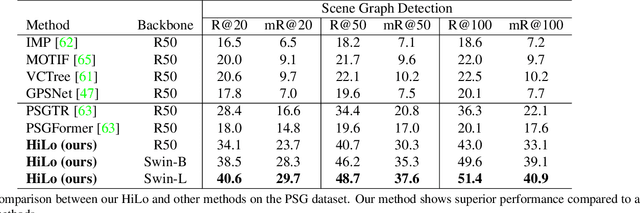
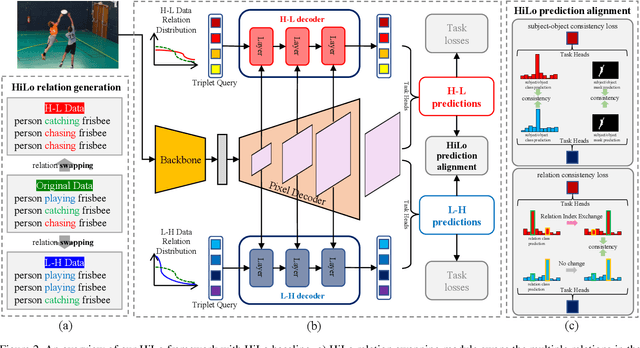
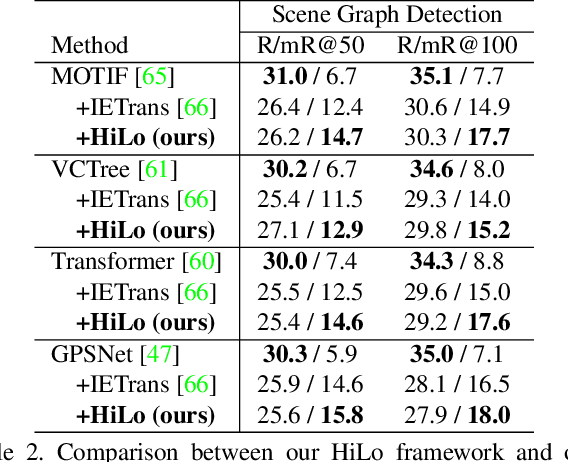
Panoptic Scene Graph generation (PSG) is a recently proposed task in image scene understanding that aims to segment the image and extract triplets of subjects, objects and their relations to build a scene graph. This task is particularly challenging for two reasons. First, it suffers from a long-tail problem in its relation categories, making naive biased methods more inclined to high-frequency relations. Existing unbiased methods tackle the long-tail problem by data/loss rebalancing to favor low-frequency relations. Second, a subject-object pair can have two or more semantically overlapping relations. While existing methods favor one over the other, our proposed HiLo framework lets different network branches specialize on low and high frequency relations, enforce their consistency and fuse the results. To the best of our knowledge we are the first to propose an explicitly unbiased PSG method. In extensive experiments we show that our HiLo framework achieves state-of-the-art results on the PSG task. We also apply our method to the Scene Graph Generation task that predicts boxes instead of masks and see improvements over all baseline methods.
Domain-general Crowd Counting in Unseen Scenarios
Dec 05, 2022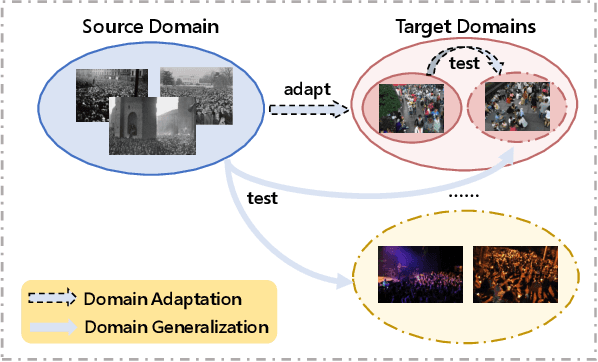
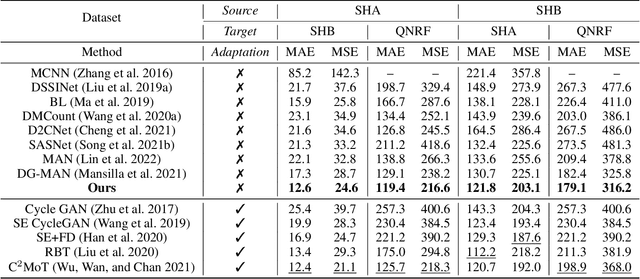
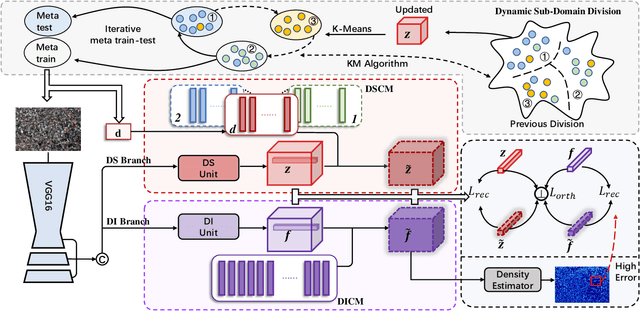
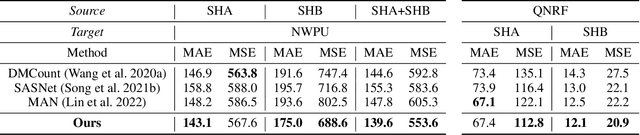
Domain shift across crowd data severely hinders crowd counting models to generalize to unseen scenarios. Although domain adaptive crowd counting approaches close this gap to a certain extent, they are still dependent on the target domain data to adapt (e.g. finetune) their models to the specific domain. In this paper, we aim to train a model based on a single source domain which can generalize well on any unseen domain. This falls into the realm of domain generalization that remains unexplored in crowd counting. We first introduce a dynamic sub-domain division scheme which divides the source domain into multiple sub-domains such that we can initiate a meta-learning framework for domain generalization. The sub-domain division is dynamically refined during the meta-learning. Next, in order to disentangle domain-invariant information from domain-specific information in image features, we design the domain-invariant and -specific crowd memory modules to re-encode image features. Two types of losses, i.e. feature reconstruction and orthogonal losses, are devised to enable this disentanglement. Extensive experiments on several standard crowd counting benchmarks i.e. SHA, SHB, QNRF, and NWPU, show the strong generalizability of our method.
Exploring and Eliciting Needs and Preferences from Editors for Wikidata Recommendations
Dec 04, 2022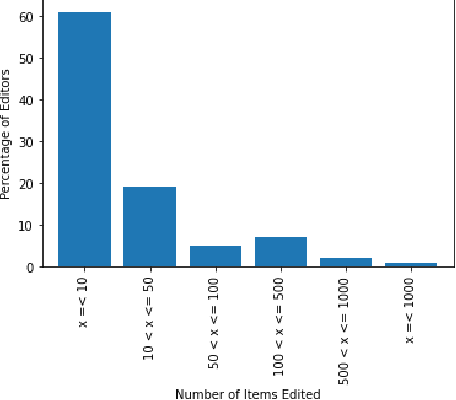
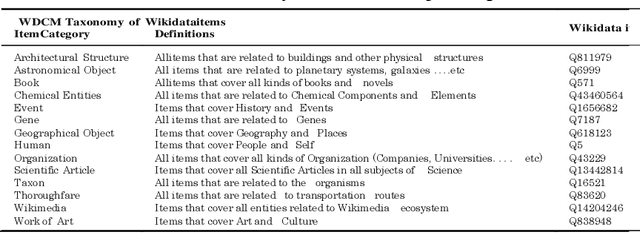
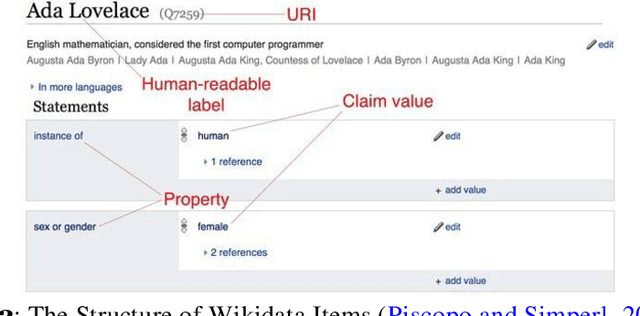

Wikidata is an open knowledge graph created, managed, and maintained collaboratively by a global community of volunteers. As it continues to grow, it faces substantial editor engagement challenges, including acquiring new editors to tackle an increasing workload and retaining existing editors. Experiences from other online communities and peer-production systems, including Wikipedia, suggest that recommending tasks to editors could help with both. Our aim with this paper is to elicit the user requirements for a Wikidata recommendations system. We conduct a mixed-methods study with a thematic analysis of in-depth interviews with 31 Wikidata editors and three Wikimedia managers, complemented by a quantitative analysis of edit records of 3,740 Wikidata editors. The insights gained from the study help us outline design requirements for the Wikidata recommender system. We conclude with a discussion of the implications of this work and directions for future work.