 Add to Chrome
 Add to Firefox
 Add to Edge
Spectral Vision Transformer for Efficient Tokenization with Limited Data
May 12, 2026
We propose a novel spectral vision transformer architecture for efficient tokenization in limited data, with an emphasis on medical imaging. We outline convenient theoretical properties arising from the choice of basis including spatial invariance and optimal signal-to-noise ratio. We show reduced complexity arising from the spectral projection compared to spatial vision transformers. We show equitable or superior performance with a reduced number of parameters as compared to a variety of models including compact and standard vision transformers, convolutional neural networks with attention, shifted window transformers, multi-layer perceptrons, and logistic regression. We include simulated, public, and clinical data in our analysis and release our code at: \verb+github.com/agr78/spectralViT+.

QSM-RimDS: A highly sensitive paramagnetic rim lesion detection and segmentation tool for multiple sclerosis lesions
Dec 13, 2024
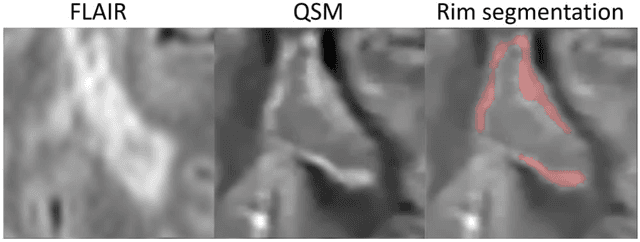
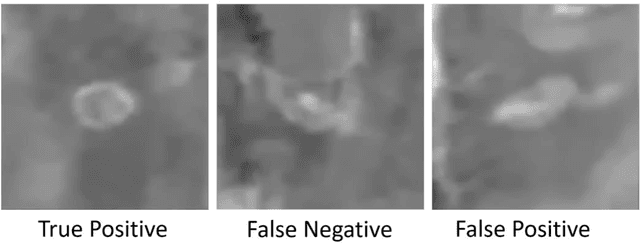

Paramagnetic rim lesions (PRLs) are imaging biomarker of the innate immune response in MS lesions. QSM-RimNet, a state-of-the-art tool for PRLs detection on QSM, can identify PRLs but requires precise QSM lesion mask and does not provide rim segmentation. Therefore, the aims of this study are to develop QSM-RimDS algorithm to detect PRLs using the readily available FLAIR lesion mask and to provide rim segmentation for microglial quantification. QSM-RimDS, a deep-learning based tool for joint PRL rim segmentation and PRL detection has been developed. QSM-RimDS has obtained state-of-the art performance in PRL detection and therefore has the potential to be used in clinical practice as a tool to assist human readers for the time-consuming PRL detection and segmentation task. QSM-RimDS is made publicly available [https://github.com/kennyha85/QSM_RimDS]
Maximum Spherical Mean Value (mSMV) Filtering for Whole Brain Quantitative Susceptibility Mapping
Apr 22, 2023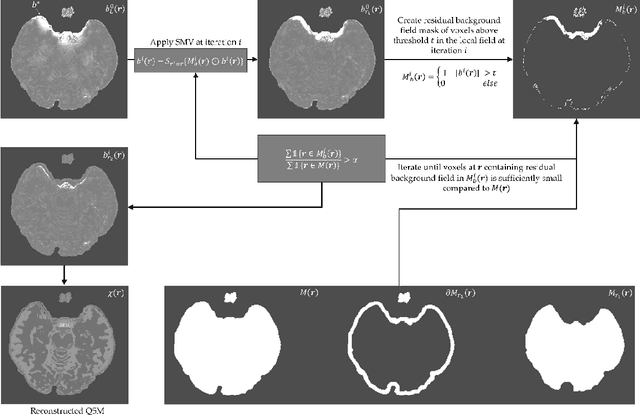
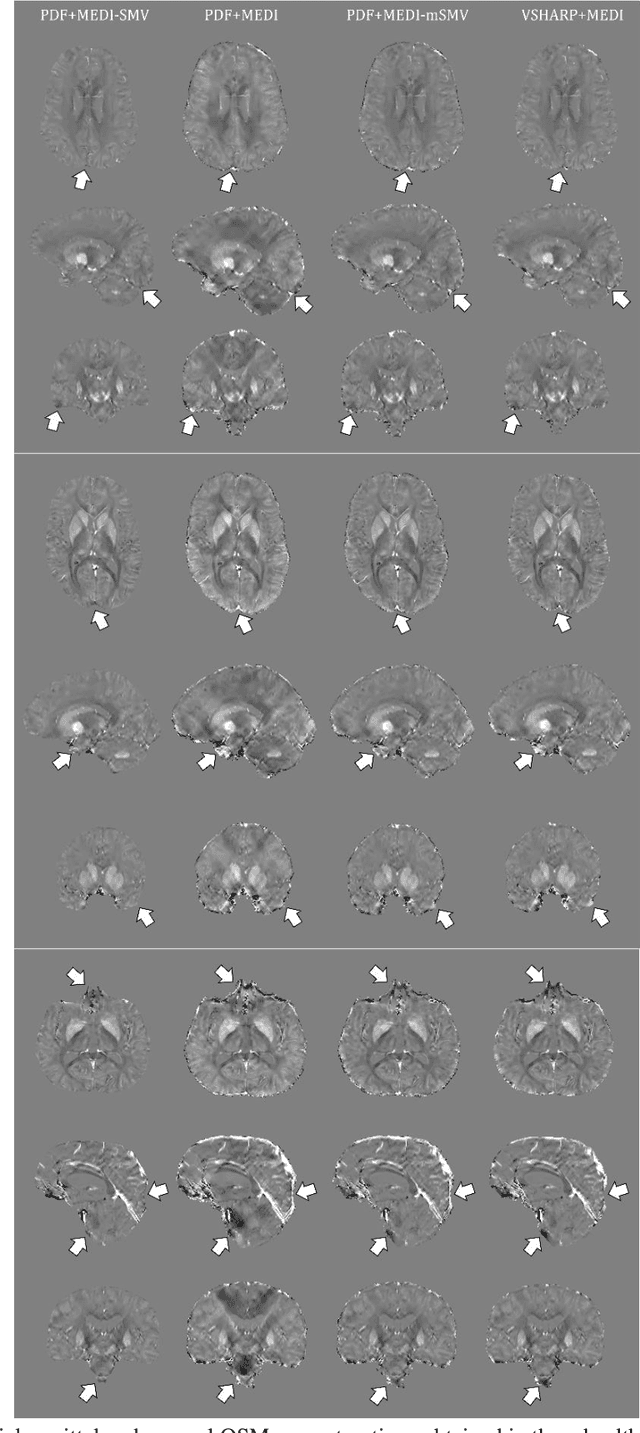
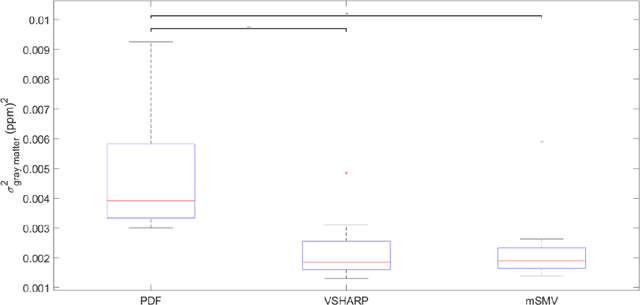
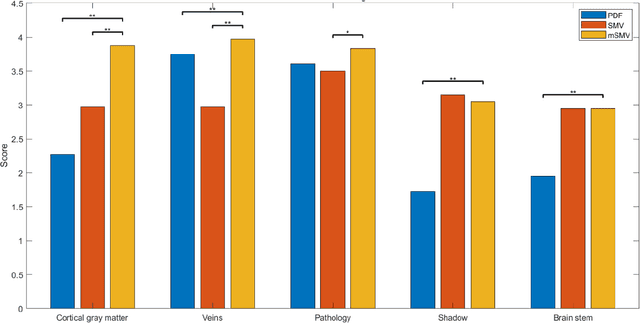
To develop a tissue field filtering algorithm, called maximum Spherical Mean Value (mSMV), for reducing shadow artifacts in quantitative susceptibility mapping (QSM) of the brain without requiring brain tissue erosion. Residual background field is a major source of shadow artifacts in QSM. The mSMV algorithm filters large field values near the border, where the maximum value of the harmonic background field is located. The effectiveness of mSMV for artifact removal was evaluated by comparing with existing QSM algorithms in a simulated numerical brain, 11 healthy volunteers, by assessing image quality in routine clinical patient study $(n=43)$, and by measuring lesion susceptibility values in multiple sclerosis patients $(n=50)$, a total of $n=93$ patients. Numerical simulation showed that mSMV reduces shadow artifacts and improves QSM accuracy. Better shadow reduction, as demonstrated by lower QSM variation in the gray matter and higher QSM image quality score, was also observed in healthy subjects and in patients with hemorrhages, stroke and multiple sclerosis. The mSMV algorithm allows reconstruction of QSMs that are equivalent to those obtained using SMV-filtered dipole inversion without eroding the volume of interest.