 Add to Chrome
 Add to Firefox
 Add to Edge
Spectral Vision Transformer for Efficient Tokenization with Limited Data
May 12, 2026
We propose a novel spectral vision transformer architecture for efficient tokenization in limited data, with an emphasis on medical imaging. We outline convenient theoretical properties arising from the choice of basis including spatial invariance and optimal signal-to-noise ratio. We show reduced complexity arising from the spectral projection compared to spatial vision transformers. We show equitable or superior performance with a reduced number of parameters as compared to a variety of models including compact and standard vision transformers, convolutional neural networks with attention, shifted window transformers, multi-layer perceptrons, and logistic regression. We include simulated, public, and clinical data in our analysis and release our code at: \verb+github.com/agr78/spectralViT+.

Mitigating Mismatch Compression in Differential Local Field Potentials
Apr 07, 2022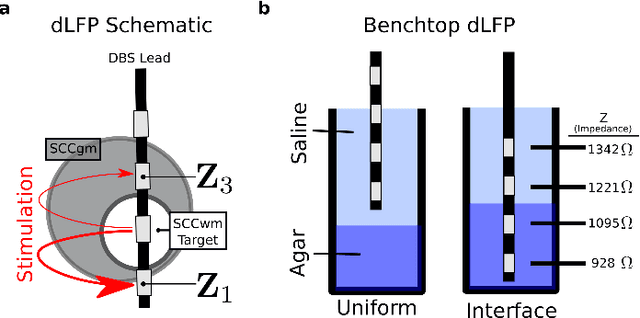
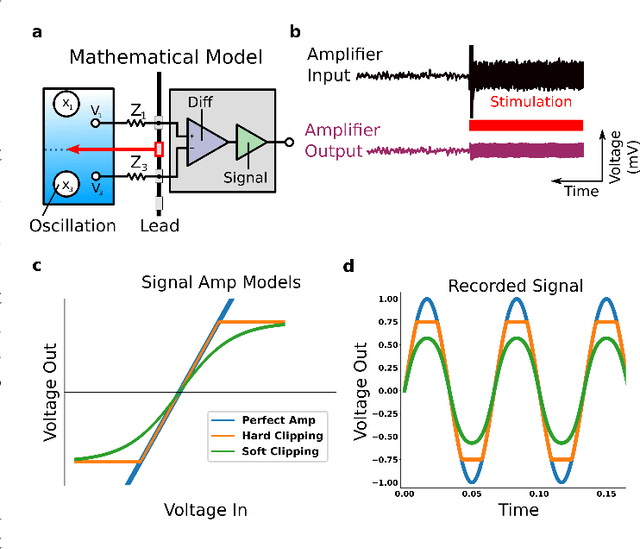
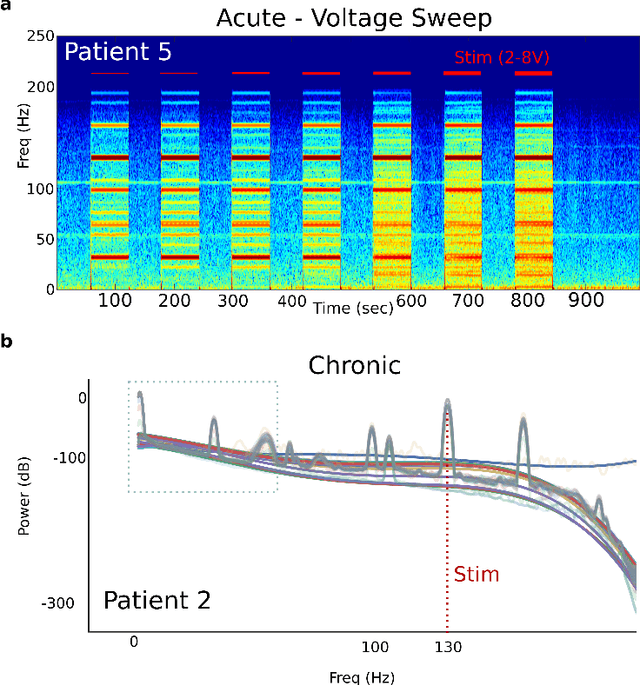
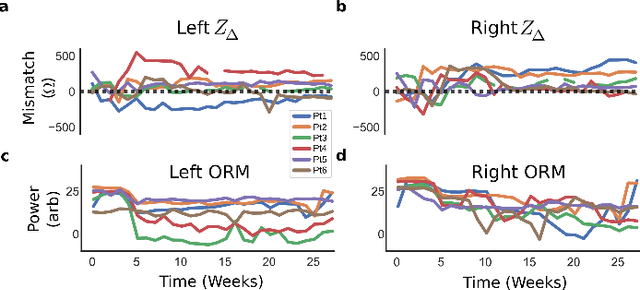
Bidirectional deep brain stimulation (bdDBS) devices capable of recording differential local field potentials (dLFP) enable neural recordings alongside clinical therapy. Efforts to identify objective signals of various brain disorders, or disease readouts, are challenging in dLFP, especially during active DBS. In this report we identified, characterized, and mitigated a major source of distortion in dLFP that we introduce as mismatch compression (MC). MC occurs secondary to impedance mismatches across the dLFP channel resulting in incomplete rejection of artifacts and downstream amplifier gain compression. Using in silico and in vitro models we demonstrate that MC accounts for impedance-related distortions sensitive to DBS amplitude. We then use these models to develop and validate a mitigation strategy for MC that is provided as an opensource library for more reliable oscillatory disease readouts.