 Add to Chrome
 Add to Firefox
 Add to Edge
ChatSVA: Bridging SVA Generation for Hardware Verification via Task-Specific LLMs
Apr 03, 2026
Functional verification consumes over 50% of the IC development lifecycle, where SystemVerilog Assertions (SVAs) are indispensable for formal property verification and enhanced simulation-based debugging. However, manual SVA authoring is labor-intensive and error-prone. While Large Language Models (LLMs) show promise, their direct deployment is hindered by low functional accuracy and a severe scarcity of domain-specific data. To address these challenges, we introduce ChatSVA, an end-to-end SVA generation system built upon a multi-agent framework. At its core, the AgentBridge platform enables this multi-agent approach by systematically generating high-purity datasets, overcoming the data scarcity inherent to few-shot scenarios. Evaluated on 24 RTL designs, ChatSVA achieves 98.66% syntax and 96.12% functional pass rates, generating 139.5 SVAs per design with 82.50% function coverage. This represents a 33.3 percentage point improvement in functional correctness and an over 11x enhancement in function coverage compared to the previous state-of-the-art (SOTA). ChatSVA not only sets a new SOTA in automated SVA generation but also establishes a robust framework for solving long-chain reasoning problems in few-shot, domain-specific scenarios. An online service has been publicly released at https://www.nctieda.com/CHATDV.html.

HAD-GAN: A Human-perception Auxiliary Defense GAN to Defend Adversarial Examples
Sep 25, 2019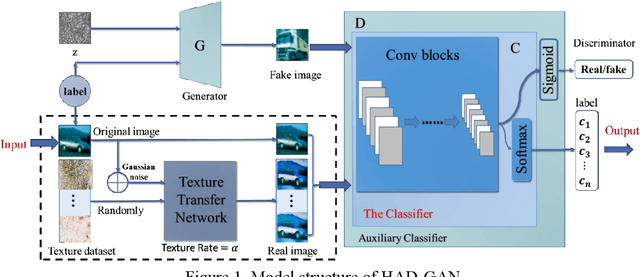
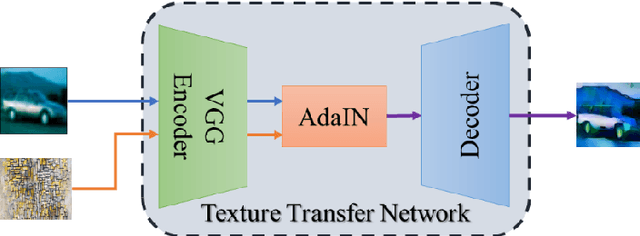
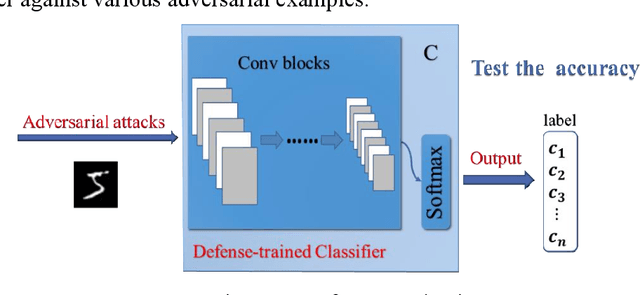
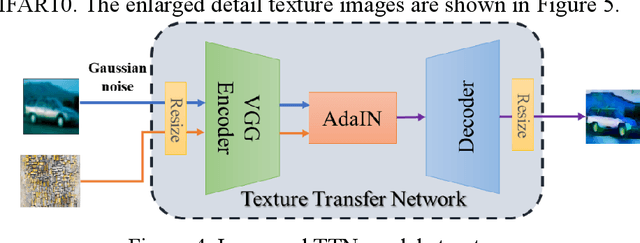
Adversarial examples reveal the vulnerability and unexplained nature of neural networks. Studying the defense of adversarial examples is of considerable practical importance. Most adversarial examples that misclassify networks are often undetectable by humans. In this paper, we propose a defense model to train the classifier into a human-perception classification model with shape preference. The proposed model comprising a texture transfer network (TTN) and an auxiliary defense generative adversarial networks (GAN) is called Human-perception Auxiliary Defense GAN (HAD-GAN). The TTN is used to extend the texture samples of a clean image and helps classifiers focus on its shape. GAN is utilized to form a training framework for the model and generate the necessary images. A series of experiments conducted on MNIST, Fashion-MNIST and CIFAR10 show that the proposed model outperforms the state-of-the-art defense methods for network robustness. The model also demonstrates a significant improvement on defense capability of adversarial examples.