 Add to Chrome
 Add to Firefox
 Add to Edge
Separating Geometry from Probability in the Analysis of Generalization
Apr 21, 2026
The goal of machine learning is to find models that minimize prediction error on data that has not yet been seen. Its operational paradigm assumes access to a dataset $S$ and articulates a scheme for evaluating how well a given model performs on an arbitrary sample. The sample can be $S$ (in which case we speak of ``in-sample'' performance) or some entirely new $S'$ (in which case we speak of ``out-of-sample'' performance). Traditional analysis of generalization assumes that both in- and out-of-sample data are i.i.d.\ draws from an infinite population. However, these probabilistic assumptions cannot be verified even in principle. This paper presents an alternative view of generalization through the lens of sensitivity analysis of solutions of optimization problems to perturbations in the problem data. Under this framework, generalization bounds are obtained by purely deterministic means and take the form of variational principles that relate in-sample and out-of-sample evaluations through an error term that quantifies how close out-of-sample data are to in-sample data. Statistical assumptions can then be used \textit{ex post} to characterize the situations when this error term is small (either on average or with high probability).

Expressivity of Quadratic Neural ODEs
Apr 13, 2025This work focuses on deriving quantitative approximation error bounds for neural ordinary differential equations having at most quadratic nonlinearities in the dynamics. The simple dynamics of this model form demonstrates how expressivity can be derived primarily from iteratively composing many basic elementary operations, versus from the complexity of those elementary operations themselves. Like the analog differential analyzer and universal polynomial DAEs, the expressivity is derived instead primarily from the "depth" of the model. These results contribute to our understanding of what depth specifically imparts to the capabilities of deep learning architectures.
Rademacher Complexity of Neural ODEs via Chen-Fliess Series
Jan 31, 2024We show how continuous-depth neural ODE models can be framed as single-layer, infinite-width nets using the Chen--Fliess series expansion for nonlinear ODEs. In this net, the output "weights" are taken from the signature of the control input -- a tool used to represent infinite-dimensional paths as a sequence of tensors -- which comprises iterated integrals of the control input over a simplex. The "features" are taken to be iterated Lie derivatives of the output function with respect to the vector fields in the controlled ODE model. The main result of this work applies this framework to derive compact expressions for the Rademacher complexity of ODE models that map an initial condition to a scalar output at some terminal time. The result leverages the straightforward analysis afforded by single-layer architectures. We conclude with some examples instantiating the bound for some specific systems and discuss potential follow-up work.
Transformer-Based Models Are Not Yet Perfect At Learning to Emulate Structural Recursion
Jan 23, 2024
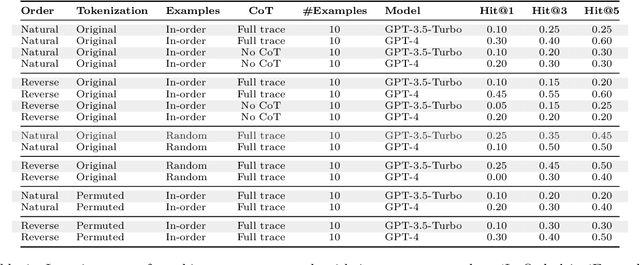
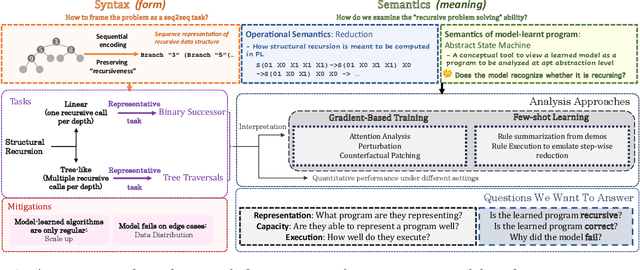
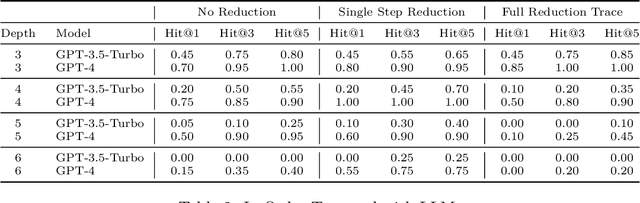
This paper investigates the ability of transformer-based models to learn structural recursion from examples. Recursion is a universal concept in both natural and formal languages. Structural recursion is central to the programming language and formal mathematics tasks where symbolic tools currently excel beyond neural models, such as inferring semantic relations between datatypes and emulating program behavior. We introduce a general framework that nicely connects the abstract concepts of structural recursion in the programming language domain to concrete sequence modeling problems and learned models' behavior. The framework includes a representation that captures the general \textit{syntax} of structural recursion, coupled with two different frameworks for understanding their \textit{semantics} -- one that is more natural from a programming languages perspective and one that helps bridge that perspective with a mechanistic understanding of the underlying transformer architecture. With our framework as a powerful conceptual tool, we identify different issues under various set-ups. The models trained to emulate recursive computations cannot fully capture the recursion yet instead fit short-cut algorithms and thus cannot solve certain edge cases that are under-represented in the training distribution. In addition, it is difficult for state-of-the-art large language models (LLMs) to mine recursive rules from in-context demonstrations. Meanwhile, these LLMs fail in interesting ways when emulating reduction (step-wise computation) of the recursive function.
Generalization Bounds: Perspectives from Information Theory and PAC-Bayes
Sep 08, 2023A fundamental question in theoretical machine learning is generalization. Over the past decades, the PAC-Bayesian approach has been established as a flexible framework to address the generalization capabilities of machine learning algorithms, and design new ones. Recently, it has garnered increased interest due to its potential applicability for a variety of learning algorithms, including deep neural networks. In parallel, an information-theoretic view of generalization has developed, wherein the relation between generalization and various information measures has been established. This framework is intimately connected to the PAC-Bayesian approach, and a number of results have been independently discovered in both strands. In this monograph, we highlight this strong connection and present a unified treatment of generalization. We present techniques and results that the two perspectives have in common, and discuss the approaches and interpretations that differ. In particular, we demonstrate how many proofs in the area share a modular structure, through which the underlying ideas can be intuited. We pay special attention to the conditional mutual information (CMI) framework; analytical studies of the information complexity of learning algorithms; and the application of the proposed methods to deep learning. This monograph is intended to provide a comprehensive introduction to information-theoretic generalization bounds and their connection to PAC-Bayes, serving as a foundation from which the most recent developments are accessible. It is aimed broadly towards researchers with an interest in generalization and theoretical machine learning.
A Constructive Approach to Function Realization by Neural Stochastic Differential Equations
Jul 01, 2023The problem of function approximation by neural dynamical systems has typically been approached in a top-down manner: Any continuous function can be approximated to an arbitrary accuracy by a sufficiently complex model with a given architecture. This can lead to high-complexity controls which are impractical in applications. In this paper, we take the opposite, constructive approach: We impose various structural restrictions on system dynamics and consequently characterize the class of functions that can be realized by such a system. The systems are implemented as a cascade interconnection of a neural stochastic differential equation (Neural SDE), a deterministic dynamical system, and a readout map. Both probabilistic and geometric (Lie-theoretic) methods are used to characterize the classes of functions realized by such systems.
Can Transformers Learn to Solve Problems Recursively?
May 24, 2023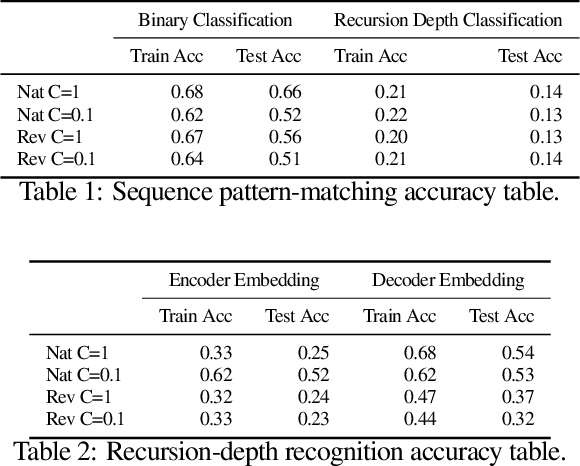
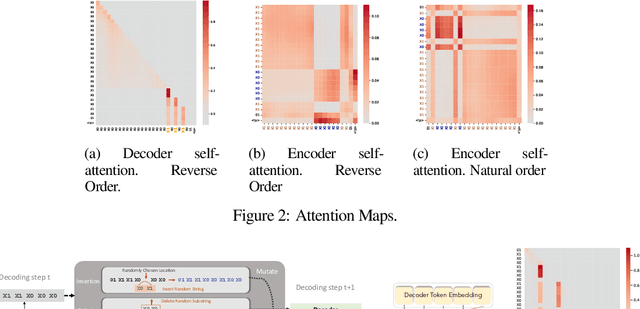
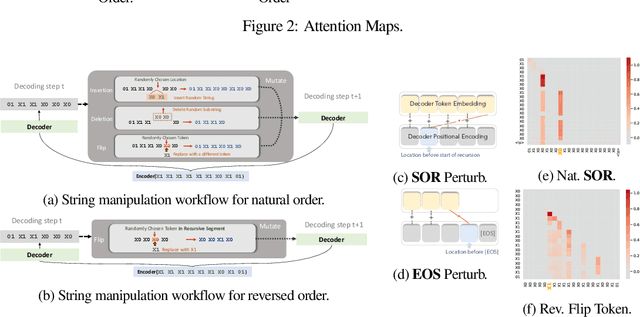
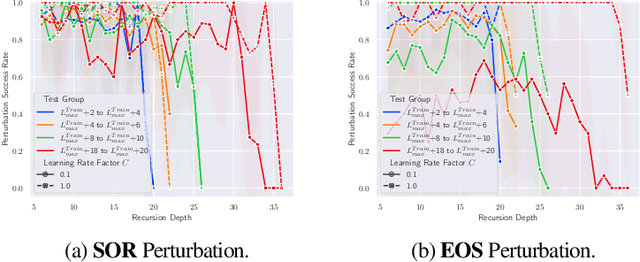
Neural networks have in recent years shown promise for helping software engineers write programs and even formally verify them. While semantic information plays a crucial part in these processes, it remains unclear to what degree popular neural architectures like transformers are capable of modeling that information. This paper examines the behavior of neural networks learning algorithms relevant to programs and formal verification proofs through the lens of mechanistic interpretability, focusing in particular on structural recursion. Structural recursion is at the heart of tasks on which symbolic tools currently outperform neural models, like inferring semantic relations between datatypes and emulating program behavior. We evaluate the ability of transformer models to learn to emulate the behavior of structurally recursive functions from input-output examples. Our evaluation includes empirical and conceptual analyses of the limitations and capabilities of transformer models in approximating these functions, as well as reconstructions of the ``shortcut" algorithms the model learns. By reconstructing these algorithms, we are able to correctly predict 91 percent of failure cases for one of the approximated functions. Our work provides a new foundation for understanding the behavior of neural networks that fail to solve the very tasks they are trained for.
A unified framework for information-theoretic generalization bounds
May 18, 2023This paper presents a general methodology for deriving information-theoretic generalization bounds for learning algorithms. The main technical tool is a probabilistic decorrelation lemma based on a change of measure and a relaxation of Young's inequality in $L_{\psi_p}$ Orlicz spaces. Using the decorrelation lemma in combination with other techniques, such as symmetrization, couplings, and chaining in the space of probability measures, we obtain new upper bounds on the generalization error, both in expectation and in high probability, and recover as special cases many of the existing generalization bounds, including the ones based on mutual information, conditional mutual information, stochastic chaining, and PAC-Bayes inequalities. In addition, the Fernique-Talagrand upper bound on the expected supremum of a subgaussian process emerges as a special case.
Majorizing Measures, Codes, and Information
May 06, 2023The majorizing measure theorem of Fernique and Talagrand is a fundamental result in the theory of random processes. It relates the boundedness of random processes indexed by elements of a metric space to complexity measures arising from certain multiscale combinatorial structures, such as packing and covering trees. This paper builds on the ideas first outlined in a little-noticed preprint of Andreas Maurer to present an information-theoretic perspective on the majorizing measure theorem, according to which the boundedness of random processes is phrased in terms of the existence of efficient variable-length codes for the elements of the indexing metric space.
A Chain Rule for the Expected Suprema of Bernoulli Processes
Apr 27, 2023We obtain an upper bound on the expected supremum of a Bernoulli process indexed by the image of an index set under a uniformly Lipschitz function class in terms of properties of the index set and the function class, extending an earlier result of Maurer for Gaussian processes. The proof makes essential use of recent results of Bednorz and Latala on the boundedness of Bernoulli processes.