 Add to Chrome
 Add to Firefox
 Add to Edge
Compiled AI: Deterministic Code Generation for LLM-Based Workflow Automation
Apr 06, 2026
We study compiled AI, a paradigm in which large language models generate executable code artifacts during a compilation phase, after which workflows execute deterministically without further model invocation. This paradigm has antecedents in prior work on declarative pipeline optimization (DSPy) and hybrid neural-symbolic planning (LLM+P); our contribution is a systems-oriented study of its application to high-stakes enterprise workflows, with particular emphasis on healthcare settings where reliability and auditability are critical. By constraining generation to narrow business-logic functions embedded in validated templates, compiled AI trades runtime flexibility for predictability, auditability, cost efficiency, and reduced security exposure. We introduce (i) a system architecture for constrained LLM-based code generation, (ii) a four-stage generation-and-validation pipeline that converts probabilistic model output into production-ready code artifacts, and (iii) an evaluation framework measuring operational metrics including token amortization, determinism, reliability, security, and cost. We evaluate on two task types: function-calling (BFCL, n=400) and document intelligence (DocILE, n=5,680 invoices). On function-calling, compiled AI achieves 96% task completion with zero execution tokens, breaking even with runtime inference at approximately 17 transactions and reducing token consumption by 57x at 1,000 transactions. On document intelligence, our Code Factory variant matches Direct LLM on key field extraction (KILE: 80.0%) while achieving the highest line item recognition accuracy (LIR: 80.4%). Security evaluation across 135 test cases demonstrates 96.7% accuracy on prompt injection detection and 87.5% on static code safety analysis with zero false positives.

DARTS: DenseUnet-based Automatic Rapid Tool for brain Segmentation
Nov 14, 2019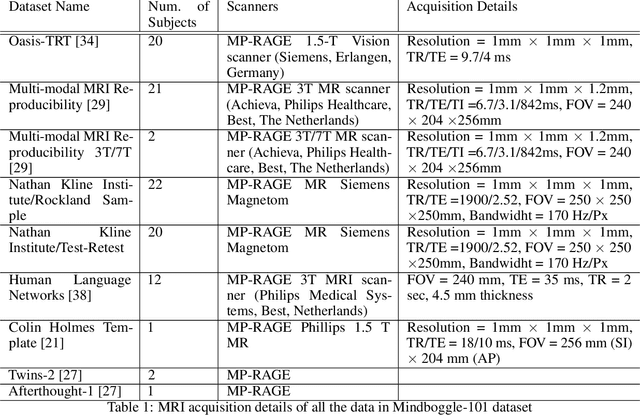
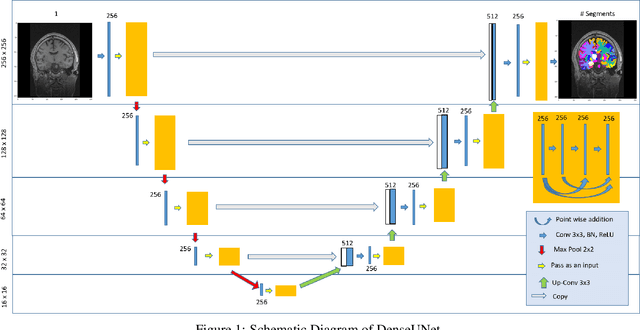
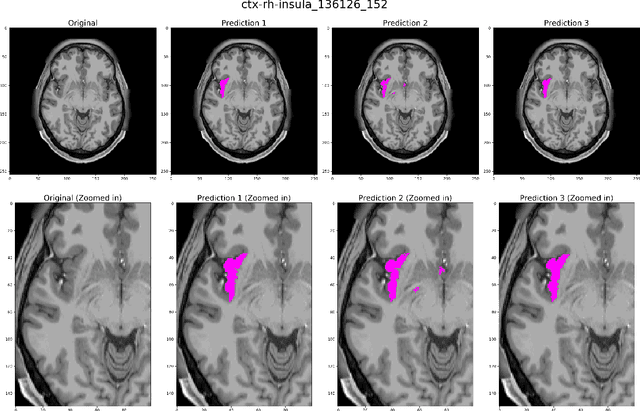
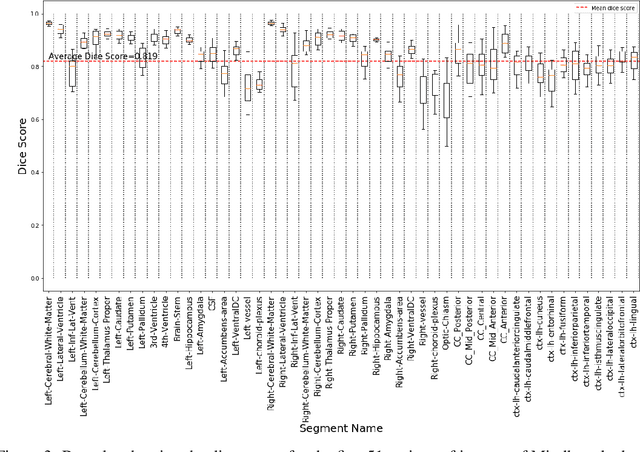
Quantitative, volumetric analysis of Magnetic Resonance Imaging (MRI) is a fundamental way researchers study the brain in a host of neurological conditions including normal maturation and aging. Despite the availability of open-source brain segmentation software, widespread clinical adoption of volumetric analysis has been hindered due to processing times and reliance on manual corrections. Here, we extend the use of deep learning models from proof-of-concept, as previously reported, to present a comprehensive segmentation of cortical and deep gray matter brain structures matching the standard regions of aseg+aparc included in the commonly used open-source tool, Freesurfer. The work presented here provides a real-life, rapid deep learning-based brain segmentation tool to enable clinical translation as well as research application of quantitative brain segmentation. The advantages of the presented tool include short (~1 minute) processing time and improved segmentation quality. This is the first study to perform quick and accurate segmentation of 102 brain regions based on the surface-based protocol (DMK protocol), widely used by experts in the field. This is also the first work to include an expert reader study to assess the quality of the segmentation obtained using a deep-learning-based model. We show the superior performance of our deep-learning-based models over the traditional segmentation tool, Freesurfer. We refer to the proposed deep learning-based tool as DARTS (DenseUnet-based Automatic Rapid Tool for brain Segmentation). Our tool and trained models are available at https://github.com/NYUMedML/DARTS
Electric Sheep Team Description Paper Humanoid League Kid-Size 2019
Oct 20, 2019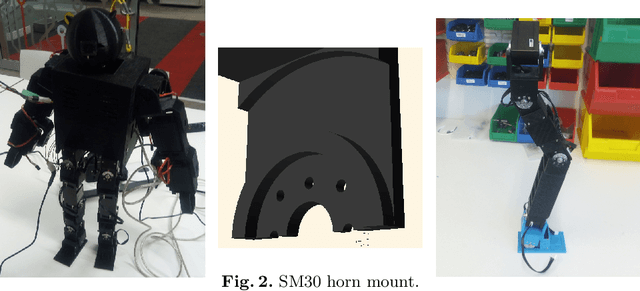
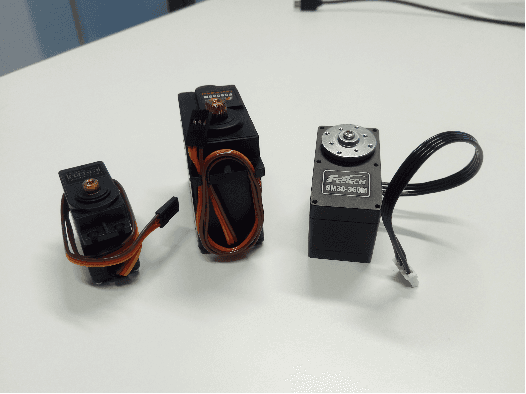
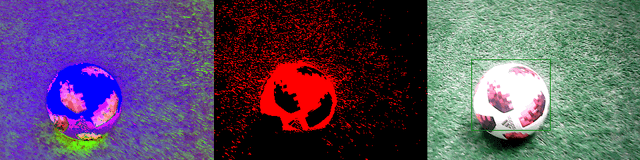
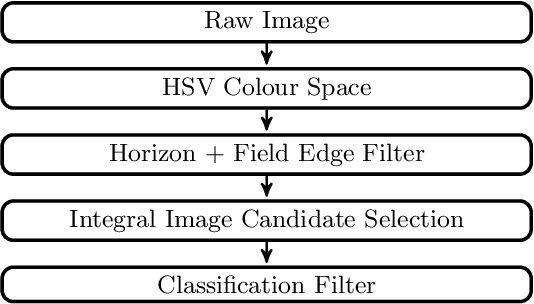
In this paper we introduce the newly formed New Zealand based RoboCup Humanoid Kid-Size team, Electric Sheep. We describe our developed humanoid robot platform, particularly our unique take on the chassis, electronics and use of several motor types to create a low-cost entry platform. To support this hardware, we discuss our software framework, vision processing, walking and game-play strategy methodology. Lastly we give an overview of future research interests within the team and intentions of future contributions for the league and the goal of RoboCup.