 Add to Chrome
 Add to Firefox
 Add to Edge
Is Surprisal in Issue Trackers Actionable?
Apr 15, 2022
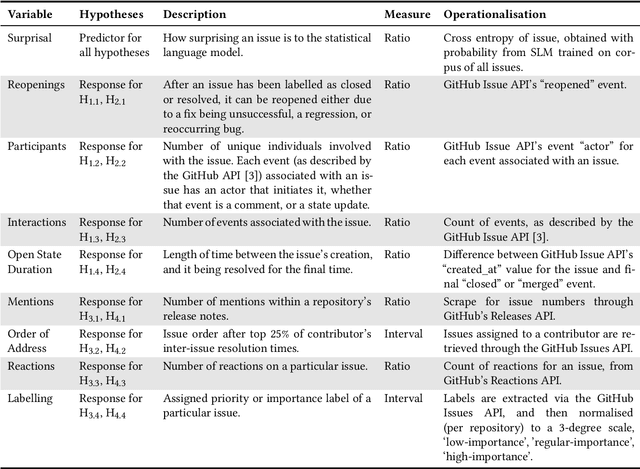
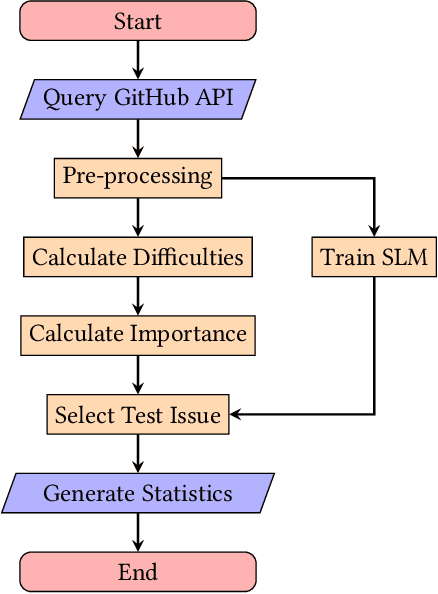
Background. From information theory, surprisal is a measurement of how unexpected an event is. Statistical language models provide a probabilistic approximation of natural languages, and because surprisal is constructed with the probability of an event occuring, it is therefore possible to determine the surprisal associated with English sentences. The issues and pull requests of software repository issue trackers give insight into the development process and likely contain the surprising events of this process. Objective. Prior works have identified that unusual events in software repositories are of interest to developers, and use simple code metrics-based methods for detecting them. In this study we will propose a new method for unusual event detection in software repositories using surprisal. With the ability to find surprising issues and pull requests, we intend to further analyse them to determine if they actually hold importance in a repository, or if they pose a significant challenge to address. If it is possible to find bad surprises early, or before they cause additional troubles, it is plausible that effort, cost and time will be saved as a result. Method. After extracting the issues and pull requests from 5000 of the most popular software repositories on GitHub, we will train a language model to represent these issues. We will measure their perceived importance in the repository, measure their resolution difficulty using several analogues, measure the surprisal of each, and finally generate inferential statistics to describe any correlations.

On the Fitness Landscapes of Interdependency Models in the Travelling Thief Problem
Feb 28, 2022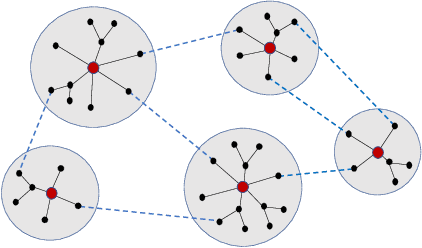
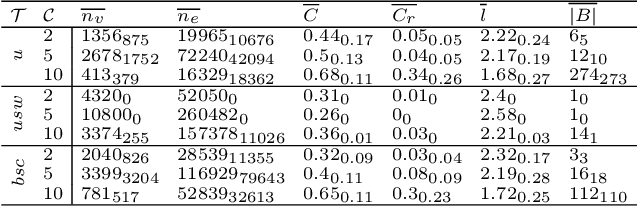
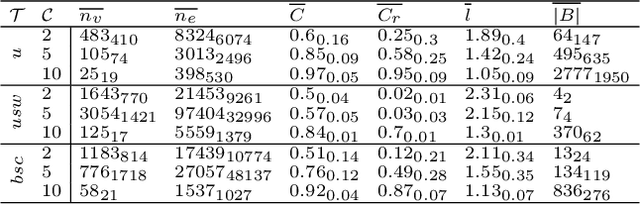
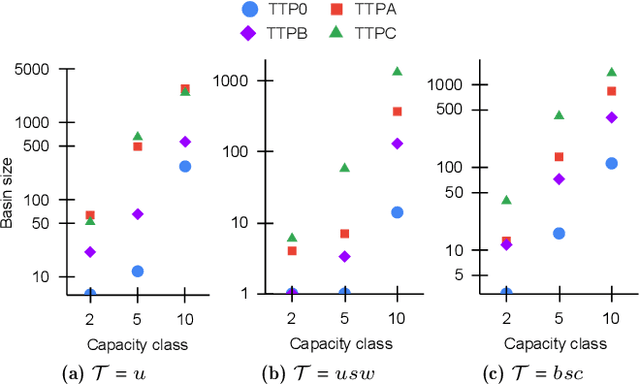
Since its inception in 2013, the Travelling Thief Problem (TTP) has been widely studied as an example of problems with multiple interconnected sub-problems. The dependency in this model arises when tying the travelling time of the "thief" to the weight of the knapsack. However, other forms of dependency as well as combinations of dependencies should be considered for investigation, as they are often found in complex real-world problems. Our goal is to study the impact of different forms of dependency in the TTP using a simple local search algorithm. To achieve this, we use Local Optima Networks, a technique for analysing the fitness landscape.
Run-of-Mine Stockyard Recovery Scheduling and Optimisation for Multiple Reclaimers
Dec 23, 2021
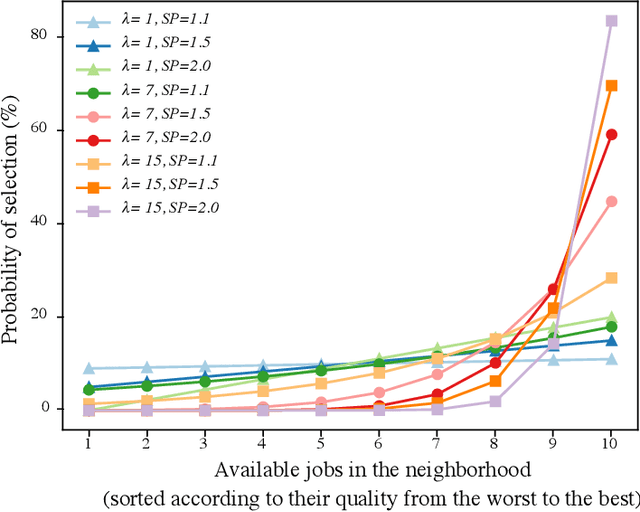

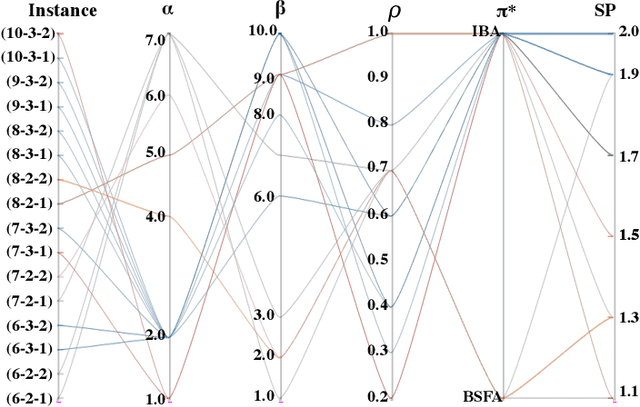
Stockpiles are essential in the mining value chain, assisting in maximising value and production. Quality control of taken minerals from the stockpiles is a major concern for stockpile managers where failure to meet some requirements can lead to losing money. This problem was recently investigated using a single reclaimer, and basic assumptions. This study extends the approach to consider multiple reclaimers in preparing for short and long-term deliveries. The engagement of multiple reclaimers complicates the problem in terms of their interaction in preparing a delivery simultaneously and safety distancing of reclaimers. We also consider more realistic settings, such as handling different minerals with different types of reclaimers. We propose methods that construct a solution step by step to meet precedence constraints for all reclaimers in the stockyard. We study various instances of the problem using greedy algorithms, Ant Colony Optimisation (ACO), and propose an integrated local search method determining an efficient schedule. We fine-tune and compare the algorithms and show that the ACO combined with local search can yield efficient solutions.
Novelty-Driven Binary Particle Swarm Optimisation for Truss Optimisation Problems
Dec 15, 2021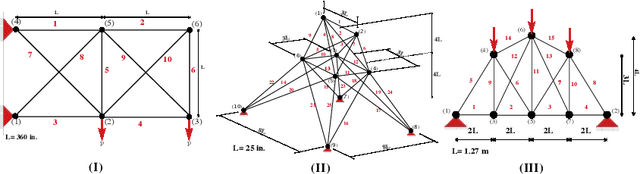
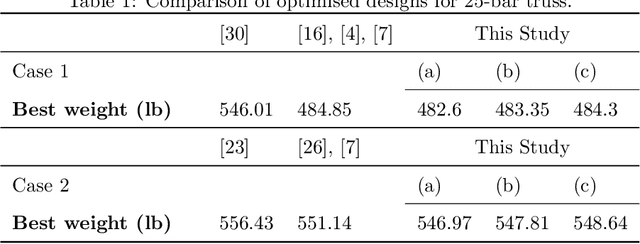
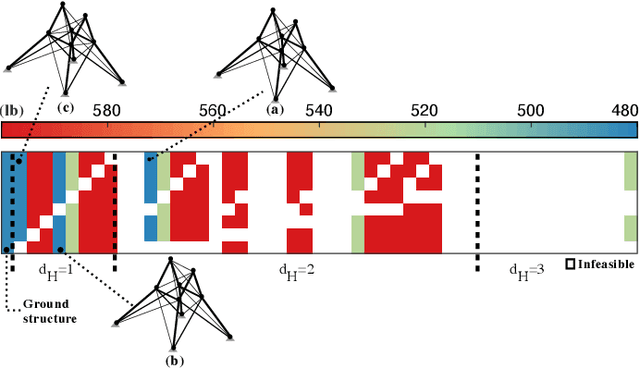

Topology optimisation of trusses can be formulated as a combinatorial and multi-modal problem in which locating distinct optimal designs allows practitioners to choose the best design based on their preferences. Bilevel optimisation has been successfully applied to truss optimisation to consider topology and sizing in upper and lower levels, respectively. We introduce exact enumeration to rigorously analyse the topology search space and remove randomness for small problems. We also propose novelty-driven binary particle swarm optimisation for bigger problems to discover new designs at the upper level by maximising novelty. For the lower level, we employ a reliable evolutionary optimiser to tackle the layout configuration aspect of the problem. We consider truss optimisation problem instances where designers need to select the size of bars from a discrete set with respect to practice code constraints. Our experimental investigations show that our approach outperforms the current state-of-the-art methods and it obtains multiple high-quality solutions.
Efficiently solving the thief orienteering problem with a max-min ant colony optimization approach
Sep 28, 2021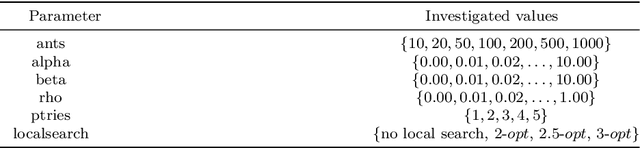
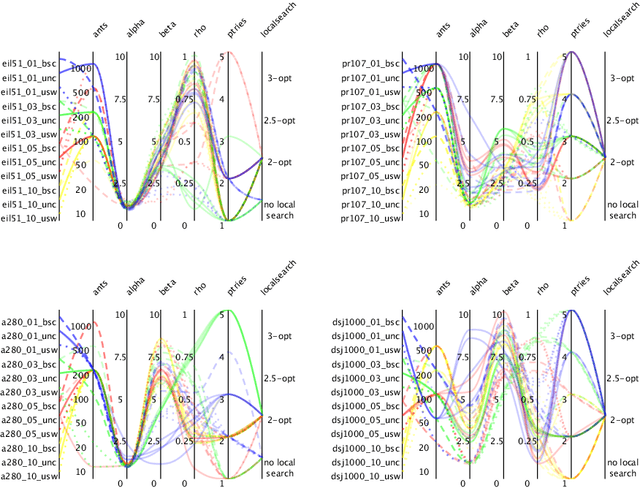
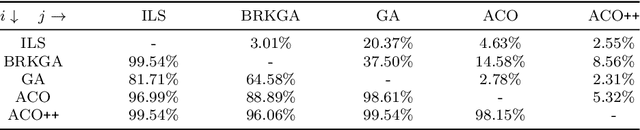
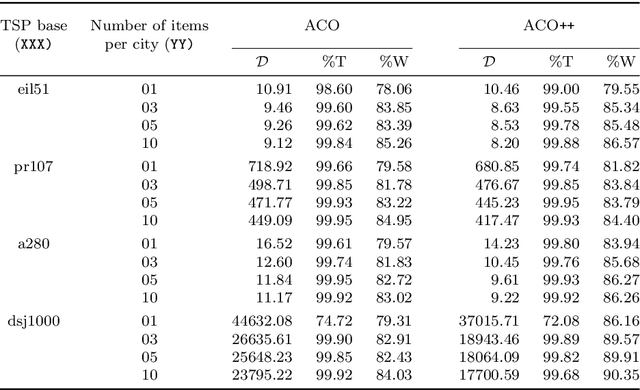
We tackle the Thief Orienteering Problem (ThOP), which is academic multi-component problem: it combines two classical combinatorial problems, namely the Knapsack Problem (KP) and the Orienteering Problem (OP). In this problem, a thief has a time limit to steal items that distributed in a given set of cities. While traveling, the thief collects items by storing them in their knapsack, which in turn reduces the travel speed. The thief has as the objective to maximize the total profit of the stolen items. In this article, we present an approach that combines swarm-intelligence with a randomized packing heuristic. Our solution approach outperforms existing works on almost all the 432 benchmarking instances, with significant improvements.
Generating Instances with Performance Differences for More Than Just Two Algorithms
Apr 29, 2021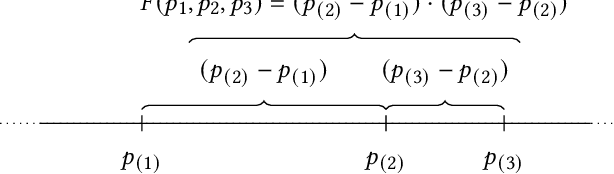
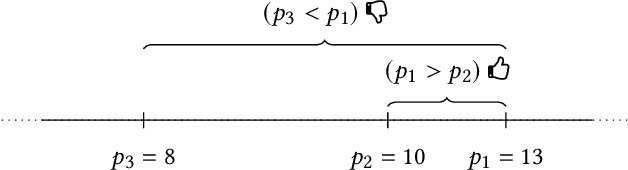
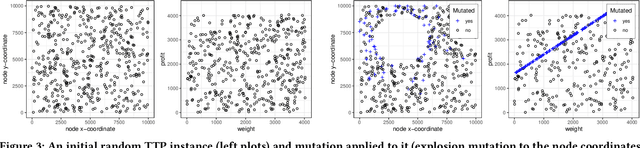
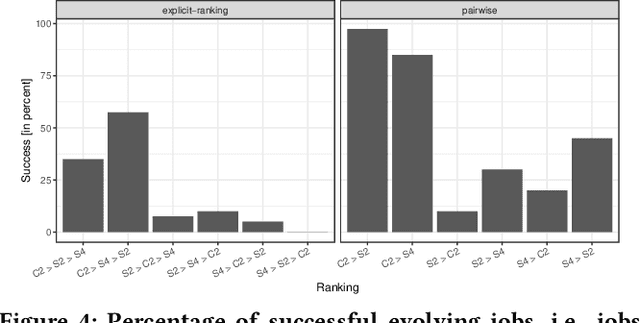
In recent years, Evolutionary Algorithms (EAs) have frequently been adopted to evolve instances for optimization problems that pose difficulties for one algorithm while being rather easy for a competitor and vice versa. Typically, this is achieved by either minimizing or maximizing the performance difference or ratio which serves as the fitness function. Repeating this process is useful to gain insights into strengths/weaknesses of certain algorithms or to build a set of instances with strong performance differences as a foundation for automatic per-instance algorithm selection or configuration. We contribute to this branch of research by proposing fitness-functions to evolve instances that show large performance differences for more than just two algorithms simultaneously. As a proof-of-principle, we evolve instances of the multi-component Traveling Thief Problem~(TTP) for three incomplete TTP-solvers. Our results point out that our strategies are promising, but unsurprisingly their success strongly relies on the algorithms' performance complementarity.
Metaheuristics "In the Large"
Dec 18, 2020Following decades of sustained improvement, metaheuristics are one of the great success stories of optimization research. However, in order for research in metaheuristics to avoid fragmentation and a lack of reproducibility, there is a pressing need for stronger scientific and computational infrastructure to support the development, analysis and comparison of new approaches. We argue that, via principled choice of infrastructure support, the field can pursue a higher level of scientific enquiry. We describe our vision and report on progress, showing how the adoption of common protocols for all metaheuristics can help liberate the potential of the field, easing the exploration of the design space of metaheuristics.
A weighted-sum method for solving the bi-objective traveling thief problem
Nov 10, 2020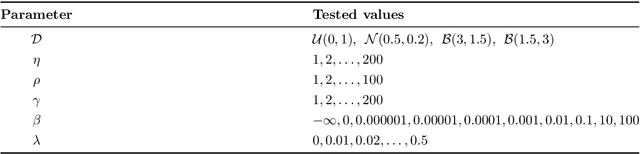
Many real-world optimization problems have multiple interacting components. Each of these can be NP-hard and they can be in conflict with each other, i.e., the optimal solution for one component does not necessarily represent an optimal solution for the other components. This can be a challenge for single-objective formulations, where the respective influence that each component has on the overall solution quality can vary from instance to instance. In this paper, we study a bi-objective formulation of the traveling thief problem, which has as components the traveling salesperson problem and the knapsack problem. We present a weighted-sum method that makes use of randomized versions of existing heuristics, and that would have won two recent optimization competitions.
GTOPX Space Mission Benchmarks
Nov 05, 2020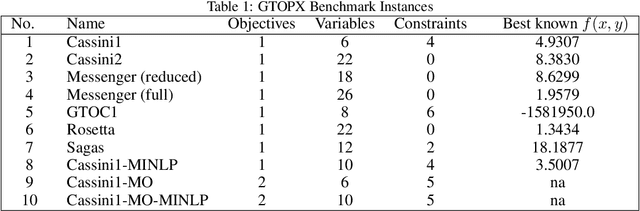
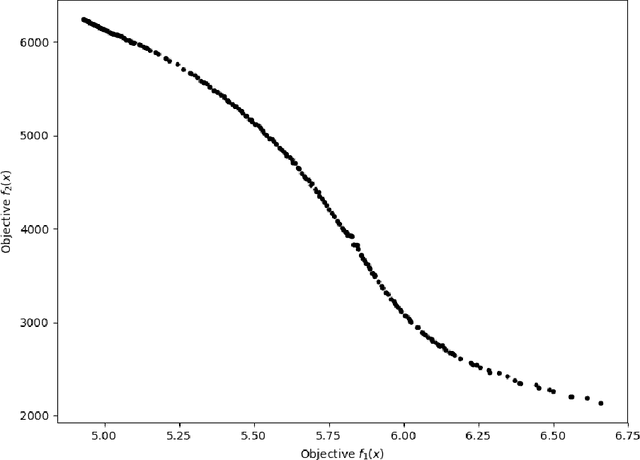

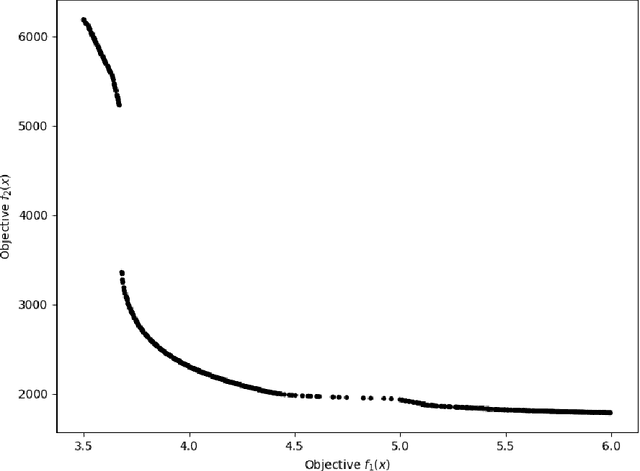
This contribution introduces the GTOPX space mission benchmark collection, which is an extension of GTOP database published by the European Space Agency (ESA). GTOPX consists of ten individual benchmark instances representing real-world interplanetary space trajectory design problems. In regard to the original GTOP collection, GTOPX includes three new problem instances featuring mixed-integer and multi-objective properties. GTOPX enables a simplified user handling, unified benchmark function call and some minor bug corrections to the original GTOP implementation. Furthermore, GTOPX is linked from it's original C++ source code to Python and Matlab based on dynamic link libraries, assuring computationally fast and accurate reproduction of the benchmark results in all three programming languages. Space mission trajectory design problems as those represented in GTOPX are known to be highly non-linear and difficult to solve. The GTOPX collection, therefore, aims particularly at researchers wishing to put advanced (meta)heuristic and hybrid optimization algorithms to the test. The goal of this paper is to provide researchers with a manual and reference to the newly available GTOPX benchmark software.
Genetic Improvement @ ICSE 2020
Jul 31, 2020

Following Prof. Mark Harman of Facebook's keynote and formal presentations (which are recorded in the proceedings) there was a wide ranging discussion at the eighth international Genetic Improvement workshop, GI-2020 @ ICSE (held as part of the 42nd ACM/IEEE International Conference on Software Engineering on Friday 3rd July 2020). Topics included industry take up, human factors, explainabiloity (explainability, justifyability, exploitability) and GI benchmarks. We also contrast various recent online approaches (e.g. SBST 2020) to holding virtual computer science conferences and workshops via the WWW on the Internet without face-2-face interaction. Finally we speculate on how the Coronavirus Covid-19 Pandemic will affect research next year and into the future.