 Add to Chrome
 Add to Firefox
 Add to Edge
SoccerNet 2026 Challenges Results
Jul 08, 2026
The SoccerNet 2026 Challenges constitute the sixth annual edition of the SoccerNet open benchmarking effort, dedicated to advancing computer vision research in sports video understanding. This year's challenges span five vision-based tasks: (1) Ball Action Anticipation, predicting the timing and class of ball-related actions within a short future window from a preceding observation window; (2) Player-Centric Ball Action Spotting, temporally localizing and classifying ball-related actions while assigning each action to the acting player through team affiliation and jersey number; (3) Novel View Synthesis, rendering images from unobserved camera poses in multi-view football scenes; (4) Spiideo SoccerNet Synloc, localizing athletes in real-world pitch coordinates from a single calibrated static-camera image; and (5) Visual Question Answering, answering multiple-choice questions about football broadcasts across text, image, and video inputs. For each task, participants were provided with annotated data, a unified evaluation protocol, and a public baseline. This edition saw broad participation, with 427 teams submitting 1,129 entries across the five tasks and 28 teams contributing reviewed technical reports. This paper describes each task and its evaluation protocol, presents the challenge leaderboards, and summarizes the leading submissions, with the aim of documenting the current state of each task as measured on held-out challenge data.

Event Detection in Videos: A Framework for the Development of New Methods
Jul 05, 2026Event detection tasks in videos, the most important aspect of video surveillance, aim to detect events either at the pixel-level, frame-level, or clip-level. Plenty of methods intended for event detection in different environments, for various applications, and within different acquisition techniques were introduced. Naturally, the attempts were made as well to classify these algorithms in terms of detection of performance or in terms of real-time abilities. Nevertheless, the lack of a large-scale dataset as well as rigorous performance evaluation methods have biased such comparisons as well as the development of the methods. Given the diversity of existing approaches, we believe it is essential for researchers to position their work within such a rich landscape. Thus, we propose a rigorous framework for developing new methods in event detection for videos. Specifically, this framework is based on three main pillars: datasets, performance evaluation, and scenarios for deploying methods.
TCG-AR: Real-Time Multi-View Augmented Reality for Trading Card Game Streaming
Jul 02, 2026Trading card games are increasingly played and broadcast online, yet live streams remain mostly limited to flat top-down footage of the playing area. Augmenting such streams with virtual models of the played cards would improve the viewing experience, but most existing systems rely on instrumented playing surfaces and embedded chips, which are costly and impractical for casual players and large-scale events. In this work, we present TCG-AR, a novel real-time pipeline that augments trading card games using ordinary RGB cameras alone, without any physical markers or specialized hardware. Our pipeline detects, orients, and identifies the cards on the board, renders virtual content onto each card across all views, and can additionally compose a broadcaststyle view that summarizes the game state for spectators, streaming the augmented feeds to standard broadcasting software such as OBS. To train the detection, orientation, and identification models without manual labeling, we introduce an automatic procedure that generates annotated synthetic training data from a reference set of card images. Then, we evaluate several trained models on a new manually annotated dataset with real images, analyzing performance and runtime throughput that determine real-world usability. Overall, by relying only on commodity cameras and hardware, and by open-sourcing all code, models, and datasets, this work aims to serve as a reference for real-time trading card recognition and to make real-time augmented-reality streaming accessible to the broader community of players and streamers.
Recursive Block-Diagonal Coupling for Resource-Efficient Training of Vision Models
May 22, 2026Training high-capacity vision models from scratch requires substantial computational resources. To improve training efficiency of a wide target model, existing growth methods often assume the availability of narrower models, obscuring the true computational cost of the entire pipeline. We propose an efficient training protocol, RBDC, that builds wide models by coupling in a parameter-free block-diagonal way narrower, independently trained models in a recursive way. This allows a flexible allocation of the training budget available across all the models involved. Evaluated with vision transformers (DeiT) and convolutional networks (ResNet) on ImageNet, our RBDC training protocol shows a much better efficiency than models trained from scratch with the standard protocol, yielding 30% FLOPs reduction at similar test accuracies. It also achieves higher performances at same training FLOPs than training protocols from the model growth literature. Finally, we show that our models can serve as better backbones than their original counterparts for downstream object detection and instance segmentation tasks.
Towards Athlete Fatigue Assessment from Association Football Videos
Apr 07, 2026Fatigue monitoring is central in association football due to its links with injury risk and tactical performance. However, objective fatigue-related indicators are commonly derived from subjective self-reported metrics, biomarkers derived from laboratory tests, or, more recently, intrusive sensors such as heart monitors or GPS tracking data. This paper studies whether monocular broadcast videos can provide spatio-temporal signals of sufficient quality to support fatigue-oriented analysis. Building on state-of-the-art Game State Reconstruction methods, we extract player trajectories in pitch coordinates and propose a novel kinematics processing algorithm to obtain temporally consistent speed and acceleration estimates from reconstructed tracks. We then construct acceleration--speed (A-S) profiles from these signals and analyze their behavior as fatigue-related performance indicators. We evaluate the full pipeline on the public SoccerNet-GSR benchmark, considering both 30-second clips and a complete 45-minute half to examine short-term reliability and longer-term temporal consistency. Our results indicate that monocular GSR can recover kinematic patterns that are compatible with A-S profiling while also revealing sensitivity to trajectory noise, calibration errors, and temporal discontinuities inherent to broadcast footage. These findings support monocular broadcast video as a low-cost basis for fatigue analysis and delineate the methodological challenges for future research.
TrackMAE: Video Representation Learning via Track Mask and Predict
Mar 28, 2026Masked video modeling (MVM) has emerged as a simple and scalable self-supervised pretraining paradigm, but only encodes motion information implicitly, limiting the encoding of temporal dynamics in the learned representations. As a result, such models struggle on motion-centric tasks that require fine-grained motion awareness. To address this, we propose TrackMAE, a simple masked video modeling paradigm that explicitly uses motion information as a reconstruction signal. In TrackMAE, we use an off-the-shelf point tracker to sparsely track points in the input videos, generating motion trajectories. Furthermore, we exploit the extracted trajectories to improve random tube masking with a motion-aware masking strategy. We enhance video representations learned in both pixel and feature semantic reconstruction spaces by providing a complementary supervision signal in the form of motion targets. We evaluate on six datasets across diverse downstream settings and find that TrackMAE consistently outperforms state-of-the-art video self-supervised learning baselines, learning more discriminative and generalizable representations. Code available at https://github.com/rvandeghen/TrackMAE
Nexels: Neurally-Textured Surfels for Real-Time Novel View Synthesis with Sparse Geometries
Dec 15, 2025Though Gaussian splatting has achieved impressive results in novel view synthesis, it requires millions of primitives to model highly textured scenes, even when the geometry of the scene is simple. We propose a representation that goes beyond point-based rendering and decouples geometry and appearance in order to achieve a compact representation. We use surfels for geometry and a combination of a global neural field and per-primitive colours for appearance. The neural field textures a fixed number of primitives for each pixel, ensuring that the added compute is low. Our representation matches the perceptual quality of 3D Gaussian splatting while using $9.7\times$ fewer primitives and $5.5\times$ less memory on outdoor scenes and using $31\times$ fewer primitives and $3.7\times$ less memory on indoor scenes. Our representation also renders twice as fast as existing textured primitives while improving upon their visual quality.
Multi-domain performance analysis with scores tailored to user preferences
Dec 09, 2025The performance of algorithms, methods, and models tends to depend heavily on the distribution of cases on which they are applied, this distribution being specific to the applicative domain. After performing an evaluation in several domains, it is highly informative to compute a (weighted) mean performance and, as shown in this paper, to scrutinize what happens during this averaging. To achieve this goal, we adopt a probabilistic framework and consider a performance as a probability measure (e.g., a normalized confusion matrix for a classification task). It appears that the corresponding weighted mean is known to be the summarization, and that only some remarkable scores assign to the summarized performance a value equal to a weighted arithmetic mean of the values assigned to the domain-specific performances. These scores include the family of ranking scores, a continuum parameterized by user preferences, and that the weights to consider in the arithmetic mean depend on the user preferences. Based on this, we rigorously define four domains, named easiest, most difficult, preponderant, and bottleneck domains, as functions of user preferences. After establishing the theory in a general setting, regardless of the task, we develop new visual tools for two-class classification.
SoccerNet 2025 Challenges Results
Aug 26, 2025The SoccerNet 2025 Challenges mark the fifth annual edition of the SoccerNet open benchmarking effort, dedicated to advancing computer vision research in football video understanding. This year's challenges span four vision-based tasks: (1) Team Ball Action Spotting, focused on detecting ball-related actions in football broadcasts and assigning actions to teams; (2) Monocular Depth Estimation, targeting the recovery of scene geometry from single-camera broadcast clips through relative depth estimation for each pixel; (3) Multi-View Foul Recognition, requiring the analysis of multiple synchronized camera views to classify fouls and their severity; and (4) Game State Reconstruction, aimed at localizing and identifying all players from a broadcast video to reconstruct the game state on a 2D top-view of the field. Across all tasks, participants were provided with large-scale annotated datasets, unified evaluation protocols, and strong baselines as starting points. This report presents the results of each challenge, highlights the top-performing solutions, and provides insights into the progress made by the community. The SoccerNet Challenges continue to serve as a driving force for reproducible, open research at the intersection of computer vision, artificial intelligence, and sports. Detailed information about the tasks, challenges, and leaderboards can be found at https://www.soccer-net.org, with baselines and development kits available at https://github.com/SoccerNet.
Triangle Splatting for Real-Time Radiance Field Rendering
May 25, 2025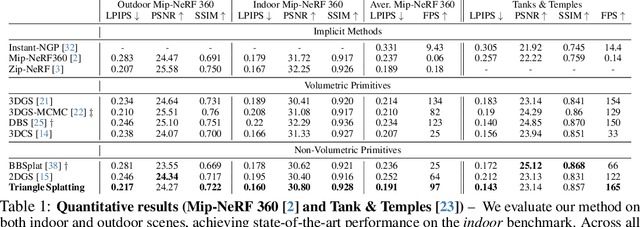
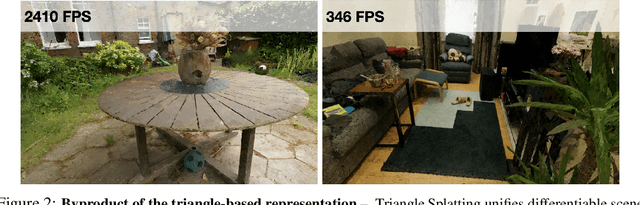
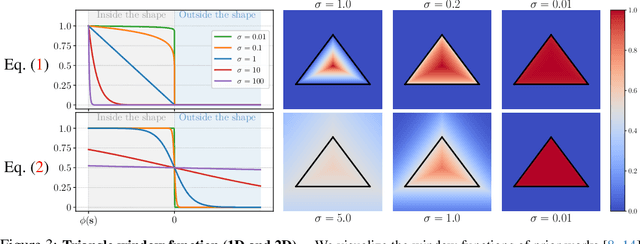
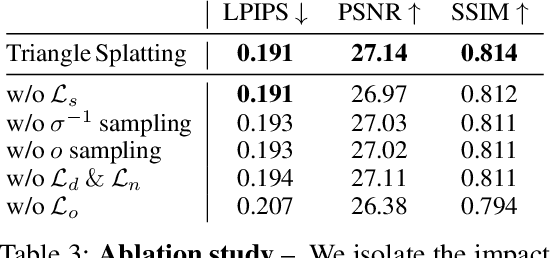
The field of computer graphics was revolutionized by models such as Neural Radiance Fields and 3D Gaussian Splatting, displacing triangles as the dominant representation for photogrammetry. In this paper, we argue for a triangle comeback. We develop a differentiable renderer that directly optimizes triangles via end-to-end gradients. We achieve this by rendering each triangle as differentiable splats, combining the efficiency of triangles with the adaptive density of representations based on independent primitives. Compared to popular 2D and 3D Gaussian Splatting methods, our approach achieves higher visual fidelity, faster convergence, and increased rendering throughput. On the Mip-NeRF360 dataset, our method outperforms concurrent non-volumetric primitives in visual fidelity and achieves higher perceptual quality than the state-of-the-art Zip-NeRF on indoor scenes. Triangles are simple, compatible with standard graphics stacks and GPU hardware, and highly efficient: for the \textit{Garden} scene, we achieve over 2,400 FPS at 1280x720 resolution using an off-the-shelf mesh renderer. These results highlight the efficiency and effectiveness of triangle-based representations for high-quality novel view synthesis. Triangles bring us closer to mesh-based optimization by combining classical computer graphics with modern differentiable rendering frameworks. The project page is https://trianglesplatting.github.io/