 Add to Chrome
 Add to Firefox
 Add to Edge
Semantic Search At LinkedIn
Feb 07, 2026
Semantic search with large language models (LLMs) enables retrieval by meaning rather than keyword overlap, but scaling it requires major inference efficiency advances. We present LinkedIn's LLM-based semantic search framework for AI Job Search and AI People Search, combining an LLM relevance judge, embedding-based retrieval, and a compact Small Language Model trained via multi-teacher distillation to jointly optimize relevance and engagement. A prefill-oriented inference architecture co-designed with model pruning, context compression, and text-embedding hybrid interactions boosts ranking throughput by over 75x under a fixed latency constraint while preserving near-teacher-level NDCG, enabling one of the first production LLM-based ranking systems with efficiency comparable to traditional approaches and delivering significant gains in quality and user engagement.

Introducing Semantic Capability in LinkedIn's Content Search Engine
Dec 29, 2024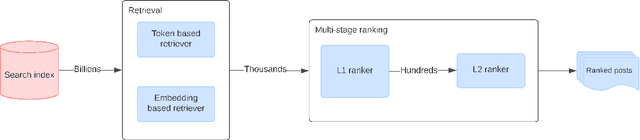
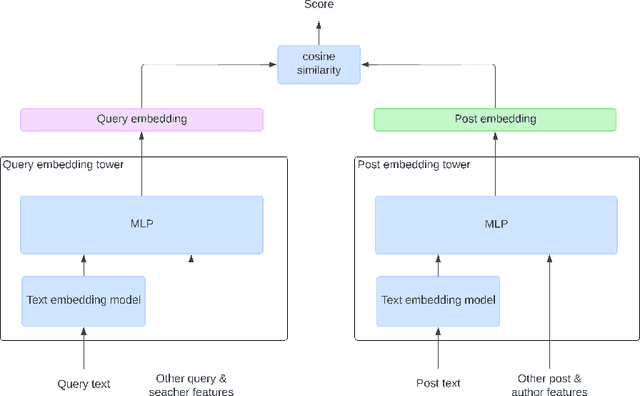
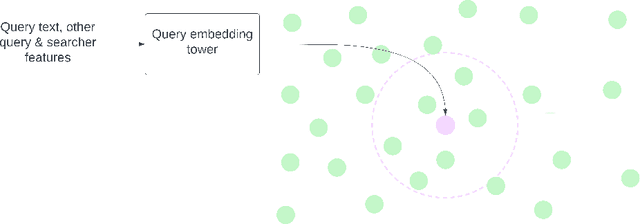
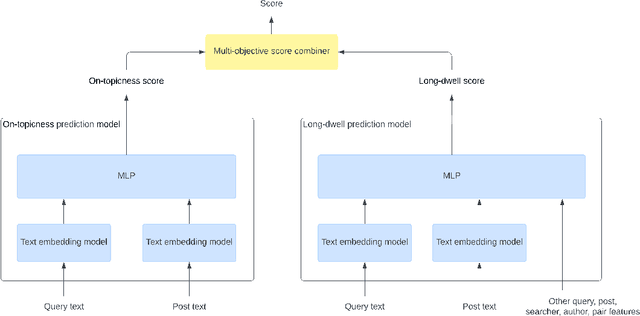
In the past, most search queries issued to a search engine were short and simple. A keyword based search engine was able to answer such queries quite well. However, members are now developing the habit of issuing long and complex natural language queries. Answering such queries requires evolution of a search engine to have semantic capability. In this paper we present the design of LinkedIn's new content search engine with semantic capability, and its impact on metrics.